




Hot Tags
TPU vs. Nothing: Why Your Car Roof Needs Armor Protection in 2026
March 17, 2026


TPU Roof Protection is no longer a niche upgrade for show cars. In 2026, it is becoming a practical decision for vehicle owners who want to preserve gloss, reduce surface wear, and protect one of the most exposed parts of the vehicle: the roof.
Why the Roof Is No Longer a Safe Zone
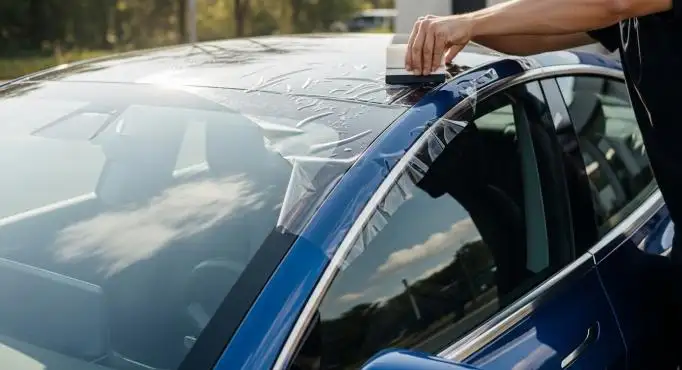
Many drivers still think paint damage begins at the front bumper, hood, or mirror caps. Those are important areas, but the roof should not be treated as secondary. It is a large horizontal surface. That means it receives direct sunlight for long periods, collects fallout, and often holds bird droppings, dust, and water residue longer than vertical panels do. Progressive notes that constant UV exposure can break down the clear coat over time, leading to dullness, fading, oxidation, and eventual peeling. XPEL also highlights that bird droppings can leave permanent marks on vehicle paint if the surface is left unprotected.
This is why the comparison in 2026 is not simply film versus no film as a styling choice. It is TPU Roof Protection versus no real barrier at all. When no protective layer is present, the original paint must absorb every day of exposure on its own.
At HEY FILM, we see this shift clearly. Buyers are paying closer attention to long-term surface preservation, not only immediate appearance. A clean roof line affects how the full vehicle looks from every angle, especially on dark colors, panoramic roof surrounds, and modern SUV or crossover designs.
What TPU Roof Protection Actually Does
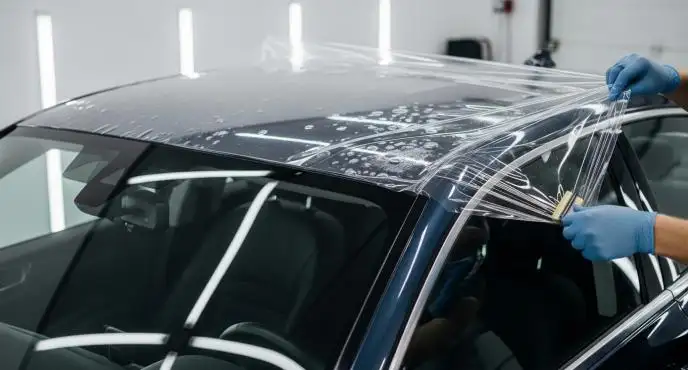
TPU Roof Protection is a transparent protective film based on thermoplastic polyurethane. In practical terms, it creates a sacrificial layer over the painted roof surface. Instead of allowing minor abrasion, staining, and weathering to act directly on the OEM finish, the film absorbs that daily stress first.
This matters because TPU is not just a thin plastic cover. BASF states that TPU-based paint protection film offers strong optical transparency, resistance to yellowing, and self-healing performance for light scratches and scuffs. These material benefits explain why TPU is well matched to exposed exterior panels that demand high clarity and reliable finish retention.
For clients considering protection systems, the result is a set of practical functional benefits:
✓ It helps soften the appearance of light wash marks and minor scuffing on the surface.
✓ It creates a buffer against droppings, water spotting, and environmental fallout.
✓ It helps preserve gloss on high-exposure roof panels.
✓ It supports cleaner maintenance over the service life of the vehicle.
The value is simple. The film takes the abuse first, while the original paint stays in better condition underneath.
Why "Nothing" Costs More Than It Seems
Choosing no protection may appear economical at the beginning. However, the roof is difficult to ignore once fading, etching, or dullness becomes visible. Unlike dirt, this type of degradation cannot be removed with a normal wash. It often leads to polishing, correction work, or repainting discussions. At that stage, the owner is no longer comparing product prices. The owner is dealing with restoration cost, downtime, and reduced finish consistency across the vehicle.
This is especially relevant for premium vehicles, leased cars, black roofs, dual-tone designs, and fleet vehicles with brand image requirements. A damaged roof may not receive the same attention as a front bumper, yet it still weakens the overall look of the car.
Why 2026 Buyers Are Looking Beyond Traditional Wax
Traditional care products still have a place. Wax, sealants, and coating systems can improve appearance and support routine maintenance. However, they do not create the same physical barrier that TPU Roof Protection provides.
This is the key difference. Surface chemistry can help with shine and short-term water behavior. A TPU film adds measurable material thickness between the outside world and the painted roof. That difference matters when the risk includes abrasive particles, careless washing, rooftop loading, and long-term UV stress.
Major industry brands continue to position paint protection film for exposed vehicle surfaces. 3M describes PPF as a solution for "high-impact, vulnerable areas" of the vehicle, while XPEL presents protection film as coverage for the full vehicle as well as high-impact zones. Those descriptions support a broader market understanding: vehicle protection is moving from isolated front-end coverage to more complete panel strategies.
At HEY FILM, we believe the roof is part of that more complete strategy. It is visible. It is exposed. It deserves the same level of attention as the front-end surfaces buyers already protect.
What Buyers Should Look for in TPU Roof Protection
Not every film performs the same way. Buyers should evaluate the material and supplier together, not separately. A strong roof protection program depends on resin quality, coating stability, installation behavior, and production consistency.
Key Evaluation Points for 2026 Programs
✓ Optical clarity that keeps the roof finish clean and natural
✓ Reliable surface performance under heat, UV, and outdoor exposure
✓ Stable adhesion with controlled removability
✓ Good conformability on curved roof edges and trim areas
✓ Support from a manufacturer that can provide consistent supply and technical guidance
These points are important because roof applications are highly visible. A film that hazes, yellows, lifts, or distorts the finish will not support a premium result.
HEY FILM approaches TPU Roof Protection, that means the product must not only protect. It must also install efficiently, maintain appearance over time, and fit the expectations of distributors, installers, and brand programs. In the current market, technical stability is as important as first-day gloss.
Why HEY FILM Recommends Roof Armor Protection Now
The central question for 2026 is straightforward: should a vehicle roof remain exposed when a modern protective layer is already available? In many cases, the answer is no.
TPU Roof Protection offers a more rational path than waiting for visible damage to appear. It helps preserve finish quality, supports resale presentation, and aligns with the market's shift toward long-term exterior protection. For distributors and installers, it also opens room for more complete protection packages rather than partial coverage discussions only.
At HEY FILM, we recommend treating the roof as a priority protection zone, not an afterthought. That is where TPU Roof Protection shows its real value.
CTA: If you are planning a 2026 product line, installer program, or private-label automotive film range, contact HEY FILM to discuss TPU Roof Protection solutions for roof panels, high-exposure surfaces, and full-vehicle protection systems.