




Hot Tags
Sunshade Car Window Film: A Complete Guide to Smarter Solar Protection (2026)
May 15, 2026


Sunshade Car Window Film is no longer just a privacy add-on. It has become an essential layer for heat management, UV protection, and driving comfort. But with so many options on the market—dyed, metalized, ceramic, carbon—how do you choose a sunshade car window film that actually lasts, looks professional, and won't interfere with your car's electronics? This guide walks you through the science, the common pitfalls, and why HEY FILM's Carbon Series represents the smart, cost-effective choice for 2026 buyers.
What Is a Sunshade Car Window Film?
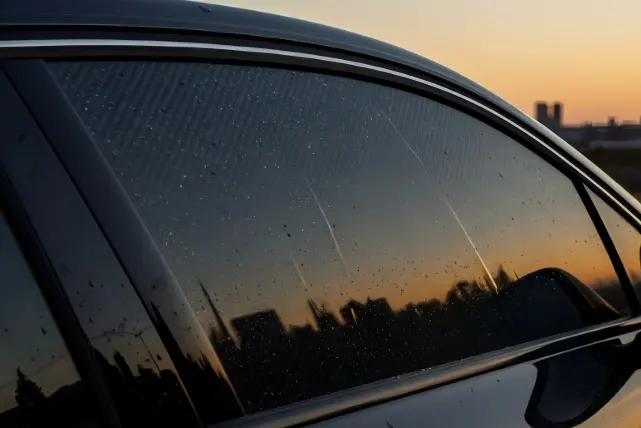
A sunshade car window film is a thin, multi-layer laminate applied to the interior side of automotive glass. Its core jobs are simple: reduce solar heat, cut glare, block harmful UV rays, and add privacy. But the quality of a sunshade car window film depends entirely on how it's made.
Traditional cheap films use dyed polyester layers that fade to purple within 1-2 years. Metalized films use reflective metallic particles—they reject heat reasonably well, but they disrupt GPS, 5G, and radio signals. That's a dealbreaker in 2026, when most vehicles depend on constant connectivity.
HEY FILM takes a different route. Their Carbon Series sunshade car window film uses natural single-layer carbon technology, which means:
• No metal particles → zero signal interference.
• No dye → no purple discoloration.
• Single-layer structure → consistent tint from edge to edge.
Why Most Sunshade Films Fail (And What 2026 Buyers Demand)
Before we dive into HEY FILM's solution, let's look at three real-world challenges that fleet managers, dealerships, and installers face every day.
1. Signal Blocking
Many sunshade car window films contain aluminum or titanium. These metals bounce heat back, but they also bounce radio waves away. Drivers complain about dropped calls, slow GPS lock, and failed toll transponders.
2. Early Deterioration
Purple bubbles, peeling edges, and clouding adhesive are signs of sub-par polyester films. At this point, removal costs will exceed the costs of the initial installation.
3. VLT Percentage and Unpredictable Performance
Some films perform very well at 5% VLT (very dark) but perform poorly at 50% VLT (very light). This prevents specific film designs for all types of windows or vehicles.
What do professional buyers want in 2026? Film that protects vehicle interiors from the sun with predictably consistent performance, long-lasting color stability, and good transmission that defies RF for the right price.
HEY FILM Carbon Series: Designed for Real Life
Our Carbon Series sunshade films for vehicles is brought to you by patents of single natural layer technology. This means the carbon particles are integrated into the film body, not just coated on top. The result is a consistent, neutral smoke tone that stays true for years.
Key specifications at a glance:
• VLT range: 5% to 80% (from limo-dark to nearly clear).
• Thickness options: Two levels – 2.0 mil for side windows, 3.5 mil for rear screens or heavy-contact areas.
• Adhesive: Bosch Ashland - with a strong bond and a clean, easy removal.
• Top coat: Soft, heat-activated self-healing layer.
• Base material: PCL Aliphatic TPU – anti-yellowing by design.
• Warranty: 3 to 8 years, depending on application.
Every roll of this sunshade car window film delivers the same reliable function, whether you choose 20% VLT for a sedan or 70% VLT for an office glass partition.
What You Actually Get
Here's what the Carbon Series does in everyday driving and fleet conditions:
• Moderate but consistent solar rejection: Reduces cabin temperature swings, so AC doesn't have to work as hard.
• 99% UV blockage (estimated): Helps protect dash, seats, and passengers from long-term UV exposure.
• Zero signal interference: Because there's no metal, your GPS, 5G, and RFID toll tags work perfectly.
• Self-healing top coat: Minor scratches from window operations disappear with a warm day or heat gun.
• Non-reflective finish: Looks like factory tint, not a mirror – compliant with most local tint laws.
• No adhesive residue on removal: Bosch Ashland's formulation allows clean peeling even after years of sun exposure.
For buyers managing large fleets or rental cars, the two thickness options are a game-changer. Thinner film installs faster on flat side windows; thicker film adds impact resistance on sliding doors and rear hatches.
How This Sunshade Car Window Film Fits 2026 Design & Purchase Trends
What are professional purchasers prioritizing this year? Based on HEY FILM's conversations with distributors and installers, three trends stand out.
Trend 1: Signal Transparency Is Non-Negotiable
With EVs and connected cars becoming the norm, any sunshade car window film that blocks a 5G signal gets rejected immediately. The Carbon Series is 100% metal-free, so it's future-proof.
Trend 2: Budgets Are Tighter, But Quality Expectations Are Higher
Buyers won't pay for ceramic premiums, but they also refuse to install film that fails in 18 months. The Carbon Series sits at the sweet spot – affordable upfront cost, with 3-8 years of reliable service.
Trend 3: Sustainability and Low-Waste Packaging
Customizable Roll Weights and Carton Sizes at HEY FILM allow customers to purchase need with no excess inventory and packaging waste. Compared to multi-layer ceramic films, HEY FILM's single-layer carbon construction consumes less raw materials and packaging.
Installation & Maintenance: Easy, Even for Curved Glass
One often overlooked benefit of a good sunshade car window film is that it wraps around curved surfaces quite well, thanks to the film's flexibility. The Carbon Series uses a soft, flexible substrate (PCL Aliphatic TPU) that shrinks evenly with a heat gun. Installers report fewer creases and faster application times compared to cheaper polyester films.
Once installed, maintenance is basic: clean with a soft cloth and ammonia-free glass cleaner. The self-healing top coat resists fine scratches from window operation. And because the film is non-metalized, there's no oxidation or corrosion at the edges.
Why Choose HEY FILM as Your Manufacturing Partner?
HEY FILM isn't a rebranding trader. We operate our own coating lines, adhesive labs, and quality control facilities. That means every sunshade car window film leaving our factory has been tested for:
• UV transmission (ASTM standards).
• Adhesion strength (Bosch Ashland certified).
• Scratch resistance (self-healing validation).
• Temperature cycling (-20°C to 90°C stability).
We also offer sample testing before bulk orders. Need a custom color or thickness? Our R&D team can modify formulations according to your local climate and types of vehicles.
Final Thoughts
Choosing the right sunshade car window film is simple: avoid dyed or metalized options. Instead, choose proven carbon technology. HEY FILM's Carbon Series delivers natural single-layer construction, wide VLT, two thicknesses, self-healing coating, and residue-free adhesive. It's the practical choice for fleets, dealers, and installers. Ready to upgrade? Contact HEY FILM for data sheets and samples. Drive cooler, stay connected.
Frequently Asked Questions About Sunshade Car Window Film
Q: Will the sunshade car window film block my GPS or phone signals?
A: No. The Carbon Series has zero metal layers, so everything, including GPS, 5G, and toll tags, functions as normal.
Q: How long does the film last before it begins to turn purple?
A: It never turns purple. The carbon, single-layer film has a long durability with no fading or yellowing for 3–8 years.
Q: Will I be able to put it on the curved parts of my rear windows?
A: Yes. The PCL Aliphatic TPU material can apply a gentle heat and shrink evenly to contour to the curved glass.
Q: Can the adhesive easily be removed from the film without a residue left behind?
A: Yes. Bosch Ashland adhesive gives a clean removal even after years of exposure from the sun.
Q: Do you provide sample film before a bulk purchase?
A: Yes. Please get in touch with HEY FILM, and they will send you sample rolls and technical data sheets.