


Hot Tags
Car Interior Decorative Film: Choose a Finish That Works While Driving
October 19, 2026


The surface has been remade, is within arms reach of a person driving a car, is touched many times and is constantly changing in the light. This makes a little cabin accent more of a challenge than it's initially seemed. A finish which is pretty in a sample book may be a distraction to the driver, may attract the fingerprints or may be a reflection of sunlight in the driver's eyes or oddly placed next to seats.
Car inner trim decorative film can be used to refresh the inner trim of certain parts. The optimal project starts with the use of the cabin, and then film appearance is taken into account, substrate, heat, the installation and everyday-cleaning. A step-by-step plan on how to go from the first sample to a fully functional interior that also flows naturally.
Select Part You Notice Every Day
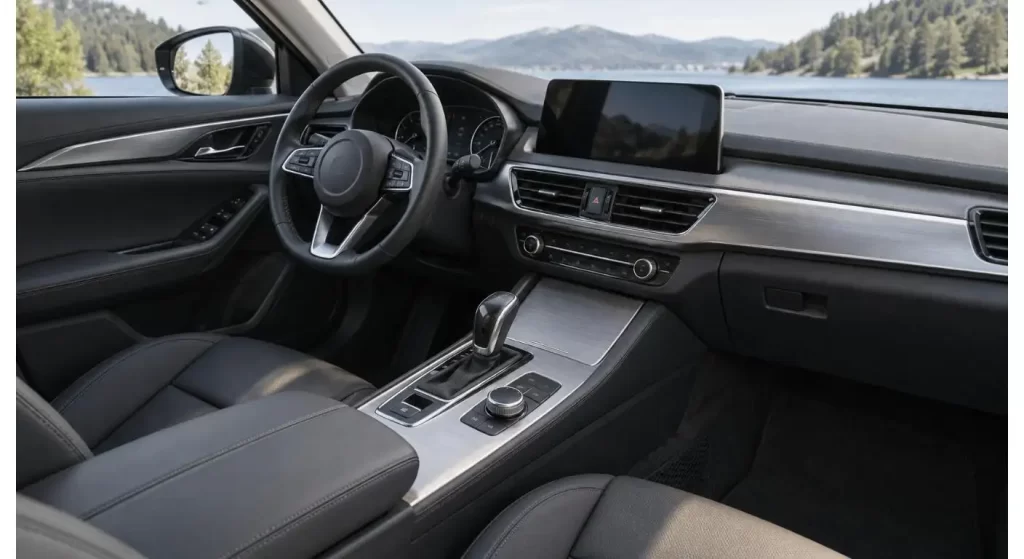
Have a seat in the driver's seat and determine one area that you wish to alter. This could be a nice console insert in the middle of the car, or a decorative strip on the door or a large decorative strip.
Take a picture of it during the day both with open and closed doors. Take a look around it: seat material, steering-wheel finish, current metal trim and original dashboard color. B brushed metal might tie in with other bright trim and a satin neutral might be more subdued with a dark interior.
Don't pick a spot because it's very convenient. Things like frequently used controls, vents, displays, openings for sensors and airbag deployment areas have functions besides being decorative. Have the installer point out items which may be covered without interfering with operation, access or vehicle safety.
A judge is seated in the driver's seat and wearing the driver's seat belt.
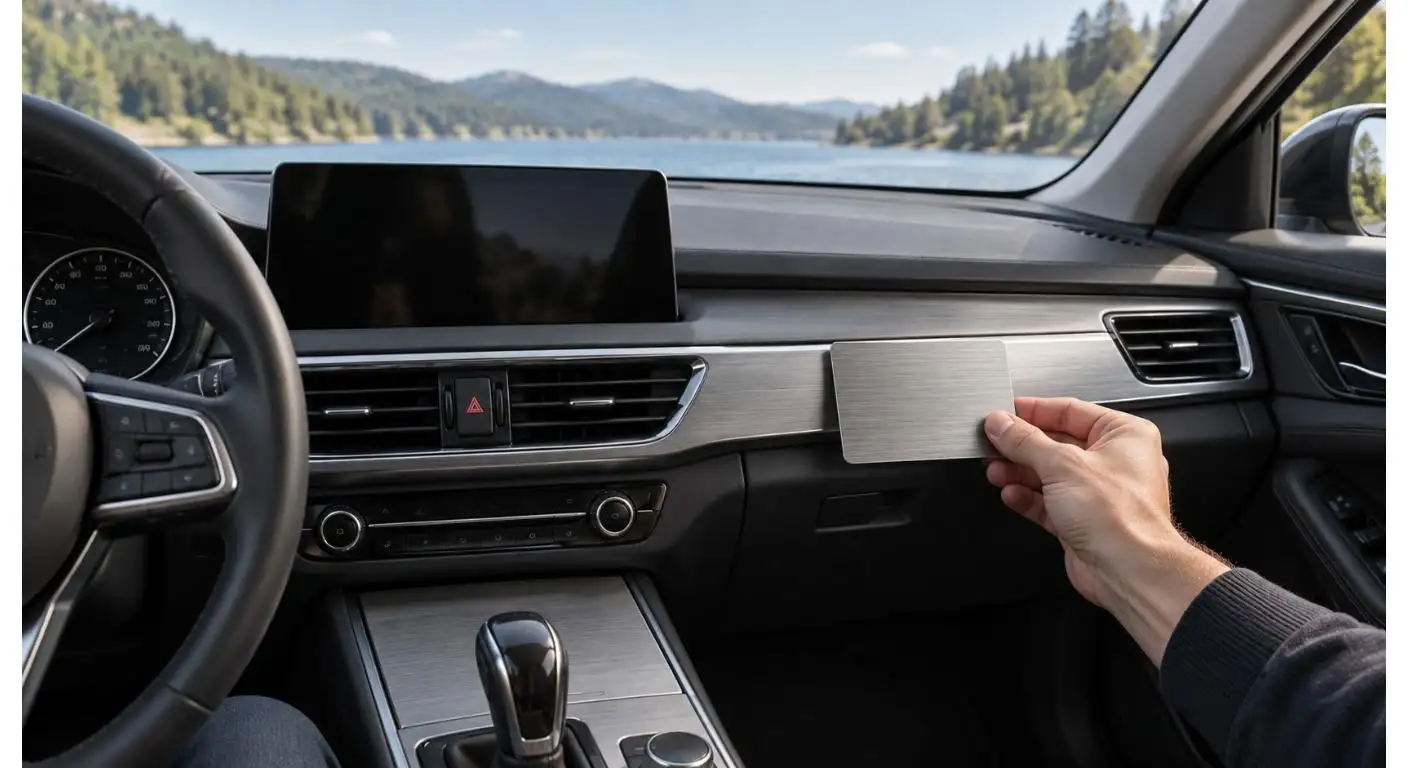
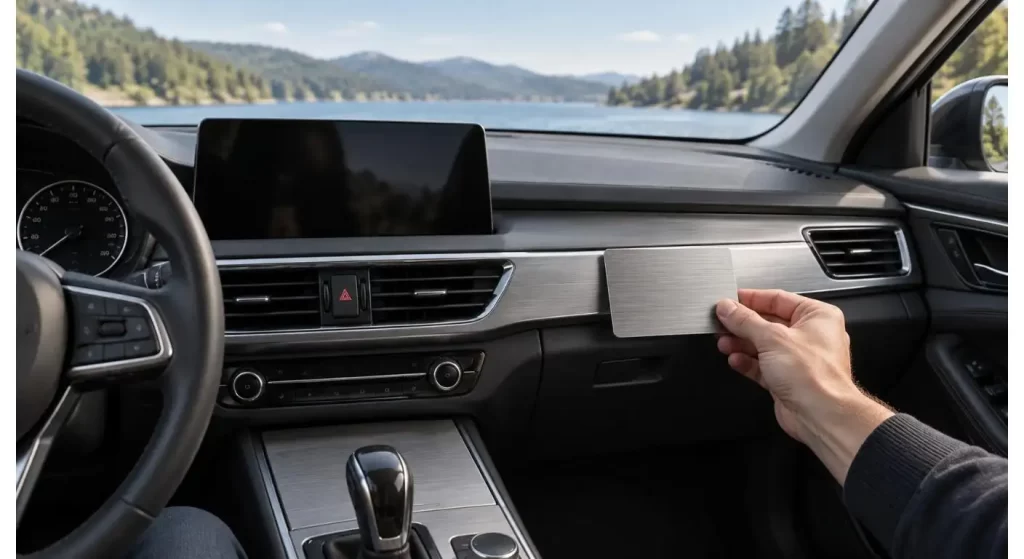
In the car while holding a reasonable size sample to the part to be held. Examine it in full sun, under shade and in the light of your cabin, if you can. A metallic or high-gloss sample may have a different appearance when it is stretched out over a long horizontal trim piece.
Look at the direction of reflections (not just the level of brightness of the finish). Some decorative strip that is close to the windshield could cause a distracting highlight in the glass. Some people sitting in the front seat may feel that a texture on the center console is quieter than when they are sitting in the driver's seat. Please review both positions prior to approval.
The HEY FILM page on automotive decorative films outlines different visual qualities such as metallic, carbon-style, matte and more. Use those as guides for taking samples. Please double check the specific product and the use application for the cabin before applying any finish displayed on a general page.
Inspect the actual "Trim Surface"
There is no same base for adhesive as a smooth painted insert, hard molded plastic and soft touch dashboard coating. Heavy factory grain can be still visible through a film or lessen its contact with the surface. A loose or aging coating can cause issues when applying or removing the coating.
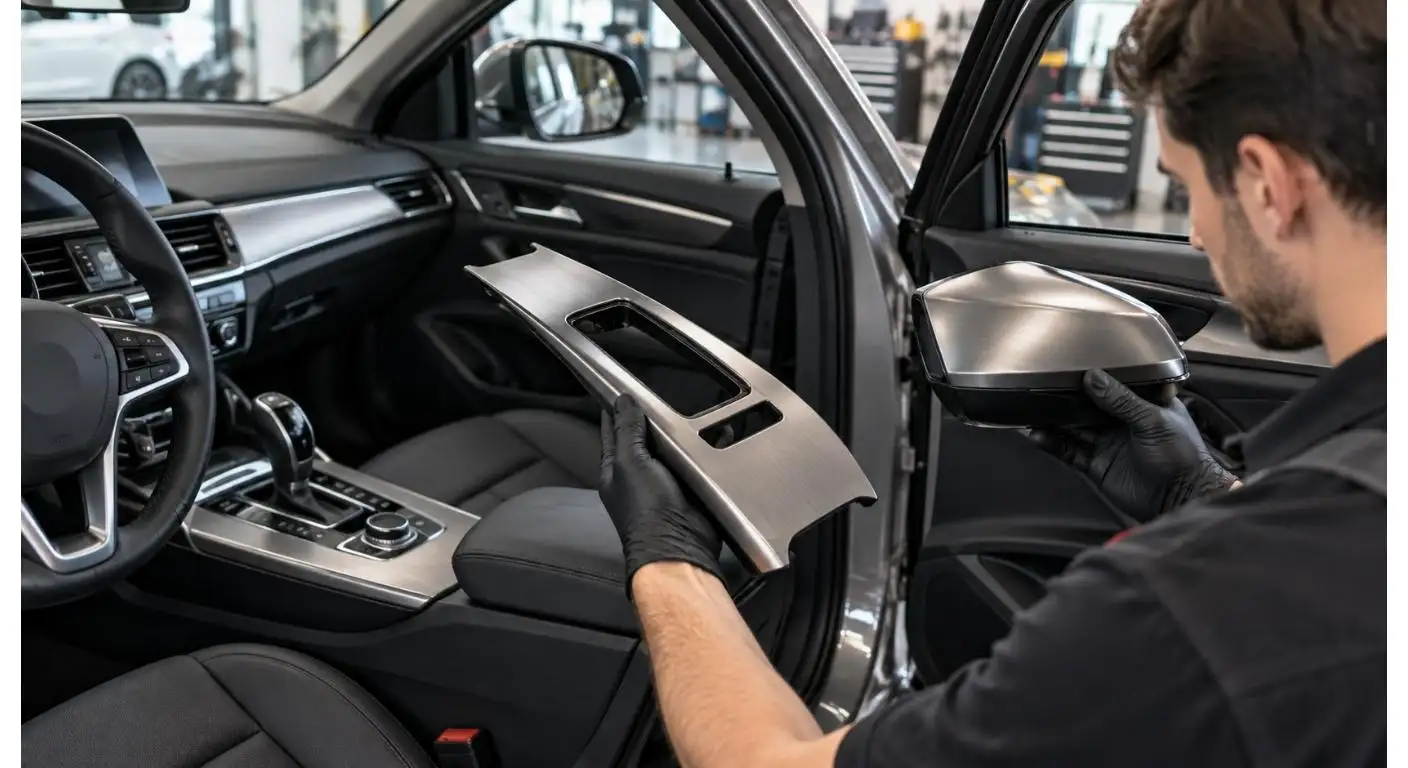
Inquire if the part is repairable. While a removable insert may allow the installer greater access to edges, it is important to be aware of the need for disassembly to be planned and performed by a person who is familiar with the vehicle.
Prepare proposed surface by following film supplier's cleaning procedure. Previously dressed/polished surfaces can cause the residues to be difficult to see. If trim's repair or coating history is unknown, ask for a discreet test prior to covering the entire part. Film alters the visible surface finish, but does not correct an unstable substrate.
Check that the Film is Appropriate for the Car Cabin
Interior does not imply light exposure. The sun can heat up trim parked in the sun and surfaces can be touched and cleaned often. Request the brand and type of film system, the approved substrates, instructions for application, temperature restrictions, and removal instructions.
This check is particularly important on HEY FILM's website as it has a wide Decorative Film category which covers furniture and commercial space applications. Its published warranty language states that it can only be vertically installed inside (not in direct UV or excessive heat). Don't assume that those words are applicable to a car dashboard that has been exposed to the sun. Specify confirmation of the intended use in the automotive industry.
Do not make performance claims that are not directly related to the material. If a decorative film is to be used on trim, it should not have heat rejecting or uv blocking figures that were applied to the window film used on automobiles. Those are the products used for various applications on glass. The interior trim decision should be based on the documents of the decorative film.
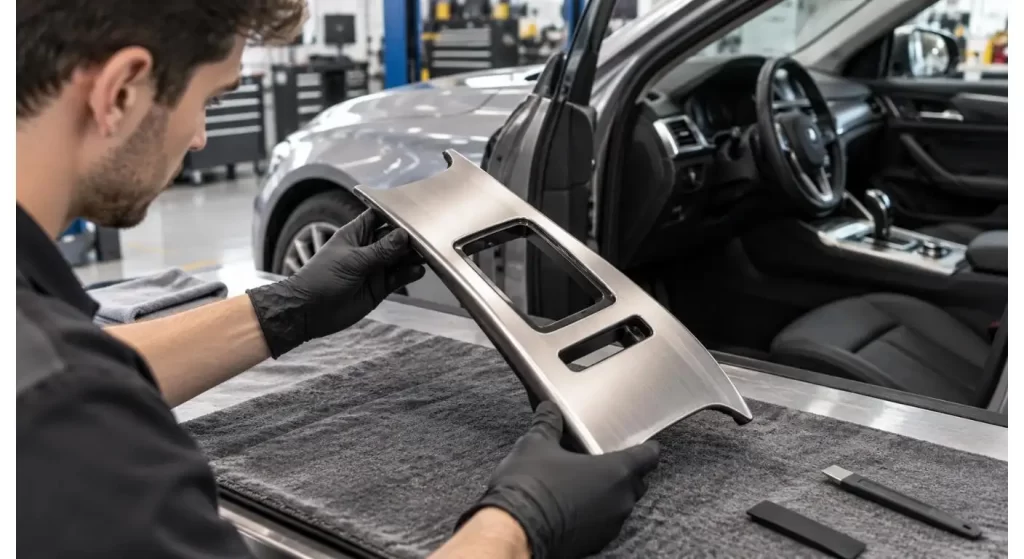
Test Texture, Touch and Pattern Direction
Watch a demonstration of a normal sitting distance and then touch it with clean hands. Is the surface feel to a surface you touch often, pleasant? Has fingerprint print on it? Does a pattern that has been raised make an edge more noticeable?
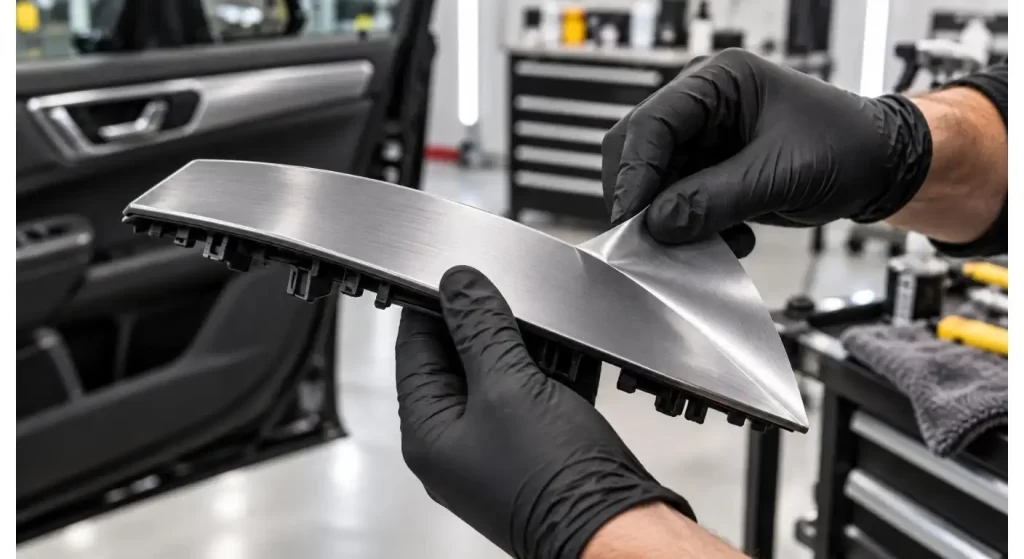
If applying wood-grain, carbon or brushed-metal film to multiple pieces, determine the direction for the pattern. When two adjacent inserts are made with opposite grain (from the same roll), they may appear to be unrelated. Prior to cutting, have installer mark orientation.
For a curved part, ask for a small practical test. A printed pattern may be stretched to alter its size and/or direction, particularly at sharp corners. Accept the appearance on a shape, which is similar to the desired trim, and not just on a flat sample board.
| Viewing Condition | What the Driver Observes | Accept / Change |
| Direct daylight | Glare in windshield or side glass: ______ | ______ |
| Open shade | Color beside factory trim: ______ | ______ |
| Evening cabin lights | Unwanted reflection: ______ | ______ |
| Driver’s seated position | Texture and visual balance: ______ | ______ |
| Front passenger position | Appearance from another angle: ______ | ______ |
Check the Finished Part During the operation of the Car
Once installed, sit in both front seats and examine finished under normal cabin light. Use nearby buttons, cup holders, vents, storage lids and adjustable components. All edges should be rounded and not snag hands or impede the movement of any part.
Check corners and returns for warping, dirt or lift. If the trim of the door has been covered, open and close the door. Compare the completed work to the approved physical part, taking into account that the surrounding colors and curves affect the appearance of the part.
Inquire about the treatment needed for the specific type of film. Products used in the factory for cleaning, brushing and polishing may not be suitable for use with the added surface. Retention of the product code and small sample in case of damage to the insert to be matched later.

When the job is done, make a decision whether to extend the finish or not.
Stay, enjoy the log house with the first part finished, until more of the cabin can be covered. Check it out in the daylight and at night. Pay attention to how it feels after the regular use and cleaning. A finish that will hold up under such conditions is a better foundation for expanding a design.
When adding additional pieces, refer to photographs and the sample piece to ensure colour and direction of pattern. Check to see if the following parts can use the same substrate and heat exposure. If a film is successful on a smooth insert it doesn't necessarily mean it will look good on every dashboard or door surface.
Conclusion
When appearance reflects the use of the interior of the car, Car Interior Decorative Film will come into play. Always begin with an appropriate trim piece, evaluate reflections of the seats, verify application of the product to an automobile, and test finish of the product on the surface. Check controls and edges before declaring the project to be complete.
FAQs
Q1. Is there any dashboard surface that film will not adhere to?
No. Substrate, the heat, visibility and functions of nearby vehicles must be all checked.
Q2. Will trim be covered by film if there are deep scratches?
It can alter the look of it but will not even out or repair a surface that is uneven, damaged or cracked.
Q3. Is it appropriate by the windshield for a shiny surface?
Test it in the car at the driver's seat in sunlight. Another finish may be preferable due to reflections.
Q4. Is it possible to use the decorative film at home in the car?
If its precise specification only permits that auto area and exposure.
Q5. What are some things I should look into at handover?
Check for edges, glare, and pattern alignment as well as the functioning of all adjacent controls.