




Hot Tags

PPF Installation Service: Set Clear Expectations from Booking to Vehicle Handover
November 9, 2026


Two installers quoting the same brand of film can provide differing results. One price could be for careful preparation, agreed edge finishing and agreed follow-up inspection, one could be describing little more than panels covered. This difference is more evident when considering the planning and checking of the work.
This is why, a PPF installation service should be considered as an overall work from start to finish, including the PPF after care. When owners are checking out workshops, the most relevant questions have to do with responsibility and workmanship, and the state of the vehicle itself -- not a promise of invisibility.
Use the word processor to create a quotation describing the job.
Firstly, provide the same vehicle information, photos, and desired coverage for each workshop. Add model year, trim, after market body parts and known paint jobs. This information prevents a "made up" headline price from being converted to a different quotation on the car's arrival.
Request a scope of work that specifies film model, panels covered, preparation and proposed finishing. Words like ‘front package' are meaningless without panel boundaries. Check if mirrors, bumper pieces and small painted insets are included, and where there will be exposed paint.
Identify the material category being discussed by using HEY FILM's PPE range of paint protection film. The workshop is not responsible for fitting it as its role is as a film supplier. A product specification defines what is provided, the service agreement defines what the installer will do.
| Situation | Scheduling Implication |
| Recent repaint | Confirm readiness with repairer |
| Aftermarket bodywork | Allow additional fitting assessment |
| Existing film | Include removal time |
| Extensive coverage | Arrange alternative transport |
If they need to assess Evidence of Workmanship, they should do so BEFORE they book.
Request to view finished projects on cars that have the same size and shape bumpers, recesses, and panels. Up close photos of corners and returns is more indicative of finishing than a far out photo promoting it. If possible, see a car that has already been driven with owner's consent and has been washed.
Talk about the troublesome aspects that the workshop takes on board. A thoughtful description of joins, edge clearance and access will be more valuable than a promise that all these edges will vanish. Certain places are practically limited, and it's essential to discuss this fact before you make a decision from the list of offers.
Determine who will do the work, and how questions will be addressed during installation as well. Where a subcontractor is involved, make sure there is someone responsible for the outcome. Changes, inspection and subsequent corrections are easier with a clear point of contact.
Agree on Paint Preparation at Vehicle Intake
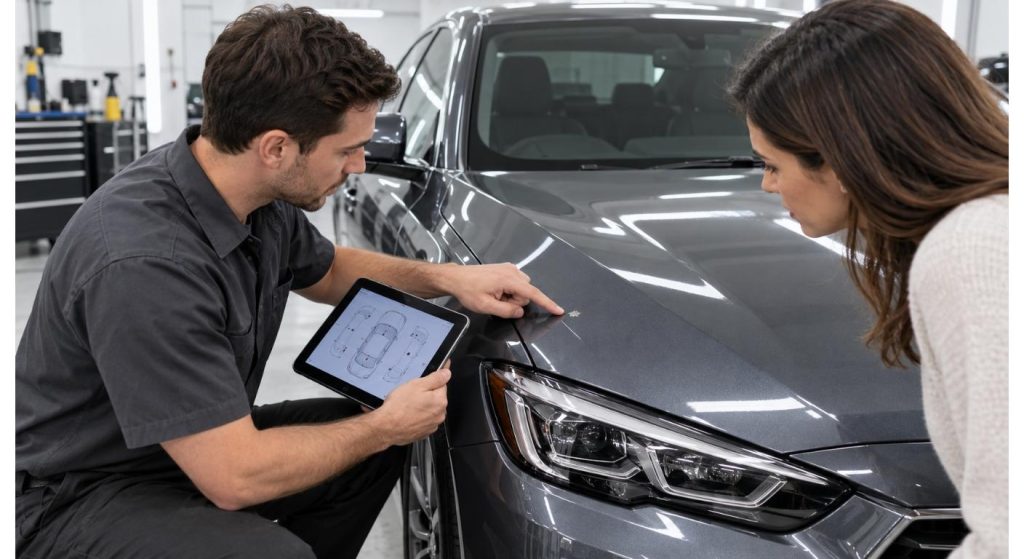
Walk around the vehicle as a unit and check it out. Document the presence of chips, scratches, loose trim and repaired panels by dated photos. This provides a starting point of common ground and the ability to separate previous damage from collection concerns.
Even a new car may require cleaning and removal of contaminates prior to film application. Inquire if polishing is recommended, what imperfections are being polished and if it is being offered. Preparation should be done according to the situation of the paint and not presented as a guaranteed correct package.
Specially the surfaces that have been repainted or recently repaired, should be discussed. Have the repairer/installer evaluate suitability and timing prior to repairs. Any existing waxes, sealants or coatings should also be identified for the installer to decide the right preparation for the selected film.
Confirm the Pattern, Edges and Access Plan
Pre-cut patterns and professionally managed bulk fitting are two methods of shaping film. These labels alone do not provide a guarantee of workmanship. Inquire about the suitability of the proposed method for your car and how the installer will ensure that no cutting near painted surfaces is involved.
Determine where the film shall be terminated prior to installation. Loose edges can be wrapped, but narrow openings and complicated trims can be problematic. If there are any parts being offered for removal, discuss who will do the removal and refitting and if this is covered in the quote.
Material width is also a factor in planning. HEY FILM oversized hood paint protection film wid is 183 cm. This may prevent a large join on a large hood, but the installer will need to measure the panel and allow for curves and ensure that there is enough material for the agreed finish.
Gain a appreciation for Wet Application
According to HEY FILM, their PPF is a wet-application film. Positioned by the installer using the appropriate application solution, it is then worked on to the panel with controlled squeegee passes. Appropriate work space and handling reduces the amount of contamination under the adhesive.
It takes some judgement in positioning and material tension when playing compound curves. Inquire about the test for the recesses and corners made before the vehicle is released. The goal is a stable installation, that looks the same every time, not just spreading a sheet until it touches all borders.
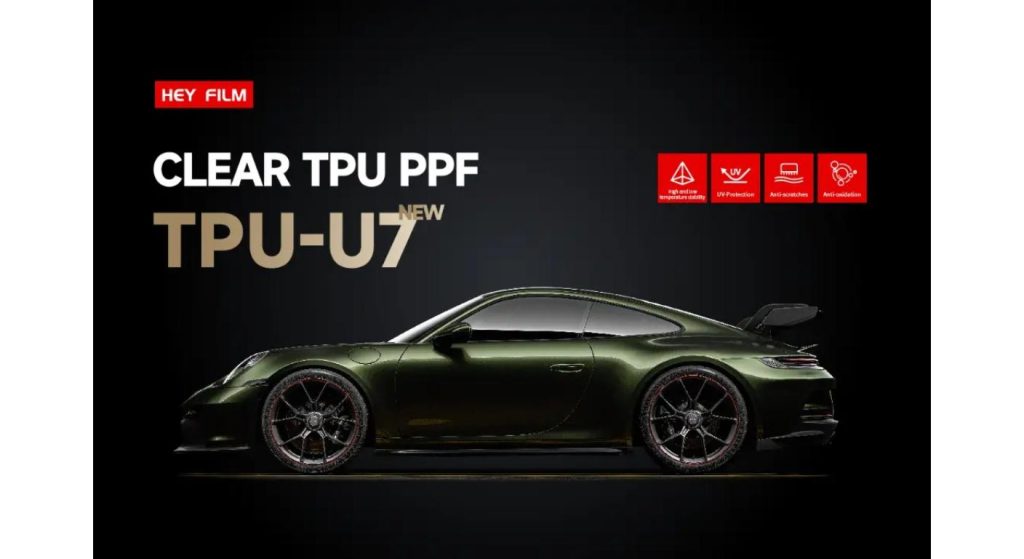
The movie selected should be recognizable during the job. A quote for HEY FILM's U7 hydrophobic PPF, for instance, will be for that model, not some ‘substitute’. Agree any material variation prior to commencement of work, in terms of appearance, price and warranty.
Take a Car with a Shared Inspection.
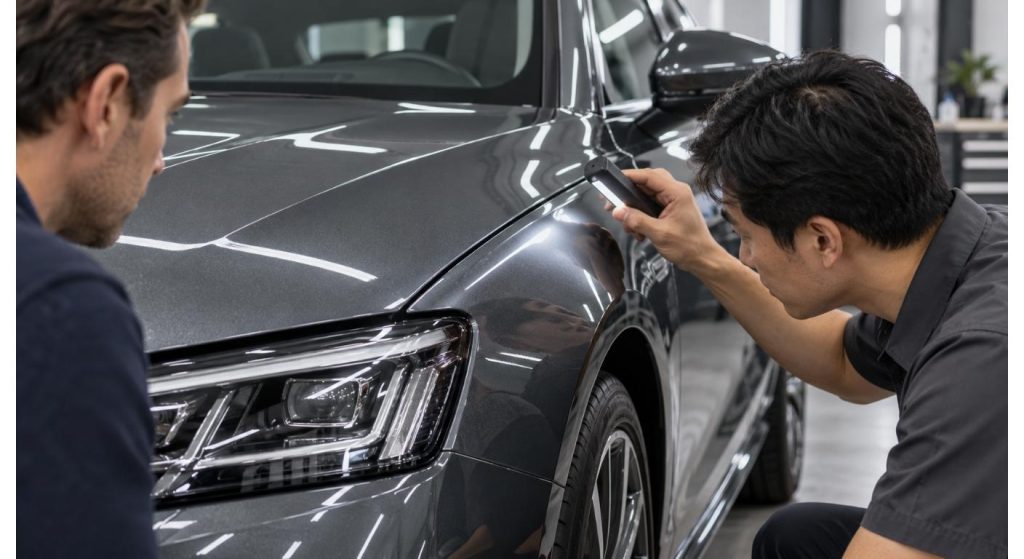
Don't use it as a fast key exchange, give it time to collect. Pass around the vehicle under useful lighting; check agreed panel boundaries, corners and joins. Compare with the written scope (including any trim that has been removed and refitted).
Request a product specific review period and ask installer to describe visible moisture/haze. Temporary effects should be explained and have a plan as to how to follow up. If there is suspected contamination and/or lifting or distortion, it should not be ignored by a vague assurance that things will "even out".
Make notes of items yet to be resolved and agree who will contact who. Identify corrective action to be taken and appoint it if necessary. This helps to make the acceptance practical without having to diagnose the installation and/or try to repair it at home.
Understand who will deal with issues once collected.
Get written instructions for initial wash, including acceptable products and precautions of cleaning around film edges. Installing material according to instructions for the material and local conditions. Don't replace an internet rule for the workshop documented aftercare advice and if an edge starts to lift contact the installer.
Distinguish product warranty issues from workmanship issues. Inquire about who deals with material claims, installation issues that the workshop deals with and if it includes labour and/or replacement fitting. Keep the film ID and invoice. Material enquiries for HEY FILM should be made directly by the product team of HEY FILM; matters of fitting and workmanship directly through your chosen installer.
Conclusion
A reliable PPF installation service is able to make it understandable before the car even comes into the workshop. Discuss written scopes and examine the workmanship and reach consensus on preparation, fitting and follow-up. Establishes clear responsibilities, making the final product easier to evaluate and maintain.
FAQs
Q1. What is the time of PPF installation?
Timing is dependent upon coverage, preparation and complexity of vehicles. Request an estimate with final checks and any settling time.
Q2. Is paint correction included with all installations?
No. Check if there is a need for correction, and if there is, make sure it is included. Seek permission for further preparation work.
Q3. Do all the edges need to be wrapped?
No. Access and panel design can limit edge wrapping. Set up boundaries and finishing in advance that are visible and reasonable.
Q4. Do I need to push down a lifting edge?
Please contact the installer first. The area can be manipulated or heated, making the assessment more complex and potentially adding contamination.
Q5. Does the warranty for the film include any coverage for installation issues?
Do not assume so. Get product terms and the workmanship policy of the workshop and who will be responsible for any replacement labor.