




Hot Tags

TPU Paint Protection Film: Turn Product Specifications into a Confident Buying Decision
November 10, 2026


Two rolls may be identified as TPU, but may display differing performance on the same bumper. One might be appropriate for the method of application used in the workshop; one might need to be handled differently or yield a different surface. The comparison begins with the material name but doesn't end there.
TPU paint protection film is a complete product for the installers, distributors and private-label buyers to evaluate. The substrate, coating, adhesive and supplied dimensions need to all work in harmony. A good buying decision correlates published specifications to sample trial and unambiguous supply documentation.
TPU is read as a Material Category, NOT a Quality Grade!
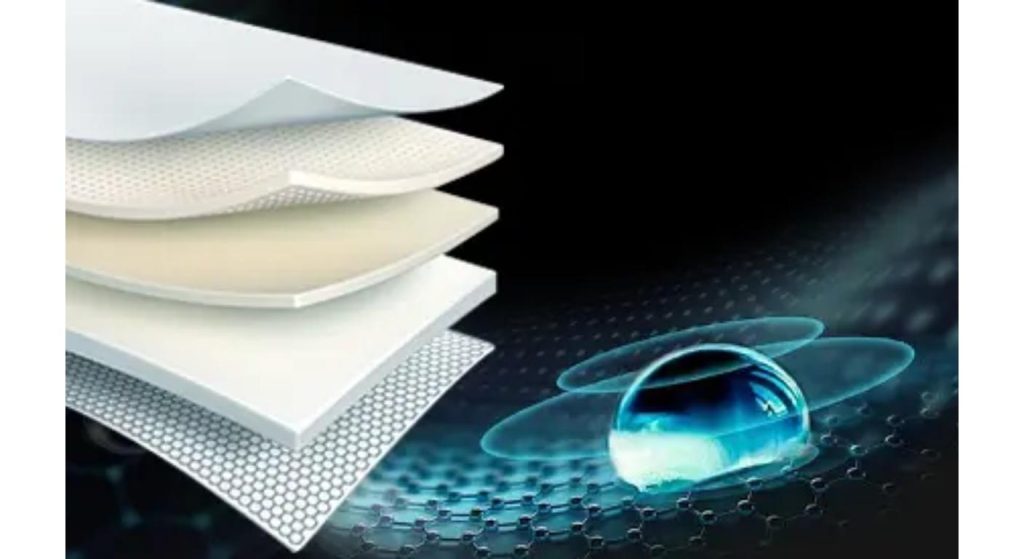
TPU is an acronym for thermoplastic polyurethane. When used as paint protection film, it acts as a flexible structural layer that conforms to the shape of the vehicle and helps to protect the paint from normal wear and tear and the impact of small debris. But to determine that layer is not to define the performance of the whole film.
In the HEY FILM paint protection film series there are several series of various constructions and finishes. Buyers should therefore ask for details relating to the particular model being quoted. A general category description must not be used in place of a current specification or in determining the interchangeability of two products.
Inquire about how the supplier identifies the substrate and if they will be included in the accepted purchasing documents. While the use of a recognisable raw-material name can be an aid to traceability, it should be accompanied by information on the finished film, not used in place of information on the finished film.
Distinguish between Surface Performance and Substrate Performance.
The exposed coating affects the water, dirt and light surface marks that the installed film will react with. The TPU layer is for structural support and the adhesive determines how it interacts with the vehicle. These functions may be used concurrently, and should be discussed separately when comparing products.
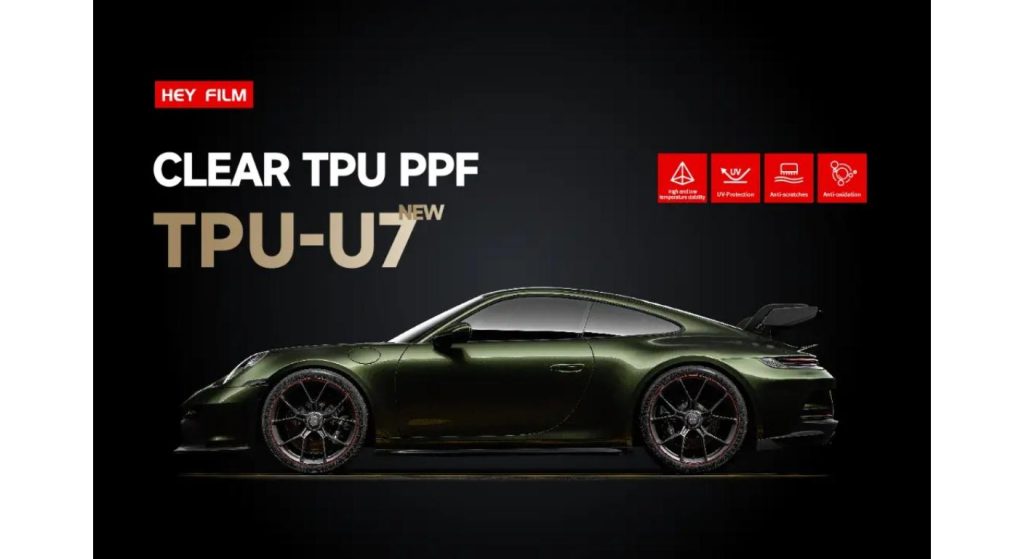
According to H.E.Y. FILM's hydrophobic U7 PPF, the material is coated with a hydrophobic layer, features Bostik adhesive and has a nominal thickness of 7.5 mil. It publishes its specs which specifies a certain combination. Does not imply that all movies made with TPU, or the same adhesive brand, will have a similar feel or performance.
Inquire from the supplier regarding claims for the coating versus claims for the entire film. A demonstration of the behaviour of water on a surface under those conditions is performed, by beading water. Does not test impact resistance, resistance to stains after exposure to outdoors, or long-term adhesive stability on its own.
Compare Thickness - On the same basis.
When comparing thickness, determine what is included in the thickness figure. A measurement of the finished usable-film is not the same as a substrate measurement. Packaging layers and removable liners/temporary protective films should not be considered as material remaining on the vehicle.
Maintain consistency of the units. A small difference in rounded conversions is expected since 1 mil is equal to 25.4 micrometres. Instead of comparing individual numbers from various marketing pages, ask for the nominal measurement and tolerance and layer definition.
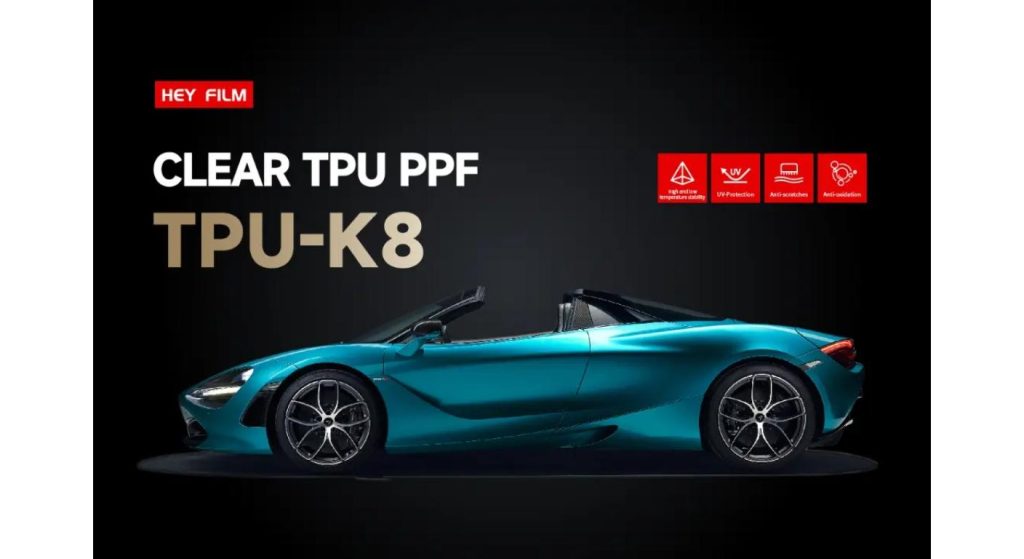
HEY FILM's K8 clear paint protection film is 8.5 mil thick and features Lubrizol TPU and Bostik adhesive and an Aquacoat finish. It outlines a tangible option to consider along with U7. The increased quoted thickness is simply a specification difference and does not prove greater quality of installation behaviour or value.
Convert Mechanical Figures to Workshop Questions
Measures of performance under test conditions: Tensile strength and breaking elongation. Elongation is not a recommended installation stretch and a high elongation does not necessarily indicate that the coating, appearance and adhesive will be unaffected at that elongation.
Before comparing figures from different suppliers, ask for the test method and conditions used for the sample. Identify if a result pertains to the substrate, to the coating/assembled film. A numerical ranking can indicate accuracy without considering significant disparities in testing.
On a controlled fitting trial, see how the film conforms to curves, how it can be remanoeuvered and how it settles around accessible edges. Maintain uniformity in preparation, application solution and working conditions. Do not make a general durability statement based on one successful stretch demonstration, but record the installer's observation instead.
| Evaluation Stage | Evidence to Retain |
| Before application | Labelled reference sample |
| During fitting | Installer’s trial notes |
| After installation | Fixed-angle panel photographs |
| Follow-up review | Dated comparison record |
Repeatable Trial to Evaluate Appearance and Coating.
Test painted samples on representative samples of painted panels under standard illumination. Examine reflections and visible texture and clarity from multiple angles. Set up the same background and the same viewing distance when demonstrating films selected from the short list to allow for easier comparisons of differences due to different films and not the setup.
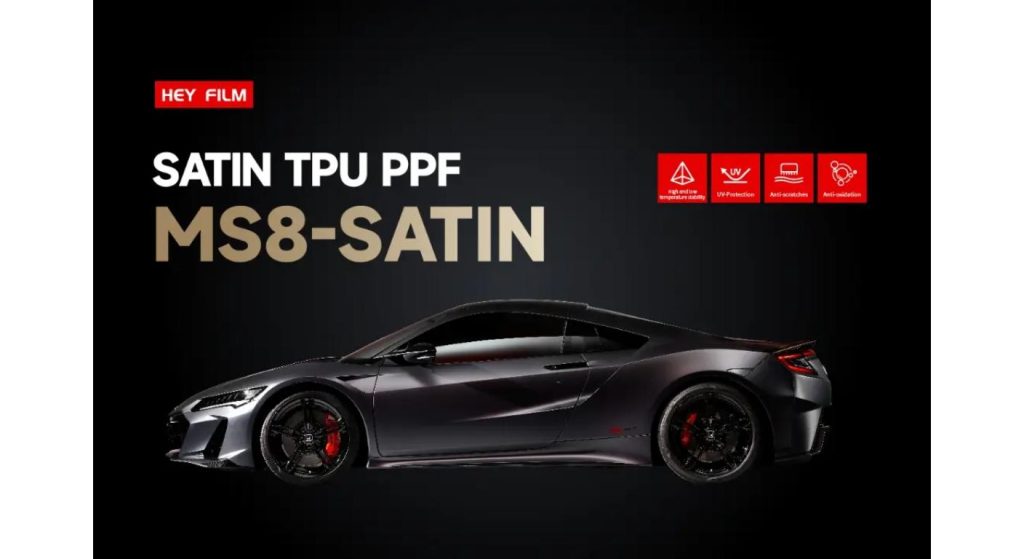
HEY FILM's MS8-Satin PPF is an 8.5 mil BASF TPU product with a hydrophobic smart coating as specified for a different surface appearance. It provides a different visual need than clear gloss film, which is a lower finish. Consider the desired finish instead of the diminished reflection as an optical fault.
If it's a self-healing feature, ask the supplier for the procedure and conditions they use to demonstrate this feature. Deep cuts or missing material will not be made repairable just because it is TPU substrate, so it is important to use suitable light surface marks. Make demonstrations consistent and record the outcome, but avoid over-claiming the predicted outcome.
Add Adhesive Behaviour and Aging Evidence
Even a film that is very appealing on a sample must be reviewed during application and after application. Inquire about positioning and adhesive marks and edge stability when installed according to the supplier's recommended installation procedure. Schedule a subsequent inspection rather than making a first judgment of the entire product as soon as the product is installed.

In the case of claims that are not short term, ask for relevant aging reports and the circumstances surrounding them. There is no set number of outdoor service years based on exposing factors alone. Check for differences in appearance and properties that are important to the intended market; ensure that reports make reference to the actual product tested.
In the technical support information provided by HEY FILM, coating, adhesive and optical TPU technologies are discussed. Use that overview to help focus in on specific questions related to the proposed model. Exclusion, claim documentation and replacement material/labour responsibility should then be considered separately in relation to terms of product warranty.
Prior to Scaling Orders, Approve a Supply Specification
After accepting the samples, document the model, finish, roll size and agreed tolerances in the order documentation. Relate approval to a specific sample and specification change. This provides a reference for both parties should a subsequent shipment seem different.
Discuss Storage guidance, Batch Identification and how to report material out of specification. When a Buyer is thinking of producing a 'private label' range, they should also check packaging and labelling requirements before production. The most valuable sample is one from a successful supply process where it is possible to reliably trace and track the approvals and deliveries.
Conclusion
TPU paint protection film needs to be chosen as an engineered combination of layers, rather than buying off the material label. Ensure that specifications are compared on a comparable basis, and conduct regular trials and record the accepted supply criteria. That's the way to tie in technical claims to workshop performance and repeatable purchasing decisions.
FAQs
Q1. Is TPU always high quality PPF?
No, not only that, but coating, adhesive and manufacturing consistency and finished-film performance also need to be taken into account. Know and compare the precise product.
Q2. Does the thickness of TPU PPF always mean it's better?
No. Check the measurement basis and determine the installation behaviour together with the protection requirements. Thickness is not enough.
Q3. Does breaking elongation lead to a guide for installation stretching?
No. It is a test point, NOT a working limit. Apply in line with supplier's instructions.
Q4. Can punctures be self-healed?
No. It is about the appropriate light marks on the surface. Punctures/missing material will require individual evaluation.
Q5. What will be found in an approved sample?
Write down MODEL, FINISH, SPECIFICATION REVISION and the AVAILABLE BATCH REFERENCE. Remember, keep it connected with the purchase documentation.