




Hot Tags
TPU Protective Film: The Standard for Luxury Car Paint Protection
June 8, 2026


For decades, automotive fans have romanticized the idea of a preserving a fresh out the showroom finish. This has led to all sorts of products coming to the market from waxes to ceramic coatings. Protecting a cars paint is important and these products are all great; however, they all do nothing to address the main threat to a cars exterior: impact from road debris and other wear and tear inflicted upon a car. This is why TPU Protective Film (also known as Paint Protection Film, or PPF) is a game changer in the market. This product gone from a niche product to the industry standard for luxury and performance vehicles.
The Evolution: From PVC to TPU
In order to understand the impact and importance of Protective Film made from TPU, we first need to understand the previous versions. The paint protection of the early days was made from Polyvinyl Chloride (PVC) and were made from materials that were originally intended to be used in the military (helicopter tape, for example). Protection offered from PVC was basic at best, and in those early days of protection, there were a lot of tradeoffs:
•Yellowing and Cracking: Early films were chemically unstable and prolonged UV exposure would lead to the yellowing that would plague early adopters
•Rigid: The lack of flexibility meant a poor fit, which resulted in visible edges and poor adhesion.
•Obscured Paint: The protective films were early models were designed to protect paint, and in doing so, lessened the aesthetics of the vehicle.
The industry has since shifted entirely to Thermoplastic Polyurethane (TPU)—a material that fundamentally changed what paint protection could achieve.
Why TPU? The Science Behind the Superiority
TPU Protective Film is not merely a "plastic cover." It is a highly engineered elastomeric barrier designed to sacrifice itself to preserve the original factory finish. Its superiority can be explained through the following.
Strength and Impact Resistance
TPU is an elastomer, unlike rigid PVC. This means that its polymer chains have parts that can stretch and then go back to the original place. This flexibility allows the material to absorb the kinetic energy of road debris—gravel, salt, and small stones—rather than acting as a hard shell that might chip or crack.
Optical Clarity
Modern TPU formulations are optically clear, allowing the depth of metallic or pearlescent paint underneath to remain completely unobscured. The film becomes virtually invisible once professionally installed.
Chemical Stability
High-end TPU Protective Film utilizes aliphatic TPU, a chemistry that contains no benzene rings—the molecular structures that react with UV light to cause yellowing. This is the critical distinction that separates premium films from budget alternatives.
The Aliphatic vs. Aromatic Distinction: What Every Car Owner Should Know
There are big differences in the types of TPU. It is divided broadly into two categories. Knowing this can help you make better buying decisions.
Aromatic TPU has benzene rings in the chains that make it up. When exposed to UV light, these rings will oxidize and cause yellowing after 3-5 years of exposure. Aromatic TPU is cheaper, and is what many low cost products that do not provide long term protection use.
Aliphatic TPU contains no benzene rings, making it more stable and offering excellent UV resistance. Commonly used in premium automotive protective films, this material often comes with a warranty of over ten years against yellowing. It is precisely the use of aliphatic TPU that makes high-end paint protection film (PPF) the preferred choice for luxury vehicles, allowing them to maintain a clear, brilliant appearance for years.
The Self-Healing Mechanism: Thermodynamics in Action
What sets modern TPU Protective Film apart from the rest of the competition is its actual ability to heal itself. This feature is no gimmick, it is actually very simple thermodynamics.
A premium PPF top coat consists of a loosely formed polymer lattice, meaning it's not rigid. Hence, with the introduction of a scratch, a molecular rearrangement occurs. By displacing the polymers and introducing a scratch edge, heat will be generated and the surrounding displaced polymers will be allowed to settle into their lowest energy state, thus 'healing' the scratch and permanently removing the surface swirl mark.
The sun, a hot engine, or even warm water will also rearrange the polymers in the same way.
Scratch and swirl constraints: deeper scratches that exceed the top coat are permanent. All others are minor and internal, thus fade entirely.
TPU Protective Film vs. Ceramic Coatings: Knowing the Difference
Many car owners struggle with knowing the difference between PPF and ceramic coatings. From an engineering standpoint, they solve fundamentally different problems:
Ceramic coatings are liquid polymers that chemically bond to the clear coat. Their primary function is hydrophobicity and chemical resistance—they make the car easier to clean and protect against bird droppings or acid rain, but they offer virtually zero impact resistance.
TPU Protective Film is a tangible physical barrier. Its primary function is impact absorption—it is the only solution that prevents rock chips and deep scratches.
For daily-driven luxury vehicles, the ideal approach is often hybrid: PPF applied to high-impact zones (bumper, hood, mirrors) for physical protection, topped with a ceramic coating for ease of maintenance.
The data speaks for itself. The valuation of the global TPU Paint Protection Film market was USD 1.65 billion in 2025, and it is estimated to be USD 2.89 billion by 2034 growing with a 6.2% CAGR. The 2025 valuatioin of the TPU segment alone was USD 483.3 million. Expansion of this segment is the result of:
•Increased production of premium and luxury vehicles, where the quality of paint is highly important.
•Increased consumer protection awareness for scratches, UV, and environmental protection.
•Continued innovations in films which improve durability, clarity, and self-healing.
North America leads the market with the US market estimated to be USD 580 million in 2025. The fastest growing market will be from the Asia Pacific region and China will be leading.
Introducing HEY FILM: High Tech TPU Protective Film
HEY FILM's TPU Protective Film is an innovative design combined with advanced protective film technology. We have a professional R&D team and in-house development and advanced lab facilities to ensure the highest level of product quality.
HEY FILM's TPU Protective Films are:
•Self-healing (minor scratches are healed with heat/sun exposure)
•Strong weather resistant (protection from rain and UV and harsh environments)
•Anti-yellowing (protection from discoloration to keep a clear film)
•Tough (impenetrable from scratches and chips)
•Hydrophobic (water and dirt are easily removed, and the surface remains clear).
Gloss Enhancement: Paint gloss enhancement makes the vehicle look newer and increases overall paint shine.
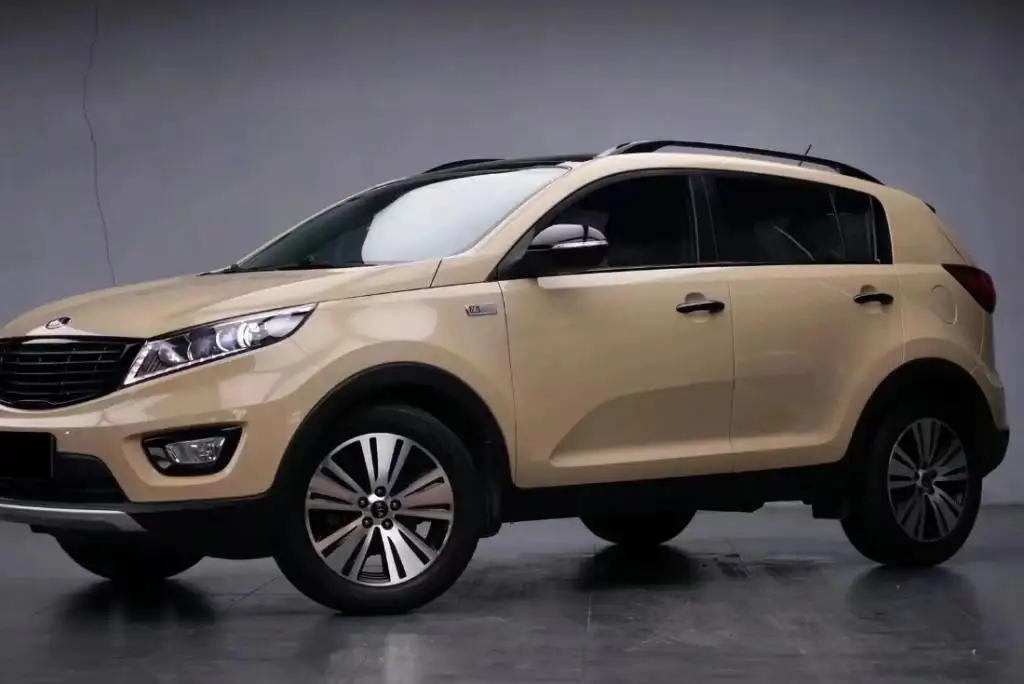
Competitive Advantages:
•Performance: Compared to competitors, HEY FILM's Product Line provides tougher and clearer films with longer protection against yellowing and keeps the protective aesthetic for longer.
•Broader Range: From TPU PPF and Color PPF to Window Film and Vinyl Wraps, Decorative Films and Building Films, HEY FILM provides a wider range of films for both Automotive and Architectural applications.
•Superior OEM/ODM: HEY FILM fulfills more customer requests for film design and production with sample/client specific requests and serves some of the top global brands with discreet OEM services.
•Sales/Production Coordinated: The dual model of a manufacturing plant located in Huizhou, and a sales office in Guangzhou streamlines logistics and offers the best customer service.
•Consistent quality and control: The outstanding quality and control of HEY FILM's Products are due to the focus of our employees on the need for a steady and consistent process and a careful inspection of every product.
•Ever Improving: Supported by extensive research and testing with the focus to constantly improve.
Final Notes
TPU Protective Film is the precursor of Luxury car paint protection and for good reason. Featuring excellent elastomeric strength and optical clarity along with self-healing and long-term anti-yellowing, modern PPF have evolved remarkably from antiquated PVC films. Year on year, with the relentless pace of innovations and market demand, TPU Protective Film stands unrivaled, maintaining that showroom quality finish.
FAQs
Q1: What is TPU Protective Film?
A: TPU protective film is a thermoplastic polyurethane clear film that is applied to the paintwork of a vehicle. It is a tough, flexible barrier that absorbs impacts and scratches.
Q2: What is the self healing technology and how does it work?
A: Minor surface scratches and swirls can be removed by the film's polymer chains. They can be excited and rearranged by heat from the sun, warm water, or an operating engine.
Q3: Does TPU PPF turn yellow?
A: Only if it is an aromatic TPU. The premium films are made from aliphatic TPU, which are resistant to yellowing for over a decade and are stable to UV light.
Q4: Is it okay to apply a ceramic coating over PPF?
A: Yes. Many PPF users do this for an added benefit of easier cleaning and increased hydrophobicity. However, the coating does not provide added protection against impacts.
Q5: What is the average length of a TPU PPF installation?
A: Around 5 to 10 years with the proper maintenance and depending on the exposure of the films. High-quality films are required for this time frame.