




Hot Tags
Beyond Heat Insulation – 5 Hidden Functions of TPU Skylight Protection
June 18, 2026


When most dealers and installers talk about TPU skylight protection—commonly known as "skylight ice armor" in the market—the conversation almost always starts and ends with heat rejection. And yes, thermal insulation is a major selling point. But if you're only promoting TPU Skylight Protection for its cooling effect, you're leaving at least 80% of its value on the table.
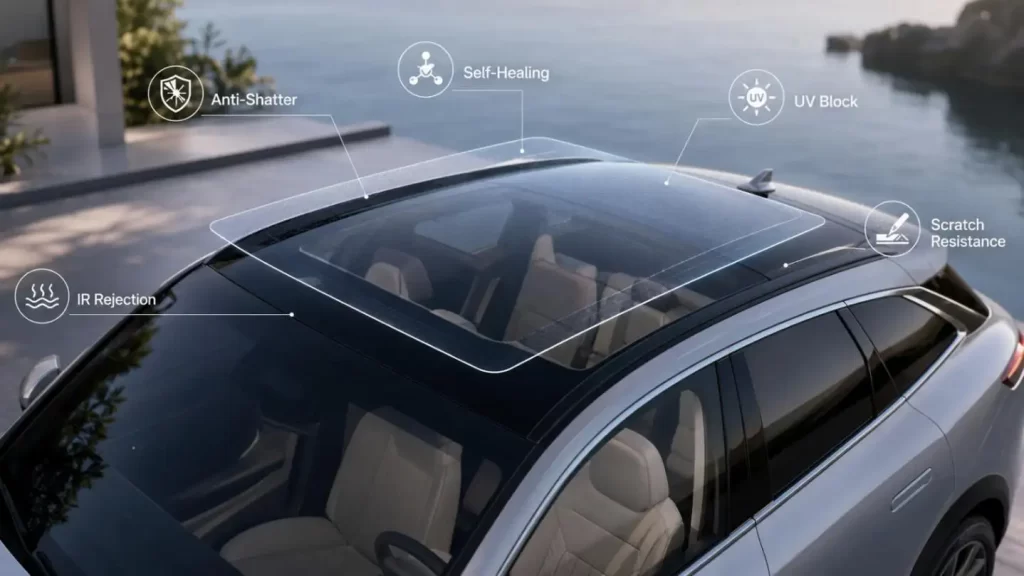
For automotive dealers looking to upsell and technicians who want to deliver genuine protection, here are the five hidden functions of TPU Skylight Protection that truly differentiate it from conventional films—and why this product deserves a permanent spot in your portfolio.
1. Anti-Shatter Protection – Your Customer's Overhead Safety Net
This is arguably the most underrated function of TPU Skylight Protection, yet it addresses one of the most serious safety concerns in modern vehicles—especially those with panoramic glass roofs.
•Standard TPU Skylight Protection films range from 7.5mil to 12mil in thickness, with premium products reaching 8mil or more. To put that in perspective: this is roughly five times thicker than conventional interior heat insulation films (which typically measure only 1.5–4mil).
•When a severe impact occurs—whether from hail, falling debris, or a road hazard—the film acts as a structural adhesive layer: it binds shattered glass fragments together, preventing them from raining down on passengers.
•This feature makes what could be a life-threatening scenario with fully panoramic roofs (that envelop most of the cabin) into just a safety-related incident.
•One of the differentiating factors of our product is the ability to prevent shattering, and it has been measured and substantiated through the JIS S 3107 test for tear strength among several other industrial tests from Japan.
•To the dealers: This is the best argument to upsell family vehicles. Use it for rideshare vehicles, as you cannot compromise on safety.
2. Invisible Shield – Self-Healing Scratch Repair
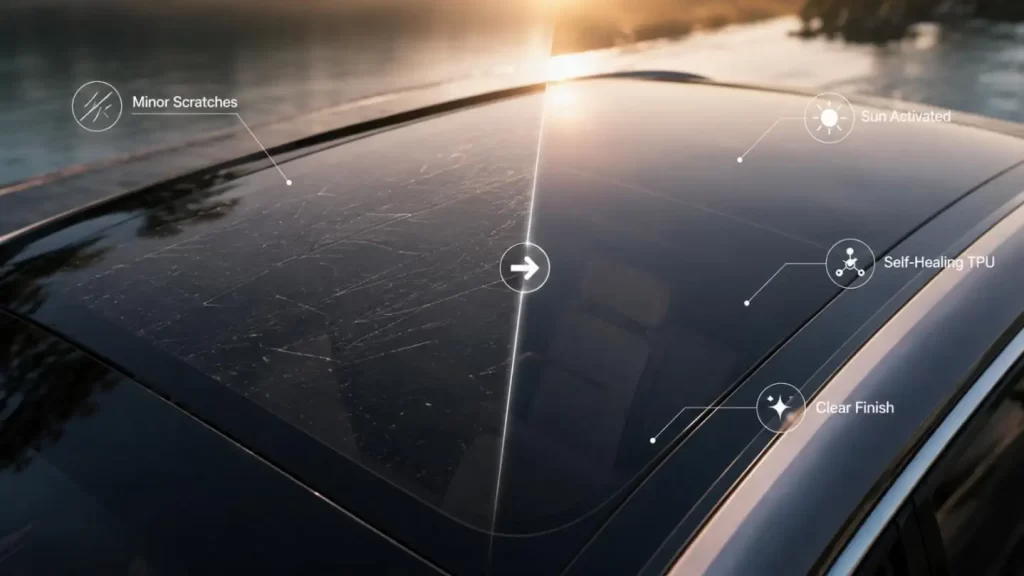
One of the great innovations that our TPU Skylight Protection has to offer is that it is a self-healing product. This can mean less warranty work for your customers and a greater use over time.
•Solar heat is the trigger to activate the self-healing. Minor swirls and scratches on the surface disappear when the product is exposed to the sun. The best part is that this product is also self-healing and requires no intervention.
•The TPU material that we use has the highest grading for yellowing resistance and will not change over time. Some films like PET scratch. TPU, with its elastic molecular structure, will not scratch and retains its memory of its surface structure.
•For the end user, this also has a clear benefit: a skylight that is crystal clear and visually remains flawless without the need of a lengthy upkeep.
•For the installers: this self-healing property also makes the film easier to work with. Minor Marks from the installer's tools will disappear after a few days.
3. UV Blockade – Protecting the Interiors and People Inside
While UV protection and heat insulation go together, UV protection provides great value on its own and is often overlooked.
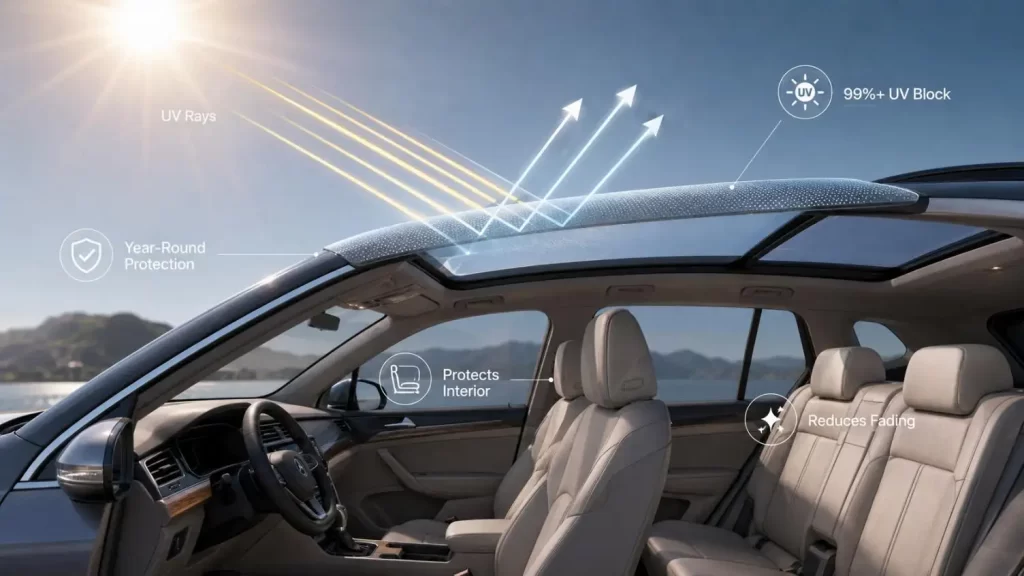
•Top-tier TPU Skylight Protection films block 99% or more of the harmful ultraviolet rays—efficiently stopping the primary contributor to interior fading, cracking and degradation.
•For vehicle interiors, this means the leather seats, dash materials and synthetic trim components retain their color and structural integrity for much longer.
•For the occupants, the health issue is just as important. Untinted glass roofs have been shown to accelerate skin aging and increase skin cancer through prolonged UV exposure.
•The performance of UV protection remains constant no matter the weather. In contrast to temperature insulation, UV protection is effective all year round.
•For dealers selling to customers in high-altitude or sun-belt regions, this function alone justifies the investment—especially for vehicles with oversized glass roofs that amplify UV penetration.
4. Infrared Heat Rejection – The Real Driver of Cabin Comfort
Heat insulation deserves its place in the conversation, but the technical nuance matters—especially when you're explaining the product to discerning customers.
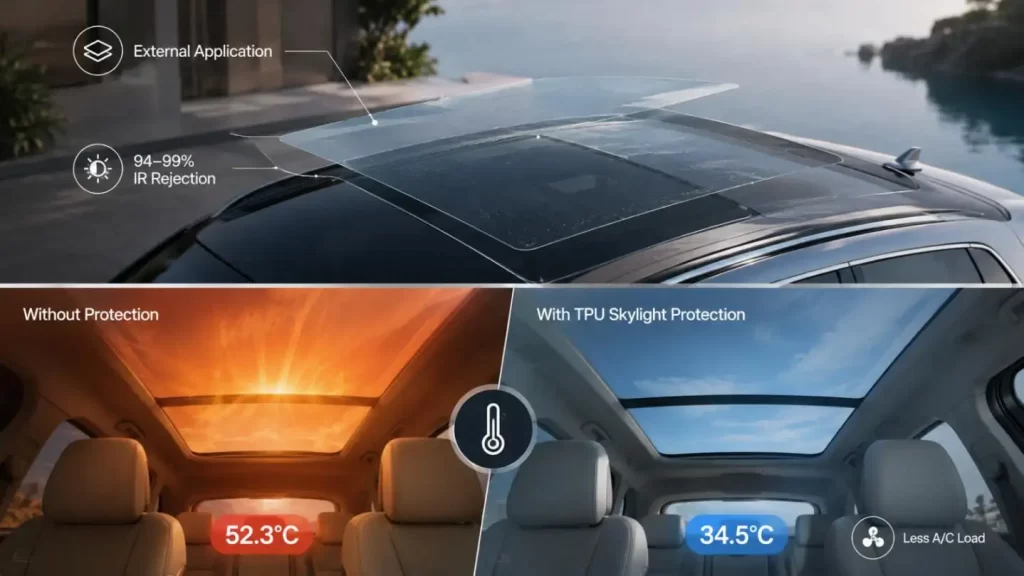
•Buildup of cabin heat is caused mainly by infrared radiation. Our premium TPU Skylight Protection films have heat rejection of between 94% and 99% infrared radiation.
•The main design difference is the "external application". Traditional protection films are applied from the inside, where the sunlight heats the glass, and the glass then radiates the heat to the cabin. TPU Skylight Protection films are applied externally and stop infrared radiation from reaching the glass.
•The difference in cooling effectiveness can be seen in actual testing. Our films have been shown to reduce the temperature of the cabin under a skylight from 52.3°C to 34.5°C, which is a reduction of 17.8°C. A reduction of between 8°C and 18°C of the overall cabin temperature has been reported repeatedly.
•For electric vehicles, it is more than just comfort. It actually impacts range. Less cabin heat means less air conditioning, which directly translates to longer driving range.
•For dealerships that sell to EV customers, this impact on driving range perfectly matches the main benefits of EVs which are efficiency and sustainability.
5. Scratch and Abrasion Resistance – Protecting the Asset
Skylights are horizontal surfaces that are actually windows. They are exposed to everything branches, bird droppings, tree sap, road debris, and automatic car wash brushes.
•The toughness of TPU aids in providing a protective layer. The film absorbs the impact and abrasion that would otherwise damage the glass.
•The film is not only radiation protector, it absorbs impacts and abrasion which would damage the glass.
•TPU Skylight Protection provides long-lasting physical protection for an average of 5-10 years with routine care, unlike ceramic coatings or sealants, which erode with time.
•For service advisors: this is the simplest, most relatable selling point for customers who park outdoors or frequently drive on highways and rural roads.
Technical Appendix: What Makes TPU Skylight Protection Different?
For installers seeking product knowledge, here is a product breakdown:
Typically, a TPU Skylight Protection Film contains five layers. The first layer is the PET protective layer which is at the top, the second layer is the functional coating and then the heat insulation layer. The fourth layer is the TPU base layer, and the last layer is the adhesive layer. The adhesive layer is supported by a release liner. Depending on how the manufacturer operates, the heat insulation layer could be placed between the adhesive layer and the TPU base layer, or between the TPU base layer and the functional coating layer.
Material quality is very important. The use of low-grade TPU or poor-grade adhesives could cause glass to crack, the adhesive to bond poorly, and/or discoloration may prematurely occur. The resistance to yellowing should be checked, and the best grade in the industry is level 5. Make sure to obtain the full product specification.
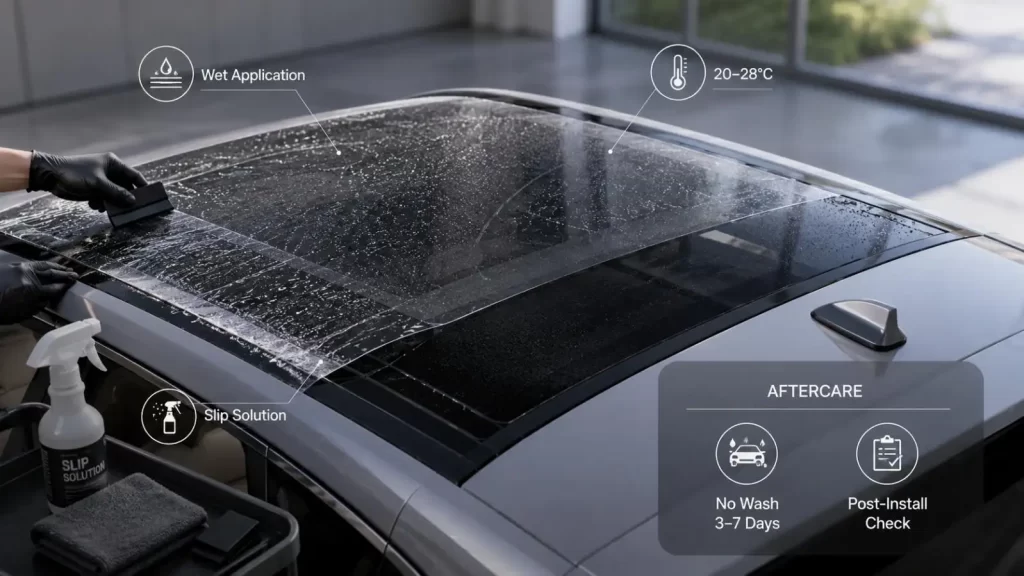
The right way to install the TPU Skylight Protection is a wet application method using a slip solution. The ambient temperature should be within the 20–28°C range. Advise customers against washing their vehicle for 3–7 days, and for edge bubbling, encourage them to return for a post-installation inspection.
Final Words
TPU Skylight Protection is a great option for safety, comfort, and preserving the value of your vehicle. The best part is that the materials HEY FILM uses are top of the line. Our films are Nano-ceramic and Sputtering films, and range from 5-85% VLT, Sputtering films, Shatter resistant, 100% UV block, Heat and Glare Reduction, with excellent optical clarity and a long lifespan. The needs of your customers are extensive, and HEY FILM is here to meet those needs. Don't sell just one product, sell the Complete solution.
FAQs
Q1: Will any signals (GPS, 5G, radio) be affected by the film?
A: No, this film is made from a metal-free TPU, and there is no possibility of signal interference, which is not the case for metallic heat rejecting films.
Q2: Will this film heal rock chips or deep scratches on the glass?
A: No. This film will only minimally improve swirl marks, and superficial scratches are healed by heat. Damaged glass or deep scratches are not healable by the film.
Q3: Can applying this TPU film cause my skylight glass to crack?
A: Only cheap poor quality films with bad adhesive and high heat absorption will stress glass. Make sure to always get a quality film, like HEY FILM, that has quality control on their thermal management.
Q4: What will daily maintenance of the film be?
A: Daily maintenance is a wash with soap and water and a soft cloth. Self-healing of scratches will be impacted by the film, so avoid abrasives or harsh chemicals or automatic brushes.
Q5: What is the added benefit of the TPU skylight film vs. standard window film, or regular window tint?
A: TPU is a 5x thicker film and is applied on the outside for protection and heat management. Traditional film only is applied on the inside and only offers reduction in UV and in glare.