




Hot Tags
Automotive Window Film: Why One Film Does Not Fit Every Car Window
August 18, 2026


If you go for a drive around a new car, you realize there's more than one type of glass.
Your main field of vision is the windshield. Mirrors and junctions are impacted by front side windows. Rear glass allows for greater privacy. A panoramic roof can become a big “solar window” that is open to the sky.
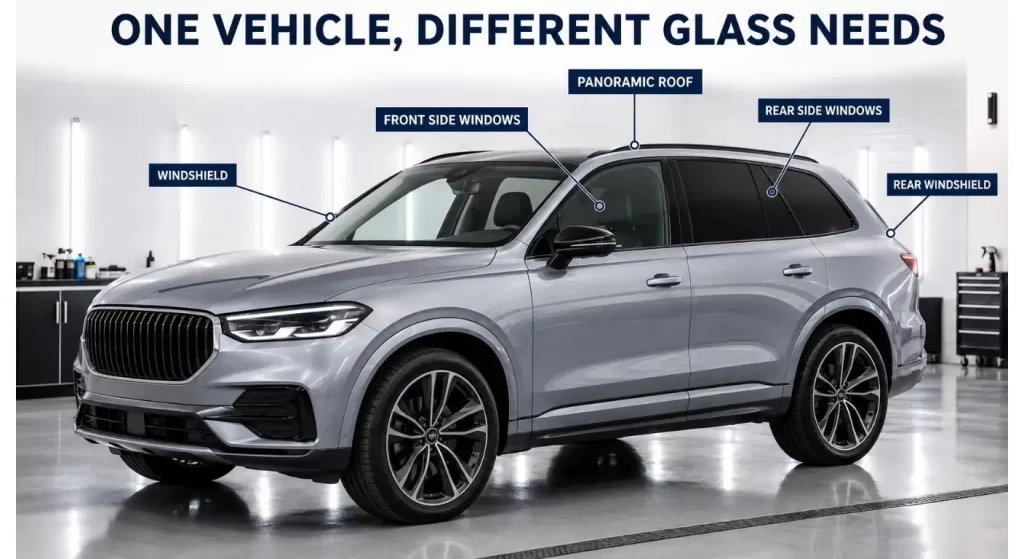
For this reason, it would be more of a lack of a specification to say, “I want 20 tint all over my car windows.”
A more convenient way of beginning is to think of the car as a number of glass areas and determine what they need.
Think Windshield First: Clarity First
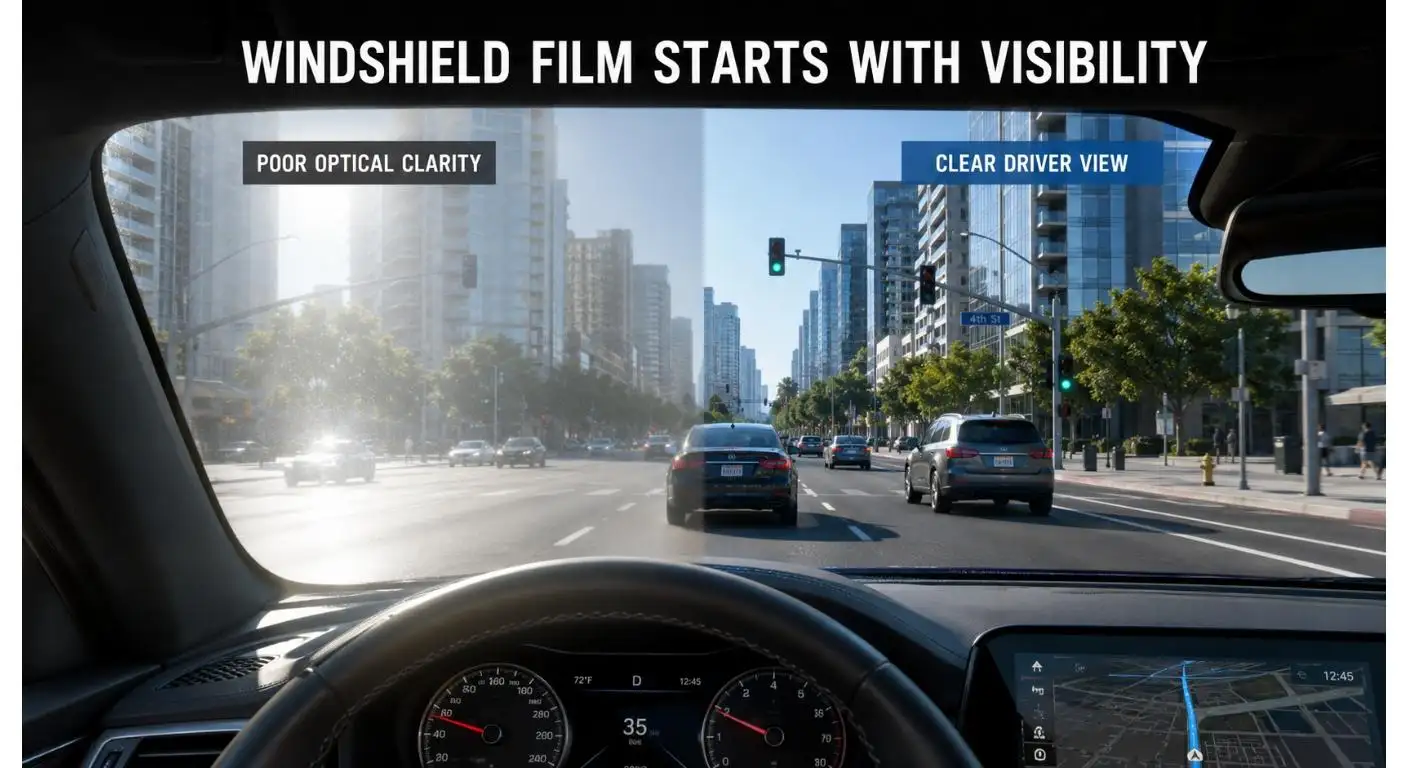
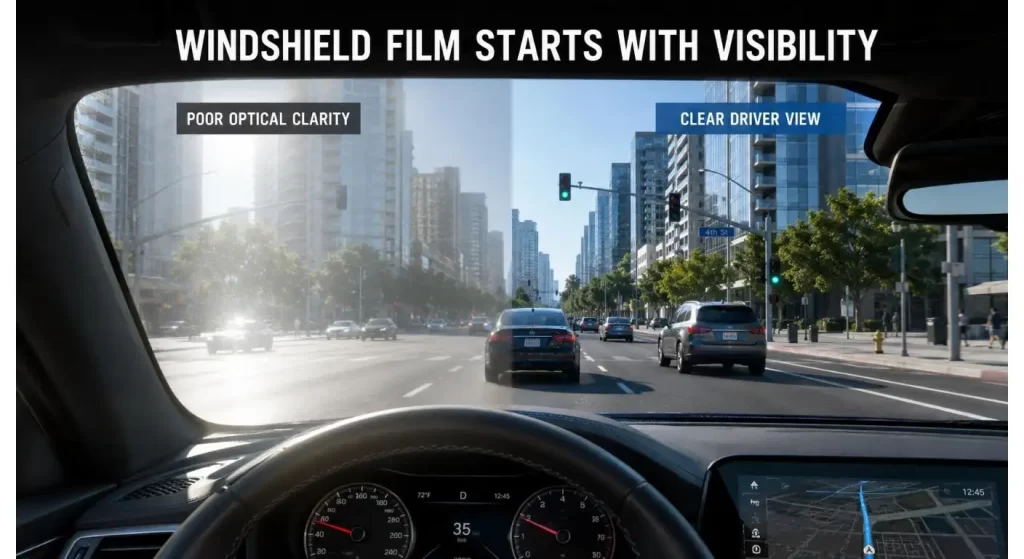
The worst place to have poor optical quality is the windshield.
Any hazing, hazing or excessive hazing is much more apparent when you are looking at it for hours. This is why it might be better to have a “high transmission” film here than just matching the darker side windows.
The various other window film options in the HEY FILM automotive window film range offer more than one shade; they offer a variety of VLT and technologies for heat, glare, UV and clarity.
When considering using tint on a windshield, always consider clear vision first and then consider how much vision tint it can add without making the window glass too dark to drive through.
Front Side Windows Have to Work With the Driver
Glass on the front side is an unusual position. You would like to reduce the sun coming through it but would want to see mirrors, cyclists, pedestrians and dark road side areas.
That means that balance is more important than maximum privacy.
What works well in the day should work well at night. Keep in mind that VLT is not only glass, it's also film...and it's the mixture of the two that create the finish.
This is where local tint regulations come into play. Determine the rules governing the place where the vehicle will be registered and driven, not the place where the photo is taken.
| Glass Zone | Main Priority | Common Concern |
| Windshield | Optical clarity | Haze or excessive darkness |
| Front Side Windows | Visibility + heat control | Mirrors and night driving |
| Rear Side Windows | Privacy + comfort | Passenger heat exposure |
| Rear Windshield | Heat + privacy | Clear rearward view |
| Panoramic Roof | Solar heat control | Overhead heat build-up |
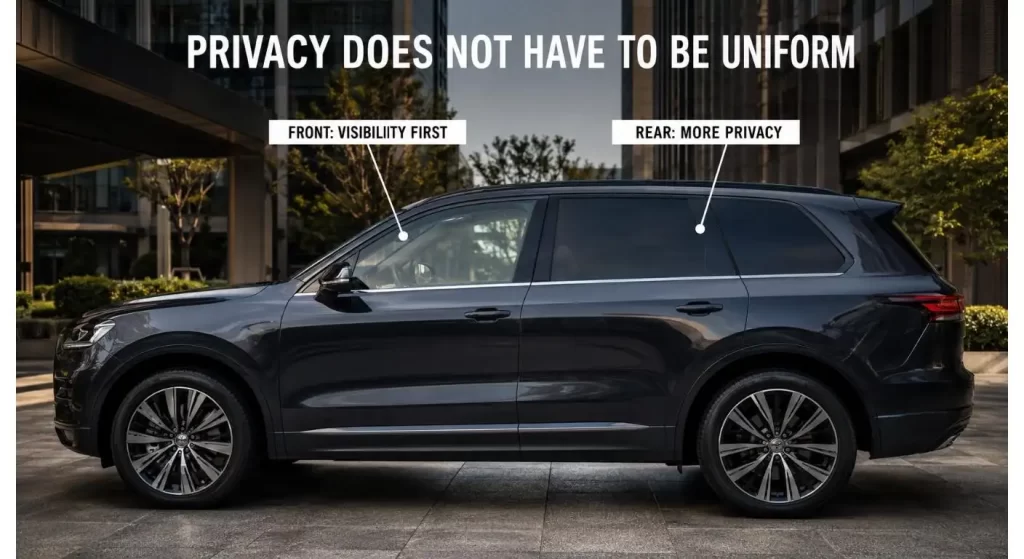
Rear Windows can do more of the Privacy Job
When owners of vehicles desire greater privacy, it's usually more convenient to find that space in the rear passenger area.
More shading for rear cabin passengers and rearward belongings may be desirable and more forward visibility may be retained. It's particularly helpful for households, SUVs and vehicles that are often loaded with gear.
The key takeaway point here is that a goal of “matching every window” may not always be the wisest.
A car can be both visually coherent and use different levels of transmission in the same car, if it's well planned.
Panoramic Roofs Merrit Their Very own Dialogue
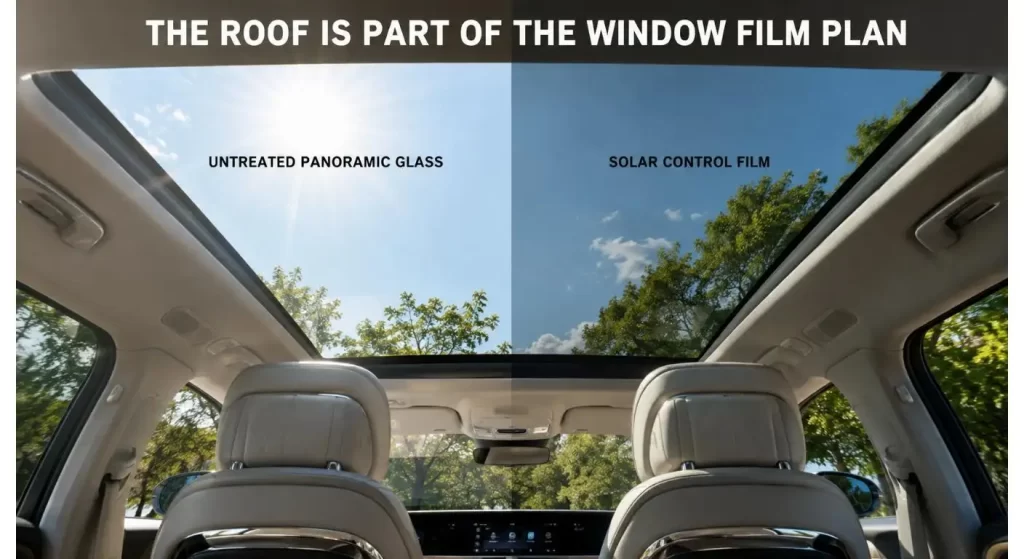
Window-film planning has been forever altered with the advent of large glass roofs.
They add light into the car but they also show a far greater horizontal expanse of glass area which receives the sun. Drivers who are 100 per cent comfortable with their side window tint may still feel heat from above during long summer journeys.
In this instance it is not so much a question of privacy as of solar management that does not compromise the cabin's lightness.
So, a high clarity heat-control option may be more appropriate than opting for the darkest film available.
A new factor added to the mix is Connected Cars.
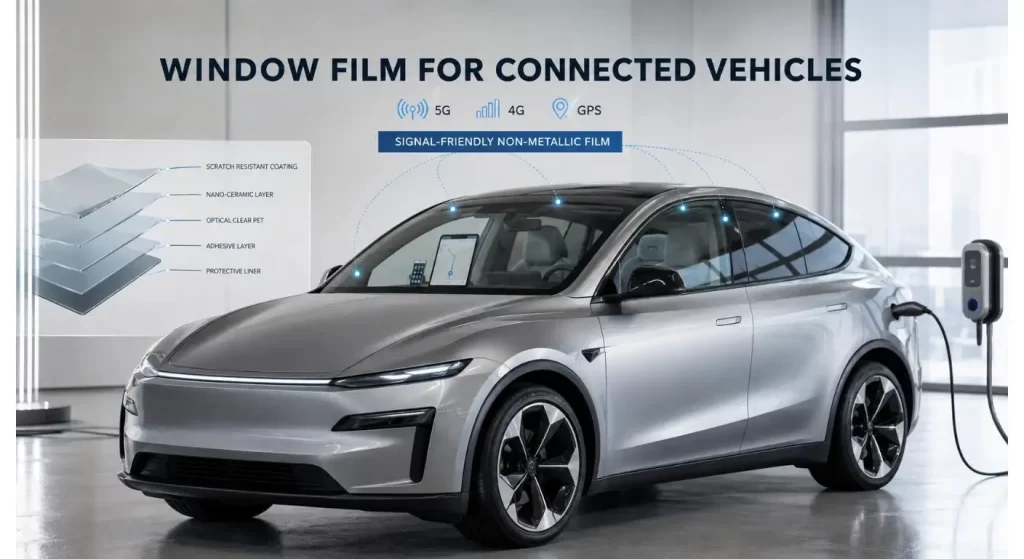
Phones, GPS and wireless connections, and vehicle telematics were seldom talked about in older tint discussions.
That's not so easy to overlook with modern cars.
Film technologies with metal content can act differently than constructions without metals in the vicinity of radio-frequency signals. HEY FILM's 5G Ultra Clear Window Film is a non-metallic nano-ceramic structure and is specifically designed for 5G, 4G and GPS signal transmission as well as heat and UV control.
Signal compatibility is a feature that should be on the specification sheet for a connected EV, fleet vehicle or for a navigation rich daily driver, not an afterthought after installation.
Different films were developed to solve different problems such as reflective and clear films.
Not all the film technologies are the same for all vehicles.
A Sputtered Window Film is a film which has a metallic reflective layer for the purpose of controlling solar radiation for applications where reflecting heat control is beneficial.
When it is more important to maintain a neutral look and feel, a clearer solution that is non-metallic may be the preference.
Both options are not necessarily “premium” simply because they seem to be more technologically advanced.
The important question is: what is the problem that the film's glass has to solve?
UV Performance is a Separate Specification.
Don't equate dark appearing glass with UV protection.
Check the actual UV-control design of the film, don't just assume it is based on appearance if you want to make sure that the interior is preserved or is going to be in the sun for a long time. The VU400 Series from HEY FILM is specially developed to incorporate high level UV filtration with visible-light transmittance.
HEY FILM also describe VLT individually in their UV Protection Car Film guide – the lower the VLT, the less visible light that can pass through; the higher the VLT the clearer the appearance.
Well, those are similar decisions, but not equal decisions.
| Priority | Specification to Ask About |
| Clear daytime view | VLT and optical clarity |
| Cabin heat | Solar / infrared control |
| Interior preservation | UV performance |
| Privacy | VLT and reflectivity |
| Connected vehicle | Signal compatibility |
| Long-term appearance | Color and optical stability |
A Good Specification Can be Undone at Any Time by the Installation.
Even for a well planned film system, installation is important.
Windshield may require high level of cleanliness and optical finishes. The rear glass has to be shaped in a controlled manner in case it is not straight. Small quarter windows and close edges can be a challenge for an installer's finishing skills.
This is why a complete car quote ought to tell more than film series and shade. Inquire about the methods and procedures for preparing and installing glass and how it will be inspected.
Once installed, don't evaluate it based only upon the shop floor.
Look forward. Check both mirrors. Rotate the head towards the back. Then view through the glass using various lighting.
That's where the effectiveness of an Auto Glass Window Film system is apparent.
Construct the Car from the Driver's seat TO the exterior.
Not all windows need to function the same.
Sensible constructions would include greater privacy behind the driver, higher solar control on the roof, and greater clarity on the front, where visibility is paramount, and more signal-friendly designs in the areas where cellphone signals may be weak.
That seems like it might be a messier option than “the same tint everywhere.”
It's generally a lot more sensible on the road.
FAQ
Q1. Is the same window film for the car to be used on all windows?
Not necessarily. There are varying requirements for windshield visibility, rear privacy and panoramic-roof heat control.
Q2. VLT in window tint on cars stands for?
VLT is short for Visible Light Transmission. The lower the VLT, the darker the finish and the higher the VLT, the more visible light it lets through.
Q3. Does a darker window film necessarily mean it's a better heat film?
No. Not only the darkness is important, but also film construction and solar-control technology are important.
Q4. Do connected cars merit non-metal window film?
Signal compatibility can be an issue; you should consider where it is applicable. Cellular, GPS and other wireless signal transmissions are possible with non-metallic films that are designed for this purpose.
Q5. So what should I choose prior to asking for a film quote for full car?
Specify the make model of the vehicle, areas of the glass to be covered, the required degree of privacy, driving conditions & priorities for heat, UV and clarity and connectivity.