




Hot Tags
Car Decorative Wrap Film: A Complete Guide from Design to Installation
September 13, 2026


Car wrap film is designed to transform a vehicle into a distinctive personal design or mobile advertisement. Unlike permanent repainting, a wrap provides the freedom to change colors, patterns, finishes, and marketing messages.
A successful wrap project begins well before the film touches the vehicle. Purpose, panel coverage, film construction, artwork, installation conditions, and future repairs should all be considered as parts of one project.
Define the Purpose Before Selecting the Film
The first step is to define the intended result. A personal vehicle may need a new color, roof stripes, a textured motif, or contrasting accents. A commercial vehicle may require logos, service information, contact details, and brand colors that remain readable while the vehicle is moving.
The main project types include:
- Full color-change wraps
- Partial body customization
- Printed commercial graphics
- Lettering and branding decals
- Temporary campaign wraps
- Protective styling with colored PPF
Full wraps provide the most complete transformation, while partial designs use less material and can emphasize specific body lines. HEY FILM automotive vinyl wraps are available in a range of colors and finishes for different customization needs.
Select Film for the Vehicle and Intended Service Life
Automotive wrap film must conform around curves, withstand outdoor exposure, and remove cleanly from suitable paint. A low-cost film may work for brief indoor use but can create problems during extended outdoor service.
Evaluate:
- Cast or calendered film construction
- Outdoor durability and UV resistance
- Film thickness and conformability
- Air-release adhesive technology
- Repositionability during installation
- Print and laminate compatibility
- Expected removal period
Cast film is generally better for long-term wraps and complex shapes because it is thin, conformable, and dimensionally stable. Calendered film can suit flatter panels, simple graphics, and shorter projects when used within its rated limits.
| Project Goal | Recommended Direction | Key Requirement |
| Temporary color change | Standard color vinyl | Clean removability |
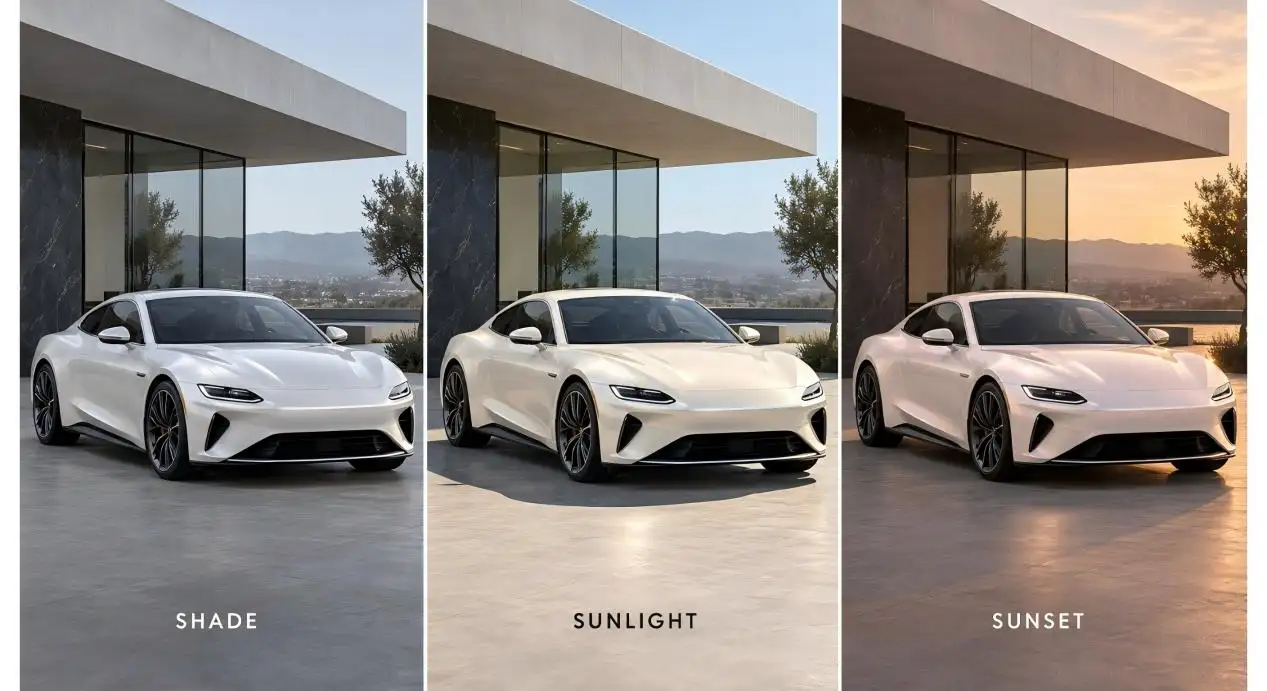
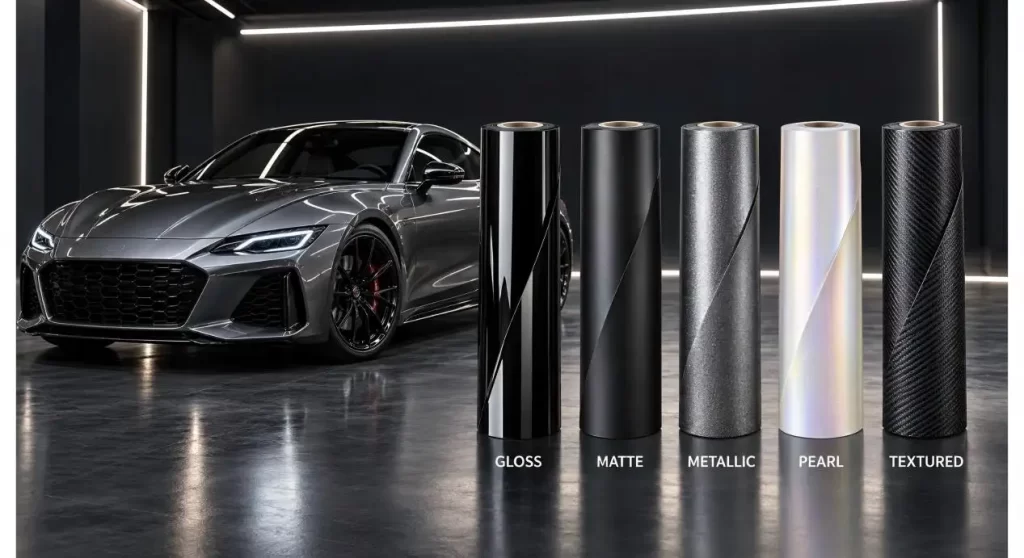
| Luxury restyling | Pearl or metallic finish | Surface consistency |
| Performance appearance | Matte or satin finish | Stretch-mark resistance |
| Business promotion | Printable wrap film | Print and laminate compatibility |
| Partial accents | Contrasting finish | Stable edge adhesion |
Choose Full, Partial, or Graphic Coverage
Coverage should reflect both visual goals and budget. A full wrap is usually required to change the main body color, and bumpers, door handles, mirrors, edges, and visible returns must be treated carefully.
A partial wrap can create effective contrast on the hood, roof, pillars, lower doors, or rear section. Printed graphics can be limited to the areas needed to communicate a message.
For commercial vehicles, prioritize visibility instead of filling every panel. A clear logo, short service description, website, and phone number are usually easier to understand than an overcrowded design. HEY FILM's business car wrap guide offers additional ideas for branding and coverage.
Build the Design Around the Vehicle
A vehicle is not a flat billboard. Door gaps, handles, wheel arches, fuel doors, windows, lights, sensors, and curved panels can interrupt text and images.
The designer should use an accurate template and confirm critical dimensions on the actual vehicle. Keep essential information away from panel edges and deep recesses. Avoid placing faces, QR codes, phone numbers, or small text across sliding doors or sharply curved areas.
Print a reduced proof to check color, spelling, image resolution, and visual hierarchy. For fleets, record approved color references and artwork versions so matching graphics can be reproduced later.
Calculate Film Requirements and Production Waste
A vehicle's visible surface area is not equal to the amount of film required. Installers need additional material for cutting, panel returns, handling, positioning, pattern alignment, testing, and possible installation errors.
Film demand depends on:
- Vehicle length and body shape
- Available roll width
- Bumper and mirror complexity
- Repeated or directional patterns
- Required overlaps and wrapped edges
- Number of future replacement sections
Using rolls from the same production batch minimizes slight variations in color and finish. Keep extra material for repairs, especially when using custom colors or printed fleet graphics.
| Order Detail | Information to Record | Purpose |
| Product series | Exact series name | Prevent material confusion |
| Color code | Manufacturer color reference | Maintain color accuracy |
| Batch number | Production lot | Support panel matching |
| Roll dimensions | Width and length | Calculate project coverage |
| Storage date | Delivery and opening dates | Control inventory rotation |
Prepare the Vehicle Properly
The condition beneath the film determines the finished surface. Rust, poorly repaired paint, damaged clear coat, dirt, wax, silicone, and tar can weaken adhesion or remain visible after wrapping.
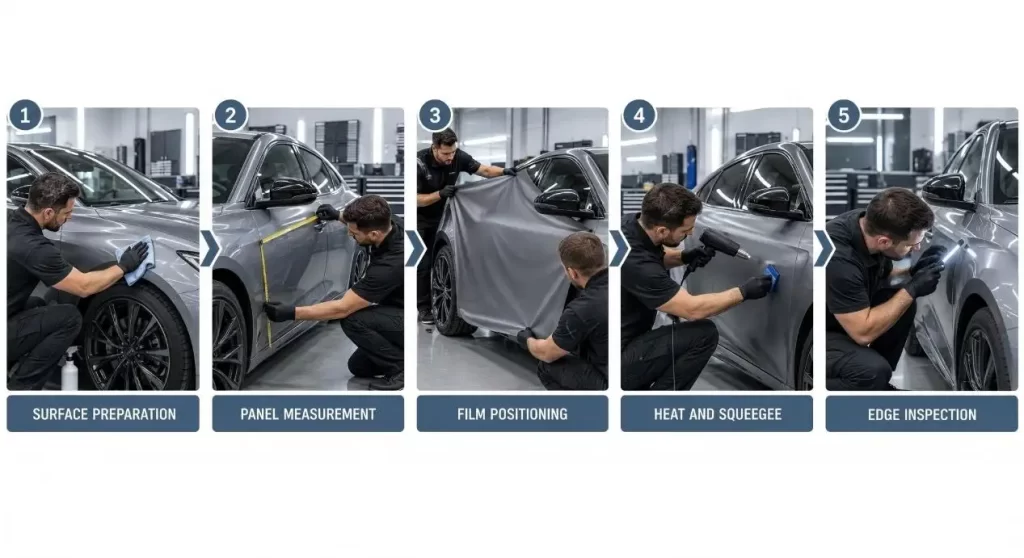
Before installation, wash, decontaminate, inspect, and dry the vehicle. Badges, lights, handles, or trim may be removed where necessary to create clean edges.
Freshly painted panels must cure fully before wrapping. Areas with peeling paint or corrosion should be repaired and stabilized rather than concealed beneath decorative film.
Installation Is a Controlled Process
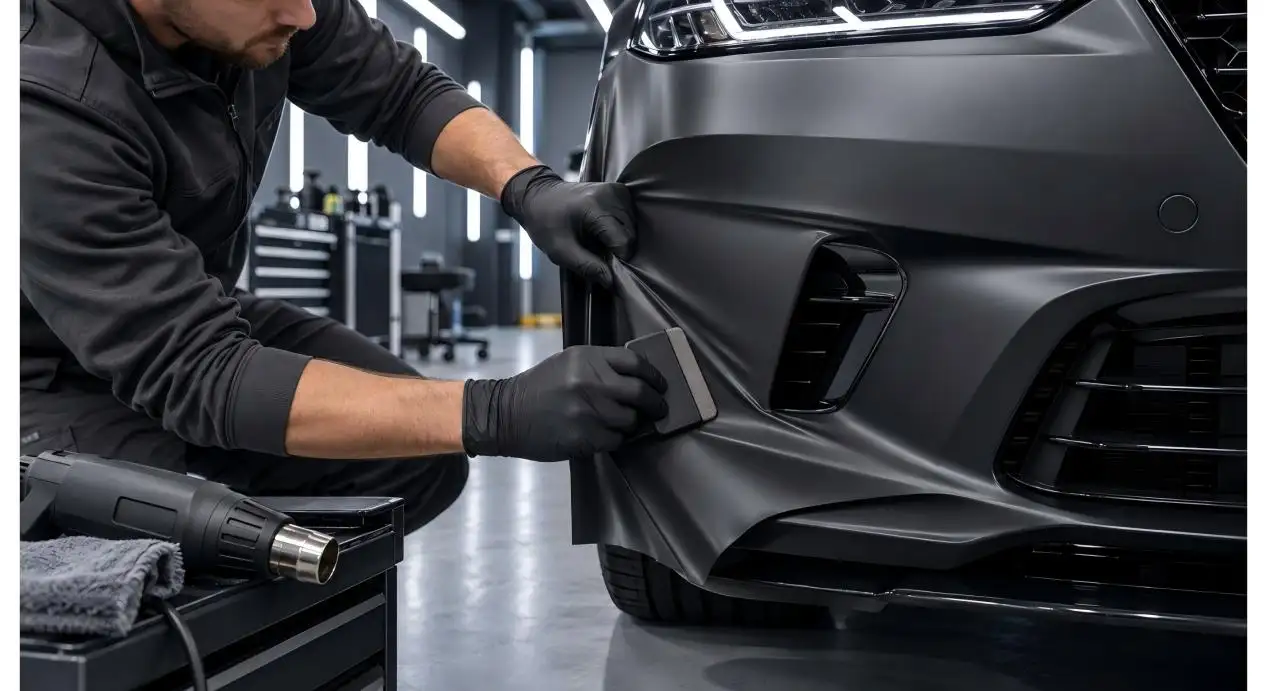
Professional installation requires suitable temperature, lighting, cleanliness, tools, and panel planning. The installer positions the film, applies controlled pressure, conforms it around curves, trims it, and post-heats critical areas as required.
Excessive stretching can thin the film, distort graphics, or weaken the adhesive. Poorly finished edges can collect dirt and lift during washing. Bumpers and deep recesses require more skill than flat doors.
HEY FILM's custom car vinyl wrap approach combines design, surface preparation, conformable material, and bubble-free application to achieve a consistent final result.
Do Not Confuse Decorative Wrap Film with PPF
Vinyl wrap is primarily intended for styling and branding. It provides light surface protection but does not match the impact resistance of thicker TPU paint protection film.
For vehicles driven on gravel or rough roads, compare PPF and vinyl wrap guide according to the required protection level. Some projects combine vinyl graphics with PPF on high-impact areas, but layer order and material compatibility must be tested first.
Maintenance and Future Panel Repairs
Clean wrapped vehicles with a mild automotive cleaner, soft wash tools, and clean microfiber towels. Avoid stiff automatic brushes, aggressive solvents, and directing pressure washers at seams or exposed edges.
Inspect edges regularly and repair lifting before contamination spreads beneath the film. Replace damaged panels using the same product code, artwork, and ideally material from the original production batch.
Remove the wrap before it becomes severely cracked or the adhesive deteriorates. Timely professional removal is generally cleaner and less stressful for the paint than removing an over-aged film.
Plan a Better Wrap Project
A successful car wrap combines a strong design, suitable material, skilled installation, and practical maintenance. Define the goal first, design around the actual vehicle, order enough material, and select an installer experienced with the required coverage and film type.
Contact HEY FILM for custom colors, distributor-supplied film, samples, or OEM/ODM wrap film development.
FAQ
Q1. Can car decorative wrap film replace repainting?
It can provide a removable color or design change, but it does not repair damaged paint. Corrosion, peeling clear coat, and major defects should be corrected before wrapping.
Q2. Is wrap film suitable for every vehicle?
It works best on smooth, sound, fully cured automotive paint. Rust, textured plastic, poor aftermarket paint, or damaged coatings may require repair or special evaluation.
Q3. How much film is needed to wrap a car?
The amount depends on vehicle size, panel complexity, pattern direction, roll width, and installation waste. Measure the actual vehicle and plan additional material before ordering.
Q4. Can individual wrapped panels be replaced?
Yes, provided the original film, batch information, color reference, or artwork is available. Older surrounding panels may differ slightly in color from newly installed film.
Q5. Does a car wrap need professional installation?
Professional installation is strongly recommended for full wraps, printed graphics, bumpers, and deep contours. Incorrect stretching or trimming can cause distortion, lifting, and possible paint damage.