




Hot Tags
Glossy Car Decorative Film: How to Achieve a Paint-Like Finish
September 12, 2026


Glossy car decorative film is suitable for drivers who want more than a basic color change. When material quality, color, surface preparation, and installation work together, the finished vehicle can display deep reflections and vibrant color similar to fresh automotive paint.
However, not every product labeled "high gloss" produces the same result. Film finish, topcoat clarity, adhesive texture, stretch control, and the condition of the underlying paint determine whether the surface looks refined or visibly wrapped.
Why Does Glossy Film Make a Car Look Shiny?
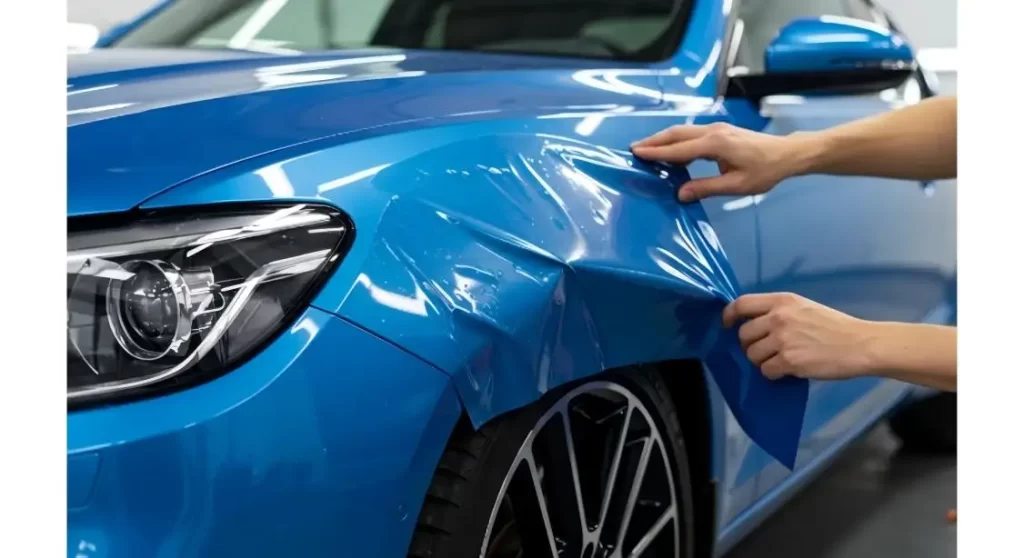
A glossy finish reflects light in a concentrated direction. The sharper and less distorted the reflection, the smoother and more paint-like the surface appears.
Four elements have a major effect on this result:
- Clarity and smoothness of the top layer
- Consistency of the colored film beneath it
- Texture created by the adhesive system
- Condition of the original painted surface
Dark colors can create deep reflections, while bright red, blue, green, and metallic finishes emphasize color depth and saturation. HEY FILM's Gloss Black Colored PPF provides a useful example of a deep-black, high-reflection vehicle finish.
| Gloss Finish | Visual Effect | Best Application |
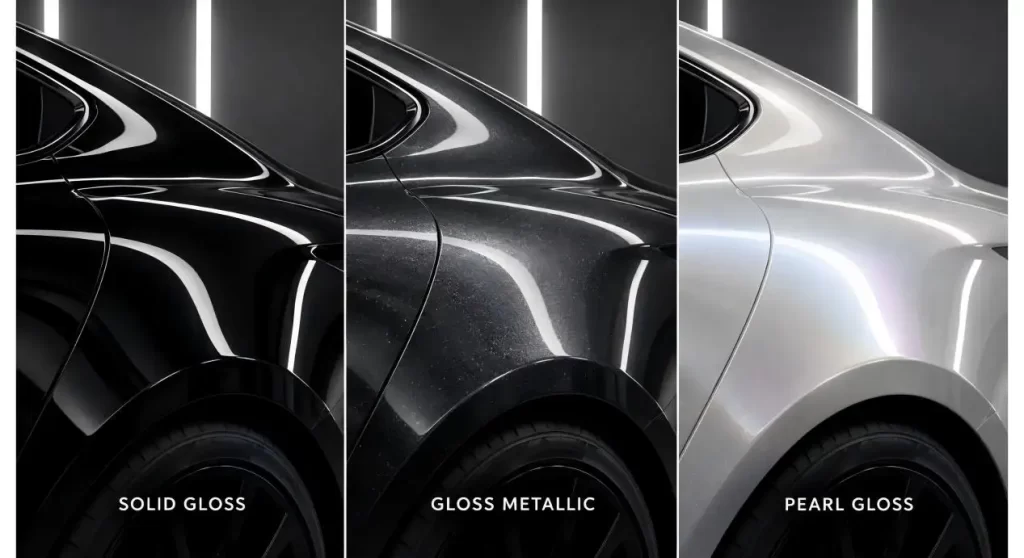
| Solid gloss | Clean paint-like color | Daily-use vehicles |
| Metallic gloss | Fine reflective particles | Sports sedans |
| Pearl gloss | Soft multi-tone shimmer | Luxury vehicles |
| High gloss black | Deep mirror-like contrast | Roofs, trim and full wraps |
| Color-shift gloss | Changes under viewing angles | Show and promotional cars |
Glossy Vinyl or Glossy Colored PPF?
Glossy vinyl wrap and glossy colored PPF can both change a vehicle's color, but they are designed for different priorities.
Glossy automotive vinyl is generally chosen for customization, broad color selection, printable graphics, and shorter-term style changes. It is relatively thin and conforms easily to many vehicle shapes, but its primary purpose is appearance.
Glossy colored PPF uses thicker, elastic TPU. It combines color change with greater resistance to stone chips, stains, road debris, and scratches. Some products also include hydrophobic and heat-responsive topcoats.
Vinyl may suit marketing vehicles or designs that require multiple colors and graphics. Colored PPF is better suited to premium vehicles that require both a high-quality finish and stronger paint protection.
Do Not Choose Based on a Gloss Rating Alone
A single gloss number does not describe the complete appearance. Reflection clarity, haze, orange peel, color saturation, and overall surface consistency are equally important.
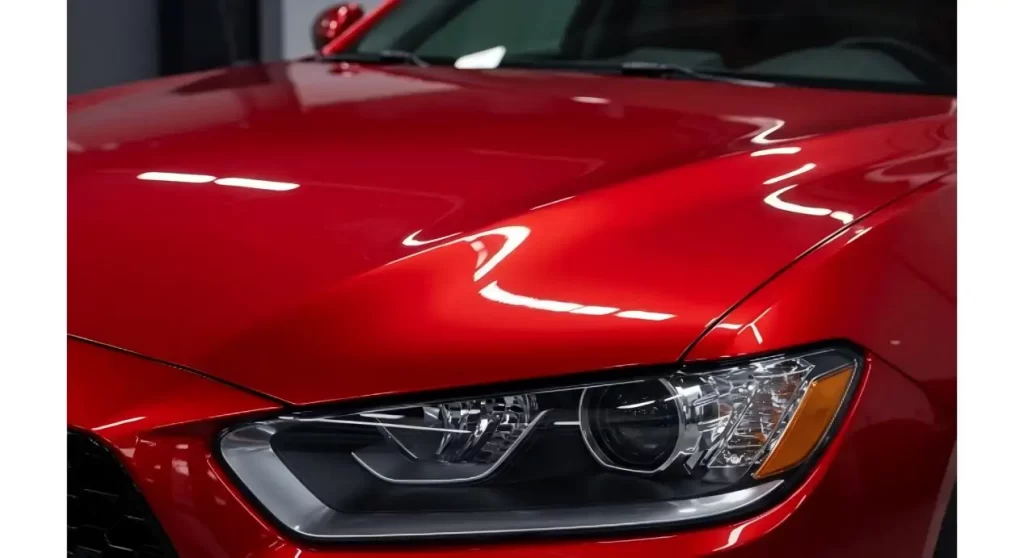
Orange peel is a fine surface texture that distorts reflected images. It may originate in the film, adhesive, or original paint. A film can measure as highly glossy while still producing a less refined reflection.
Inspect a large installed sample rather than relying on a small swatch. Observe straight lines, overhead lights, and surrounding objects reflected in the panel. Clear, continuous reflections generally indicate a smoother surface.
Light Changes the Appearance of Color
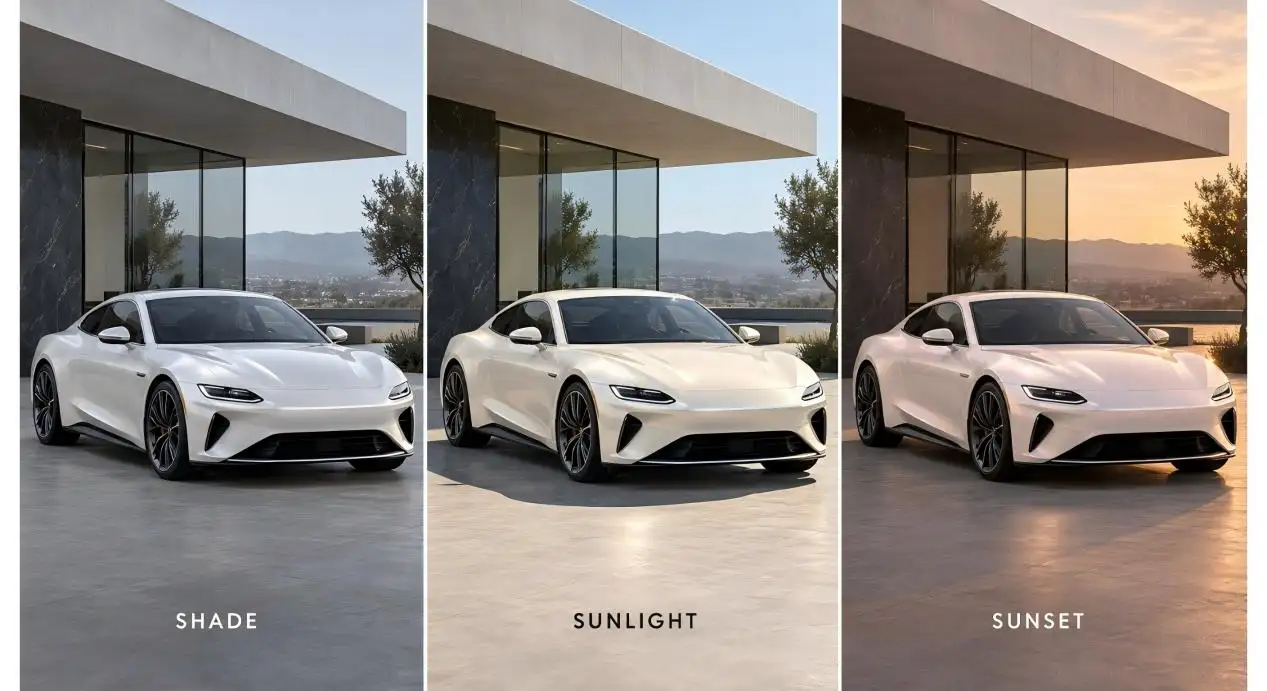
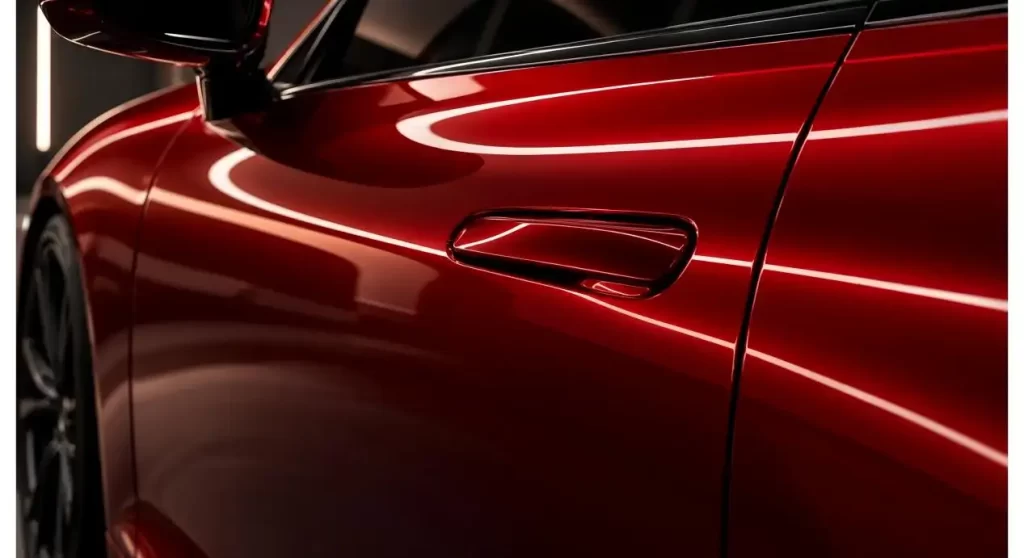
Glossy surfaces are highly responsive to their surroundings. A color that appears almost black indoors may reveal blue, green, purple, or red undertones in direct sunlight.
Metallic and pearlescent particles reflect light at different angles, adding further variation. The same film may appear brighter on a curved fender than on a flat panel.
Evaluate samples under:
- Direct daylight
- Overcast or shaded conditions
- Warm indoor lighting
- Cool LED lighting
- Nighttime street lighting
Actual colored PPF and vehicle wrap installations provide a more reliable reference than digitally generated color charts alone.
Proper Surface Preparation Is Essential
High-gloss film cannot conceal every paint defect. Scratches, dust, chipped paint, adhesive residue, and poorly repaired panels may remain visible and can appear even more obvious beneath a reflective finish.
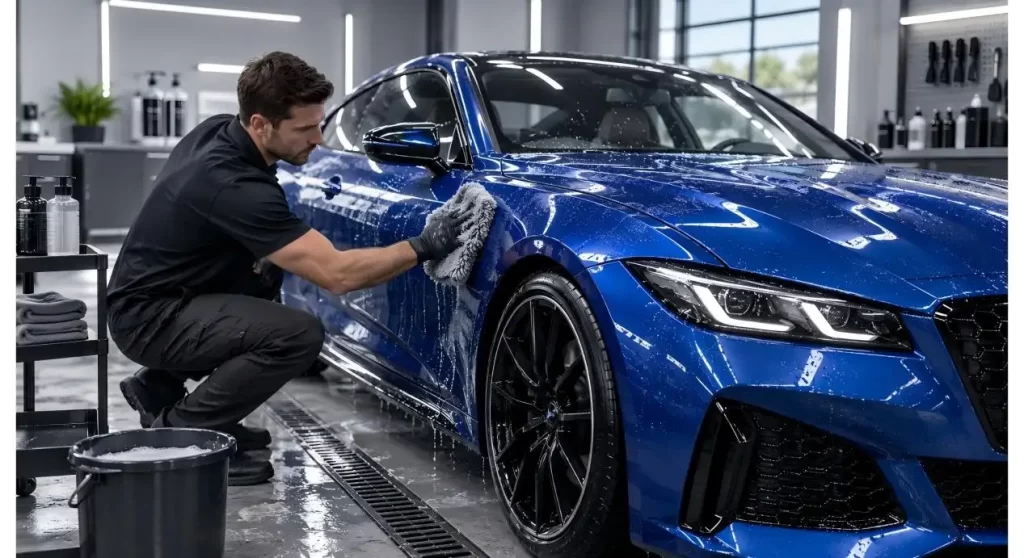
Before installation, the vehicle should be washed, decontaminated, inspected, and corrected where necessary. Wax, silicone, polishing oil, or ceramic-coating residue may interfere with adhesion if not removed properly.
Repainted panels must be fully cured and tested for adhesion. Film should not be used to hold down peeling clear coat or unstable paint.
Installation Must Preserve the Gloss
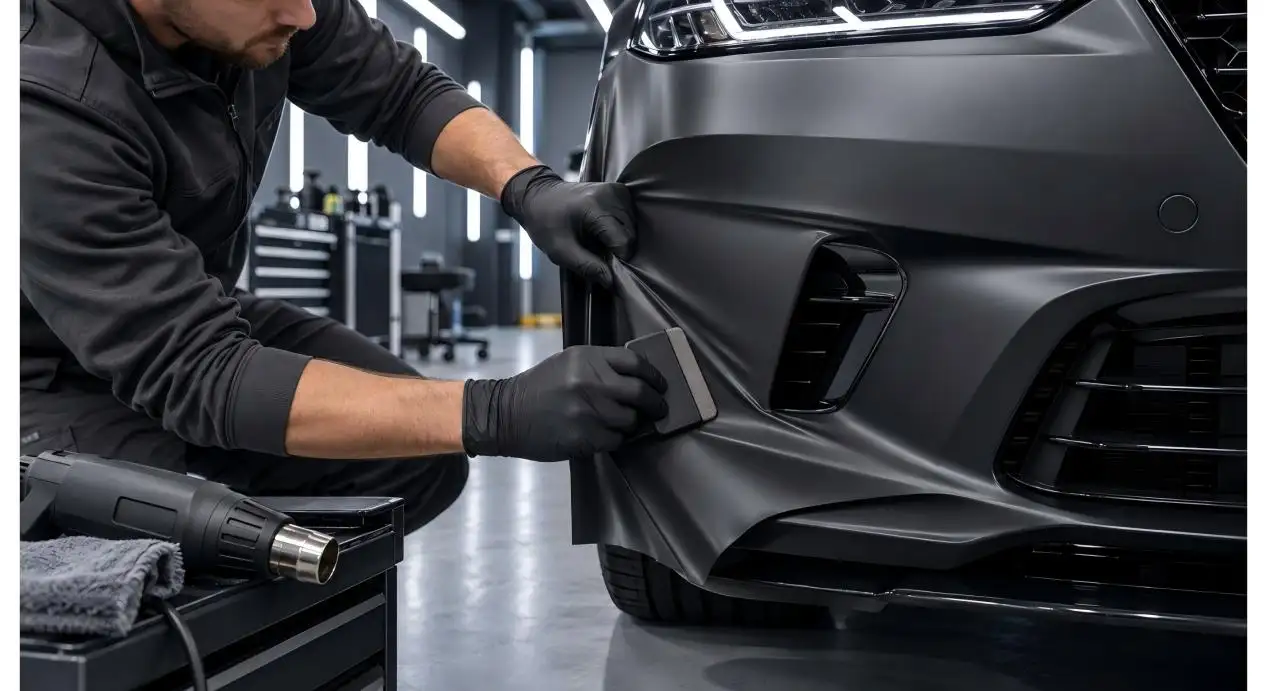
Heat and controlled tension allow film to conform around curves, but excessive stretching can reduce color density and create inconsistent reflections. Broad panels should be installed with balanced tension, while edges and recesses should be post-heated according to the material manufacturer's instructions.
Key quality indicators include:
- Large, clean reflections with straight visual lines
- No trapped dust, water, or bubbles
- Uniform color between adjacent panels
- Neatly wrapped edges without lifting
- Minimal visible seams
- Accurate alignment of metallic or directional effects
Black and other dark films reveal surface defects easily, making professional installation particularly important.
How to Protect a High-Gloss Surface
Wash glossy film with a pH-neutral automotive cleaner and soft wash tools. Remove bird droppings, insects, tree sap, fuel, and road tar promptly because they may stain or etch the topcoat.
Avoid stiff brushes and harsh chemicals. Some glossy vinyl films allow limited correction, while coated TPU films may be treated only with products approved for PPF. Always follow the manufacturer's care instructions.
Hydrophobic protection can make washing easier, but not every film is compatible with every coating. Test the coating on a sample and confirm that it will not affect gloss, flexibility, or warranty coverage.
When Should Glossy Film Be Replaced?
Normal aging may cause reduced gloss, color change, embedded contamination, cracked edges, adhesion loss, or reduced surface recovery. Horizontal panels often deteriorate faster because they receive more direct sunlight and environmental deposits.
If extensive cracking or adhesive deterioration appears, removal should not be delayed. Recording the film code, batch number, and installation date makes future panel replacement easier.
HEY FILM can provide information about TPU construction, topcoat, adhesive, and optical performance. Technical data should always be considered together with physical samples.
Selecting the Right Glossy Car Decorative Film
Choose glossy vinyl when affordability, graphics, and frequent style changes are the priority. Choose glossy colored PPF when enhanced protection and a premium color change are required together.
Request technical data, full-panel samples, warranty terms, and examples of successful installations. Contact HEY FILM for custom colors, distributor supply, samples, or OEM/ODM film development.
| Inspection Area | Good Result | Defect to Watch For |
| Large door panel | Smooth reflections | Waves or adhesive lines |
| Bumper curve | Even gloss | Stretch marks |
| Panel joint | Consistent color | Shade mismatch |
| Recess | Secure adhesion | Film lifting back |
| Trim edge | Cleanly finished | Exposed or jagged cuts |
FAQ
Q1. Can glossy car film look like real paint?
A high-quality film can achieve a paint-like finish, especially when installed on smooth, well-prepared panels. Final reflection quality still depends on material texture and workmanship.
Q2. Can glossy film hide scratches?
It may make very fine marks less visible, but deeper scratches, chips, and dents can remain noticeable. Paint correction should be completed before installation when necessary.
Q3. Does glossy PPF have self-healing properties?
Some TPU PPF can reduce light swirl marks when exposed to controlled heat. Deep cuts that penetrate the film will not self-heal.
Q4. Can glossy decorative film be polished?
Some products allow limited correction using approved methods, but aggressive polishing can damage the topcoat. Check the film manufacturer's instructions before using compounds or machines.
Q5. Which colors create the strongest glossy effect?
Black and other dark colors generally create the deepest reflections, but they also reveal dust and surface defects. Bright and metallic colors produce a more dynamic appearance under changing light.