




Hot Tags
Car Paint vs Vinyl Wrap Pros and Cons: Which Fits the Way You Own Your Car?
August 16, 2026


The typical Car Paint vs Vinyl Wrap Pros and Cons begins with the cost and culminates with durability. That's not the more helpful question, however, which would be, how permanent do you want this decision to be?
The paint is "on" the vehicle. Vinyl is placed on top of the old finish, and is also removable. This difference will impact nearly every aspect of what comes after it — the colors you choose, repairs, and selling on.
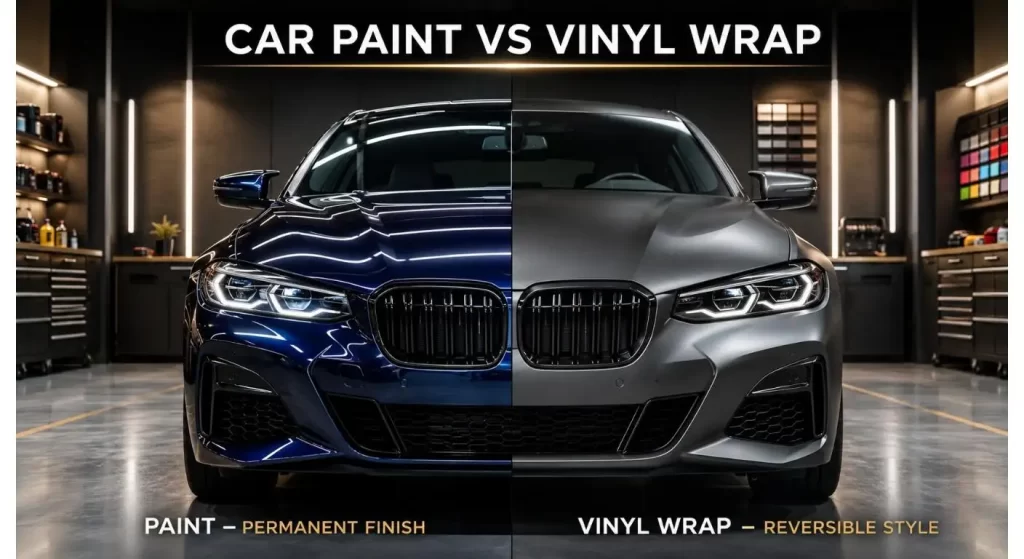
If you're still in the midst of sorting out the fundamental technologies, then this vinyl wrap car paint guide provides a helpful beginning. When both choices feel like they're a possibility, the tougher hard choice kicks in.
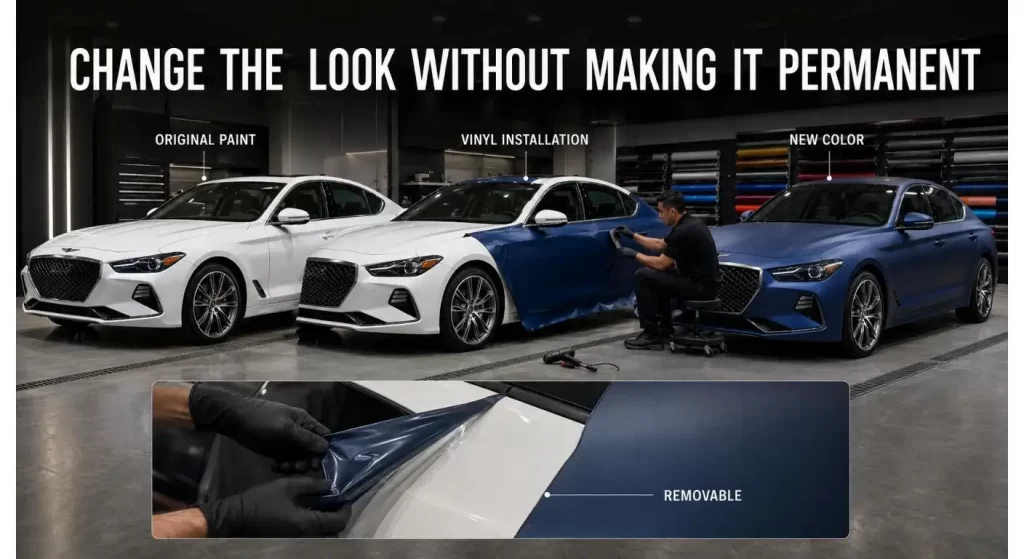
When you know you're likely to change your mind, vinyl wrap is the better choice.
This is likely to be one of the most significant pros of vinyl.
Without changing the factory finish, a gloss black car can have a satin gray and/or metallic green (or much more!) finish. This makes wrap an appealing option for enthusiasts, leased cars, promotional vehicles and car owners who don't expect the same appearance to last for a decade.
HEY FILM's car color change wrap is a guide into the latest color wrap finishes from nonflashy matte neutrals to metallic and color changing finishes.
The flip side is just as simple: wrap is a material for surfaces that has a service life. All of these factors affect the graceful aging of it: exposure, washing habits, quality of installation and horizontal panels.
If you know you want one of the permanent colors, reversibility isn't going to be a big deal to you.
When the Finish is in Need of Rebuilding, Paint Wins.
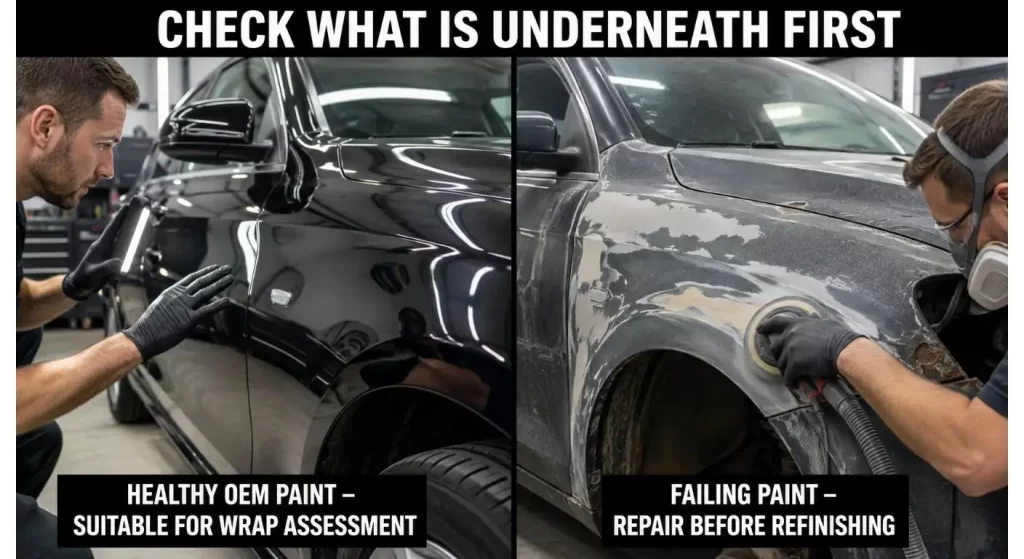
Vinyl wrap requires an acceptable substrate.
Covering old paint will not cure paint problems if the paint is peeling, is heavily oxidized, is rusting or in poor repair. On unstable surfaces adhesion may also be unpredictable.
This is where repainting is an edge. Damaged surfaces can be repaired and then prepared and rebuilt properly before applying the final color and clear coat by using proper refinishing techniques.
This difference is not recognized when wrapping is used as an alternative repair technique. It isn't.
Wrap modifies the surface that you're viewing. Behind painted can regenerate surface.
What Does 'Better' Mean?
A good paint job can provide a body panel with glacial levels of shine and the uniformity that many buyers look for in a painted body panel. It's especially convincing if the door jambs, edges of the panels and all hidden parts have been refinished and the colour scheme changed.
Vinyl is of another type—strong: variety.
Without committing the body to that matte, satin, metallic, textured or unusual color, often other matte, satin, metallic, textured or unusual finishes can be achieved. If you don't need absolute permanence, but instead want to play around with visual effects, then the wrap has an obvious edge.
If you're looking to compare how each finish will age, HEY FILM's vinyl wrap vs auto paint durability guide will take a closer look at weather exposure and longevity in terms of appearance.
| Your Priority | Option Worth Considering |
| Temporary color change | Vinyl Wrap |
| Factory paint preservation | Vinyl Wrap |
| Frequent style changes | Vinyl Wrap |
| Repair failing paint | Repaint |
| Permanent color change | Repaint |
| Unusual matte/texture finish | Vinyl Wrap |
| Bodywork already required | Repaint |
Feel Very Different repairs.
Imagine a banged up bumper on one door.
Depending on the damage, the repair can be done with paint and may include sanding, colour matching and spraying and blending into surrounding areas.
If the damage is to only one panel, vinyl allows the panel to be stripped and rewrapped sometimes without the need to replace the entire vehicle wrap. There's a problem: It's not always easy to find a perfect match with an older wrap and a newer piece since the installed wrap has already been subjected to the effects of sunlight and weather.
Both methods are not economical ways to eradicate body damage.
The only difference is in the way of the repair.
New Coat of Paint Shifts the Vote
A clean factory finish may be a consideration before sanding it down and permanently changing the colour.
Vinyl has an obvious advantage for owners who wish to maintain this basic finish; the original paint is still under the vinyl. In HEY FILM's overall discussion of the distinction between car paint and vinyl wrap, the preservation aspect is also highlighted.
Wrap cannot be mistaken for impact protection, though.
Vinyl and Paint Protection Film can aid with light scuffs and environmental exposure, respectively, with Paint Protection Film being specifically designed for the strong paint defense. It's explained more in-depth in the Paint Protection Film vs Vinyl Wrap comparison from the company.
When the primary consideration is rock-chip protection, it's no longer a wrap vs. paint argument.
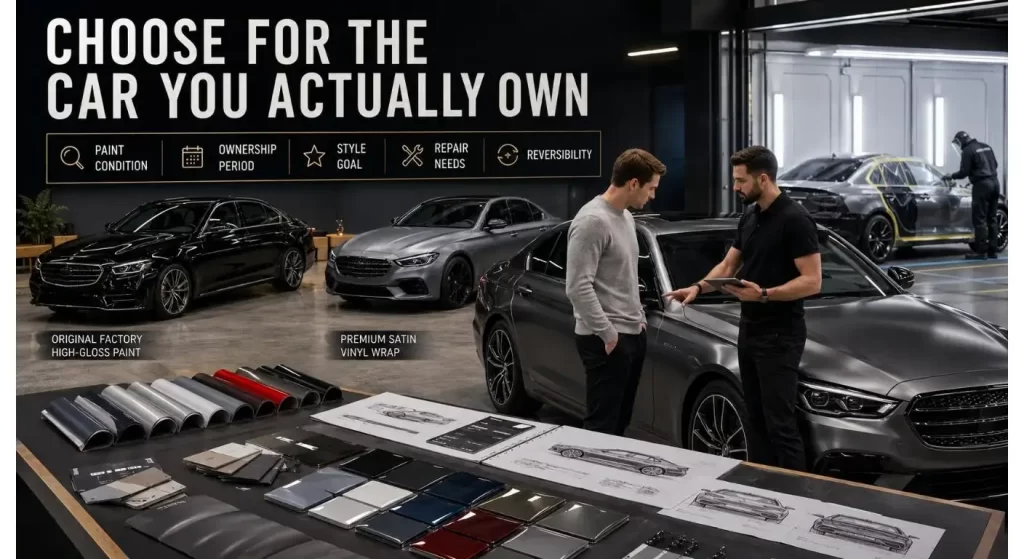
Cost should be determined along the lines of the ownership period.
A lower up-front price quote won't necessarily result in reduced ownership expenses.
Inquire about the length of time you plan to keep the car.
For a short term colour change, wraps can be applied to a vehicle, which is in excellent condition, to avoid the permanent repainting process. In a much longer ownership period replacement cycles and aging film need to be taken into account.
Typically, paint requires more time and effort on surface preparation and refinishing, but when done properly, it should be a long-term component of the vehicle.
This comparison is explored from an investment standpoint in the HEY FILM's article about the cost of vinyl wrap vs car paint.
Before You Choose: Five Questions:
| Ask Yourself | Why It Matters |
| Is the original paint healthy? | Wrap needs a stable surface |
| How long will I keep the car? | Changes the cost logic |
| Will I want another color later? | Favors reversibility |
| Does bodywork need repair first? | May favor repainting |
| Is protection or styling the priority? | May change the product choice |
Not all cars have a winner!
Vinyl wrap is hard to overlook for a healthy factory-colored automobile when an owner desires to make a large, but reversible, transformation.
If your car's paint is already in poor condition, and you must have body preparation for your car anyway, then repainting can be the more sensible option.
Sure, if you are just as into the factory color as much as you are into the stone chips, neither side of the wrap versus paint debate really addresses the issue—PPF might need its own debate.
That is the reason for working with the car that is already in your garage, rather than someone else's before and after photo.
FAQ
Q1. Vinyl wrap vs car paint?
Not universally. Wrap is better if you want to change up the styles and paint is good if you are looking to restore the existing surface or keep your new colour permanently.
Q2. Is it okay to use vinyl wrap over existing paint?
It is best to use professional installation and removal over a good factory paint. Peeling or less than satisfactory paint should be given additional evaluation prior to wrapping.
Q3. Is paint covered with vinyl wrap protected?
It offers some protection from daily wear and tear and scuffs, but should not be regarded as an alternative to an appropriate PPF in response to more significant road impacts.
Q4. A car with a coat of paint on it is better repainted or not?
It could be when the old finish is peeling, corroded or when there is need for extensive body preparation. Vinyl cannot be used to cover up paint that is in poor condition.
Q5. If I may, which is better if I get to sell the car later?
A reversible wrap may be helpful if it is important to maintain a good original finish. The condition and installation quality, and the way the vehicle is maintained is still important.