




Hot Tags
Heat Reduction Window Film: How It Improves Vehicle Comfort and Interior Protection
August 12, 2026


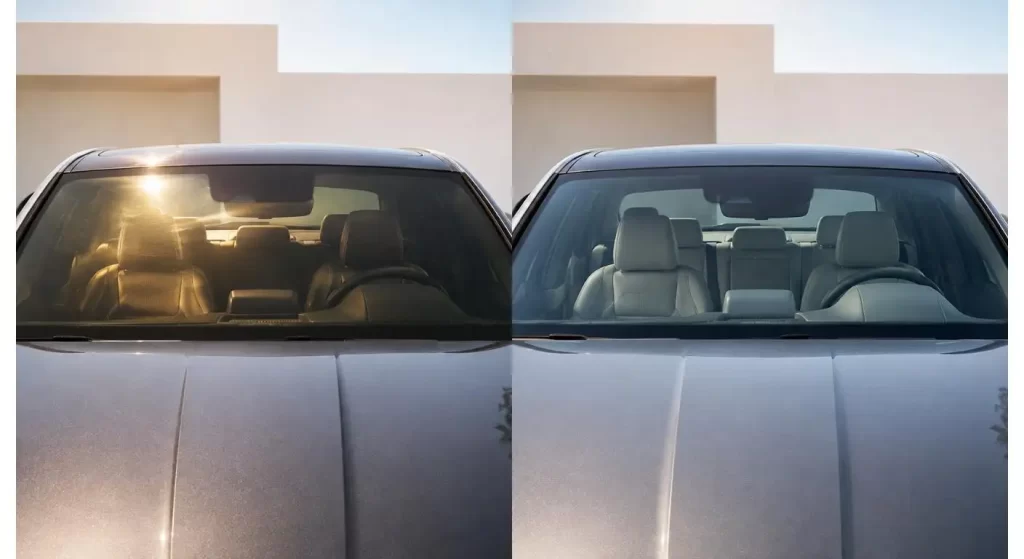
Many vehicle owners face the same issue during the summer driving season – the inside of their vehicles gets too hot after not that long in direct sunlight.
A traditional window tint may make the car look better but today window tint is about a practical need – to minimize solar heat transmittance through the window to make the car more comfortable and less hot to drive.
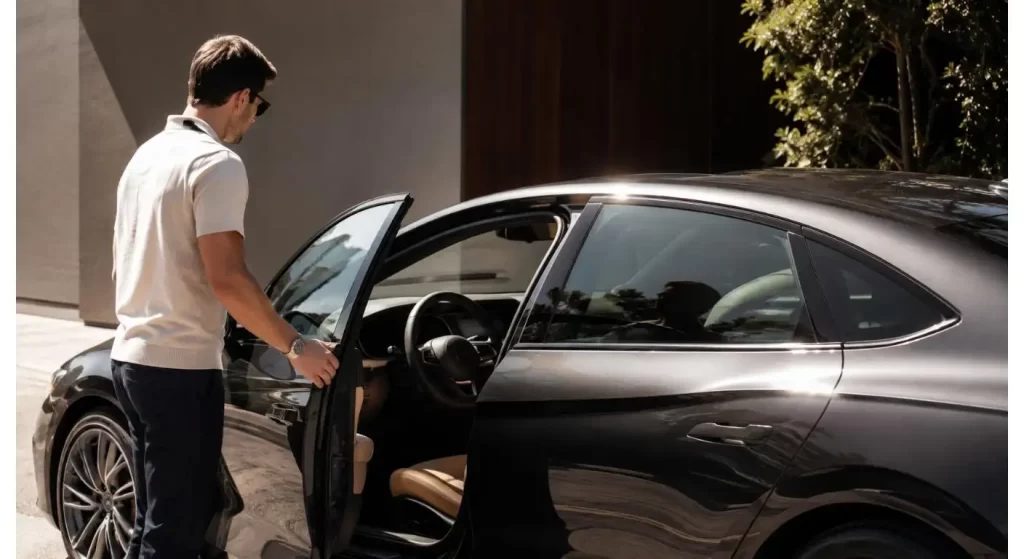
Heat control is now a key consideration in the protection and interior maintenance of commuters, luxury car owners and drivers in hot climates.
Modern vehicles are increasingly equipped with a variety of heat reduction window film options.
Heat reduction window film is important for today's vehicles.
When the glass of a vehicle is exposed to the sun, it will heat up inside the vehicle causing uncomfortable driving conditions.
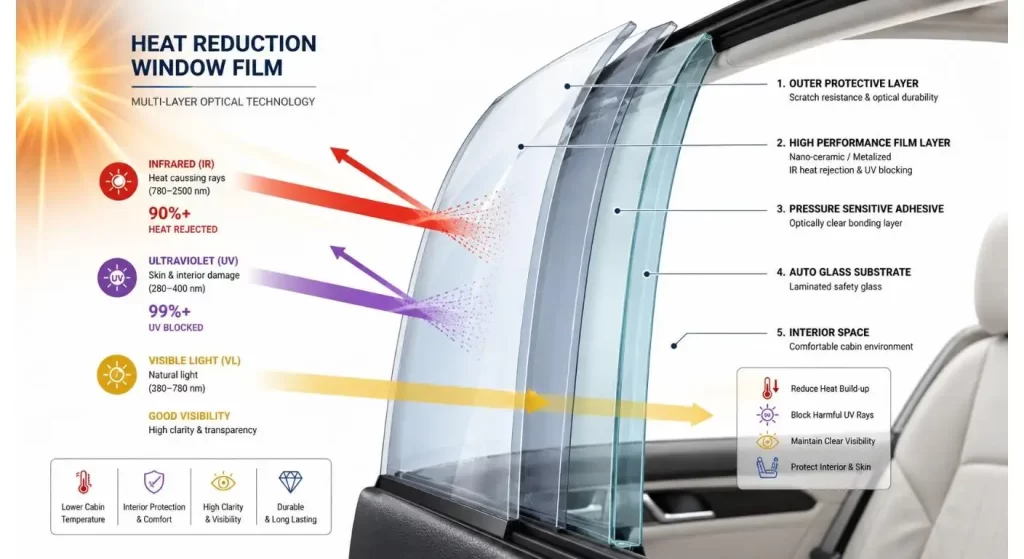
The main purpose of heat reduction window film is to control the solar energy using the advanced film structures.
The key advantages are:
- Minimising infrared heat transfer
- Intercepting damaging UV rays and
- Improving cabin comfort
- Protecting interior materials
High-performance heat reduction films are not like simple dark window film, which only alters the appearance of vehicle windows; instead, they are about managing heat.
How Do Heat Reduction Window Film Work?
Heat reduction window film's performance is due to the multi-layer structure.
May contain, depending on the film technology:
Infrared Rejection Layer
Minimises infrared radiation which can help build up heat inside.
UV Blocking Layer
Minimises UV exposure which can lead to fading and ageing of interior materials.
Optical Control Layer
Ensures good visibility while achieving high solar control performance.
It is not just about darkening windows, it's about creating a more balanced driving environment.
Heat Reduction Window Film as opposed to Conventional Window Tint.
When considering car window tint, many drivers equate it to heat rejection film.
| Comparison Factor | Traditional Window Tint | Heat Reduction Window Film |
| Main Function | Mainly changes appearance and reduces light | Designed for solar heat management |
| Heat Control | Basic heat reduction | Stronger infrared heat rejection |
| UV Protection | Depends on film material | Focuses on reducing UV exposure |
| Driving Comfort | Improves brightness control | Helps create a cooler cabin environment |
| Technology | Dyed or basic tint materials | Advanced heat-control film technology |
However, when you're the owner of a vehicle that's used for extended driving periods, it may be more important than appearance alone.
Other advantages of using a fan heater include:
Heat reduction window film offers extra benefit other than cabin temperature reduction.
Protect Vehicle Interior
Can be affected by continuous exposure to sunlight:
- Dashboard materials
- Leather seats
- Interior trim
Less UV and solar exposure results in a better look of interior parts.
Improve Driving Experience
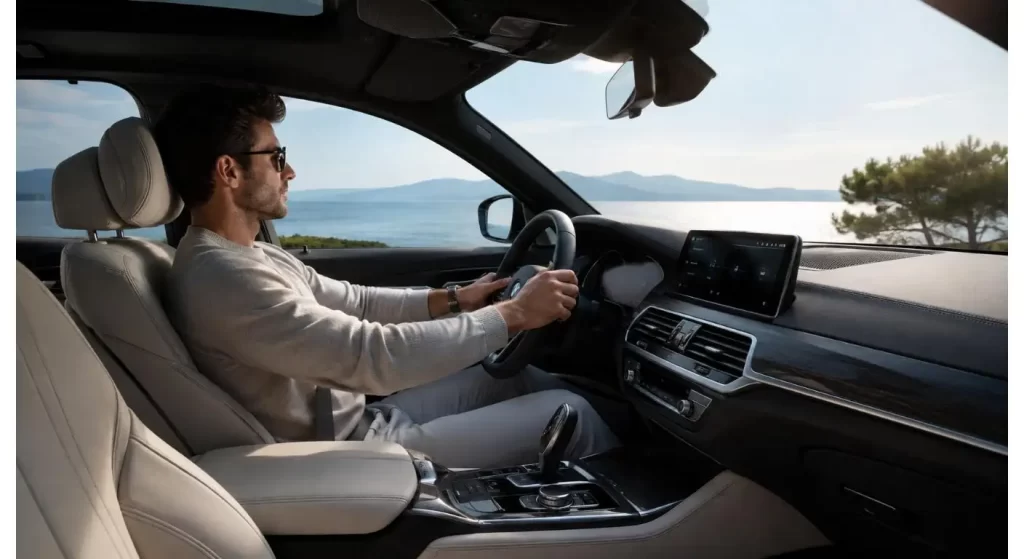
Reduced heat levels can help to improve cabin comfort, particularly in summer or during long journeys.
Minimise use of Air Conditioning
A cooler cabin might help to minimize initial demand for max cooling after parked.
When deciding on a heat reduction window film to use, there are a few factors to consider.
All window film is not created equal.
Before you select a product, think about the following:
Heat Rejection Performance
Look for films that will block infrared as well as visible light.
Visibility and Appearance
It is important for a good film to be heat-regulating and yet allow good visibility.
| Selection Factor | Why It Matters |
| Heat Rejection Performance | Determines how effectively solar heat is reduced |
| Visibility | Balances heat control with clear driving vision |
| Film Quality | Influences durability and long-term performance |
| Installation Experience | Affects appearance, edge quality, and lifespan |
| Vehicle Usage | Helps choose suitable protection requirements |
Professional Installation
Proper installation affects:
- Film appearance
- Edge quality
- Long-term durability
Information on Professional Auto Dealer Films:
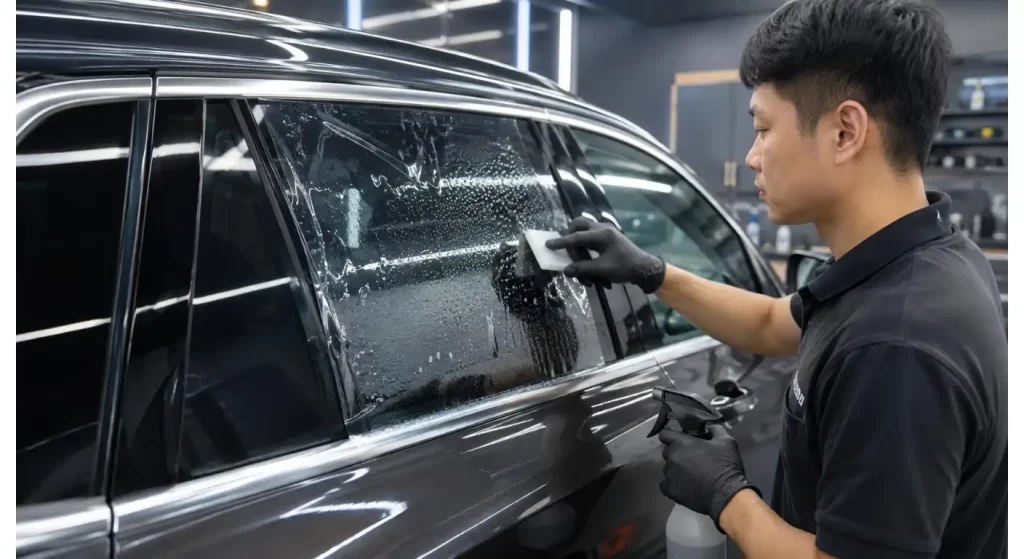
Professional Installation Process
Some key steps of a reliable installation are included.
Glass Preparation
The surface of the window should be cleaned thoroughly to ensure that there is no dust or other impurities.
Film Cutting
The film is correctly formed to form the vehicle window.
Application
The film is installed in a smooth manner, alignment is controlled and surface pressure is controlled by installers.
Final Inspection
Edges, clarity, overall appearance are reviewed prior to completion.
The clean installation will ensure that the film functions correctly and is installed in a professional manner.
Are Heat Reduction Window Film Worth Installing?
Heat reduction window film is more than a vehicle appearance enhancement when the vehicle is subjected to high levels of sunlight.
It offers a practical solution to help enhance cabin comfort, preserve the integrity of interior materials and help to make for a better driving environment.
Can be used in conjunction with other vehicle protection products like paint protection film, to give you more comprehensive vehicle protection.
Get to know about auto protection solutions:
Conclusion
One of the most common issues of vehicle owners is too much heat in the cabins, which is where Heat Reduction Window Film can help.
Advanced window film delivers long-lasting benefits for drivers and vehicles, such as a reduction in infrared heat, UV blockage and enhanced comfort.
The selection of the technology of the film and professional installation method will guarantee better performance and cleaner final result.
FAQ
Q1. But does heat reduction window film actually lower the temperature in a vehicle?
Yes. High-performance films significantly reduce the heat into the car through the windows, making them more comfortable.
Q2. Does the heat reduction film block out the ultra-violet rays?
The majority of good auto window tinting films are made to block out UV rays and safeguard inside materials.
Q3. Does a darker window film mean it's going to be better for heat reduction?
No. Heat rejection is not only a function of darkness, but of film technology and material structure as well.
Q4. Is it possible to put the heat reduction film on all vehicles?
Automotive window films can be used in most passenger vehicles, but should be installed in accordance with local regulations and glass needs.
Q5. How long will window film on a car last?
The life expectancy varies with film quality, installation techniques and maintenance.