


Hot Tags
Window Tinting Service Near Me: How to Choose the Right Installer
October 15, 2026


It may appear to be convincing on a desk, but in various other applications, it may act differently, such as a bumper. Once a film is completely applied over a vehicle, little variations in gloss and color, and surface texture become noticeable. A neat edge directly after installation can have different characteristics once the car is returned to normal driving.
The issue to consider is if the film will provide a good consistent finish throughout the car and if it can be replaced with a new panel later. When it comes to picking shades, there's more to it than just picking something that looks great. Everything from the vehicle to the film, installation and future supply must be appropriate for the same project.
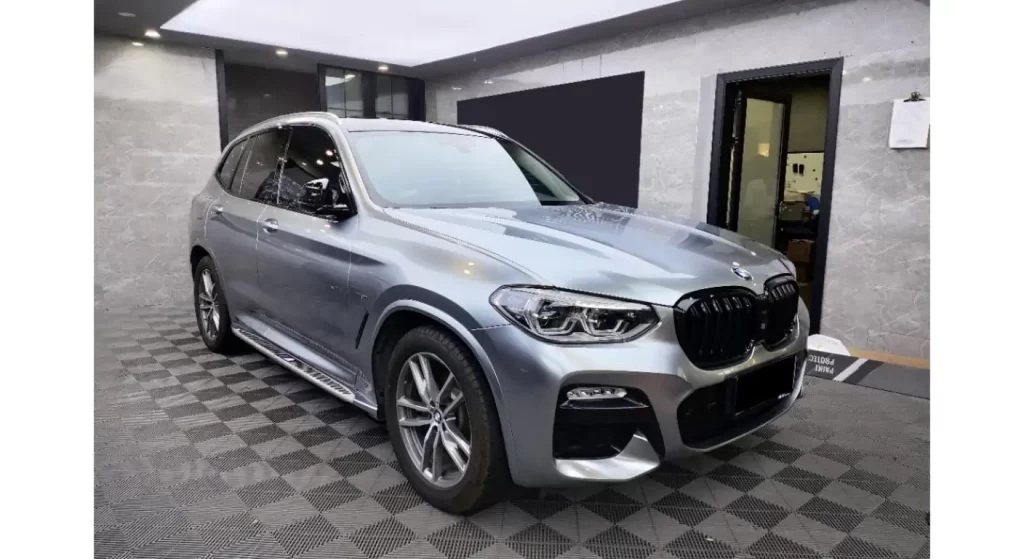
A car salesman's first step is to start with the vehicle and the customer's goal.
Write down the model of the car, original paint color, coverage and desired finish. If you're changing your roof from one color to another, that's a lot more emphasis than a roof accent. Broad, flat doors are not the only spots that need attention, bumpers, mirrors, door handles and recessed panels are all other points of interest. Before selecting materials, or giving a quote, determine whether or not visible returns, door jambs or separate door trim pieces are included.
Look at the paint prior to installing. Peeling clear coat, loose repairs and rust or recently refinished panels can impact adhesion and/or make subsequent removal uncertain. Vinyl mimics the underlying surface, it won't fill in a dent, cover up a raised paint edge or hold a failing paint. Advise customer that certain defects could show through the completed wrap.
Explain the primary purpose of wrapping a car. Let's say a customer is looking for a new colour, a vehicle vinyl wrap may be a good fit for him. A person who is mainly interested in stone chips needs to have their own discussion regarding protective film. HEY FILM's Vinyl Wrap collection is the vehicle's starting point, but what the customer's priority is should drive the final choice.
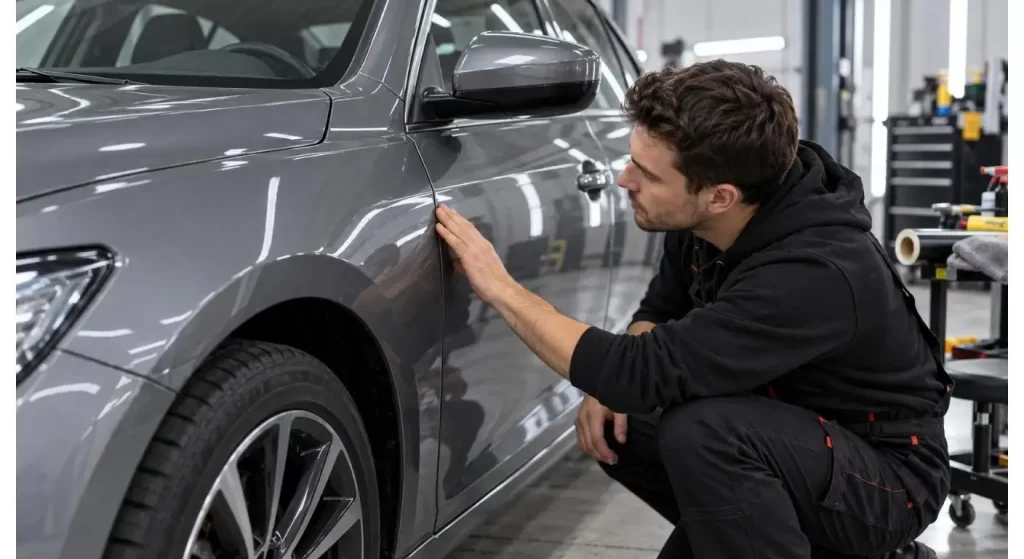
Evaluate the Finish on the More than a Flat Sample
See an actual specimen under workshop lights and daylight. Don't evaluate it independently but next to the trim installed on the vehicle. Surface waviness can be amplified by a dark gloss finish or may have a different effect on a satin or textured finish due to the effects of the light on the body. An extra step is needed for metallic and direction finishes: spin the sample and look to see if there is any change in appearance.
It is impossible for a sample on a table to demonstrate all of the installation process. Use a small piece on a typical curve, and a flat panel. Before and after processing the shape, compare the color and finish before and after the film is worked. Notice extended corners and transition into other panels; examine reflected straight lines.
This action is also helpful for a shop to discuss with the customer what they're expecting. When someone refers to "gloss black" or "metallic gray" it is a category, not any one particular look. Having an agreed lighting of a physical sample makes it easier for both parties to have a specific point to compare with a finished car. To learn more about coverage options, check out HEY FILM's complete car vinyl wrap guide.
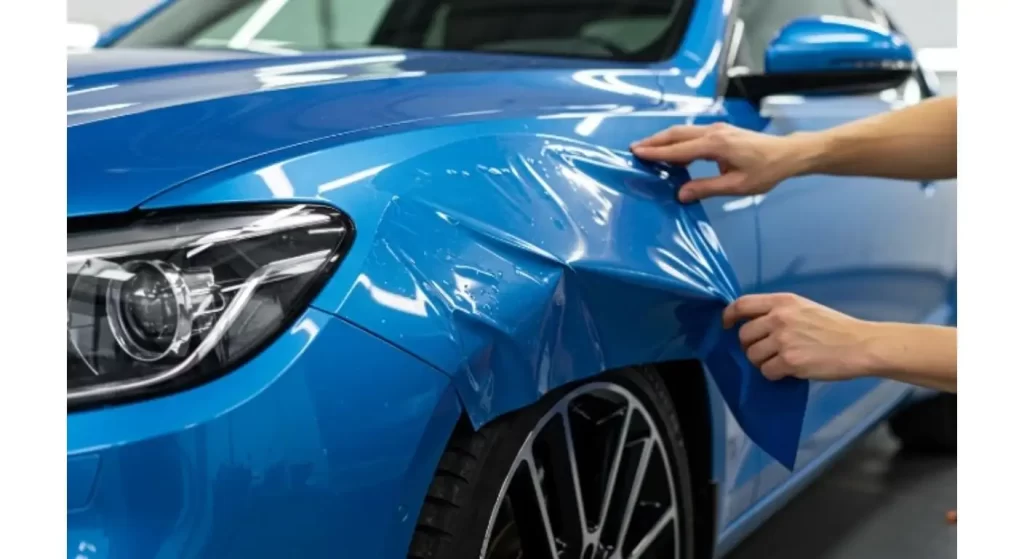
Evaluate parts of the process that are most likely to result in rework.
A smooth finish on a door doesn't mean that the film will lay flatly in a deep recess or around a mirror. Select trial areas to encompass challenging areas of the job. Inquire with the installer about the ease of positioning the film, lifting and re-positioning it, the removal of trapped air and the finish of the edges of the film without unnecessary stretching.
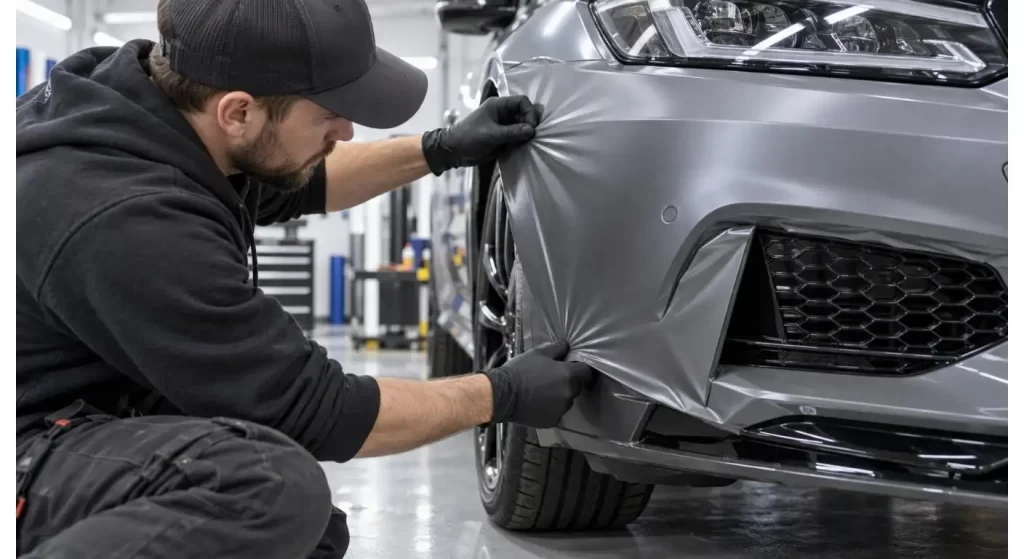
Do an inspection of the film during the trial and after the film has set as per the manufacturer's instructions. Be on the lookout for color density variations, visible adhesive marks, warped reflections or lifting near the edges. If a problem exists in a challenging area this does not necessarily mean the film will not work on a whole vehicle, but it must be realised.
The environment that the installation is to be made in is also important. The film is designed to function properly under good surface and workshop conditions and proper handling. Record the conditions of the trial to enable a later result to be fairly compared. The idea of the trial is not to make one successful sample – it is to find a process that the shop can repeat.
| Trial area | What to inspect | Record before approval |
| Flat door | Color and surface appearance | Approved visual sample |
| Curved bumper | Stretch and finish consistency | Visible distortion, if any |
| Mirror housing | Positioning and edge finish | Areas needing rework |
| Recessed section | Film seating after installation | Result after settling |
| Adjacent panels | Match under the same lighting | Accept or reject decision |
Make plans for Matching Panels Later
The first installation is just the beginning for a wrap shop. If the door or bumper is damaged, it could require a replacement panel months later. Note product series, color code, finish and where applicable, a roll ID and direction of installation. Retain approved piece of film if feasible with the job record.
Before ordering large quantities, enquire of the supplier how repeat orders are identified and how the supplier knows if they are consistent with the colour. Compare replacement material with retained sample under the same lighting conditions when it is received. Two rolls with the same colour name shouldn't be assumed to give an exact visual match as production batches and condition of film already on the car may be a factor.
This planning can be especially helpful for commercial vehicles or customer fleets, where the coordinated repairs have an impact on the overall appearance. It further aids distributors in a real-life customer enquiry: if this finish is chosen, can it be restocked when another car is added to the project?
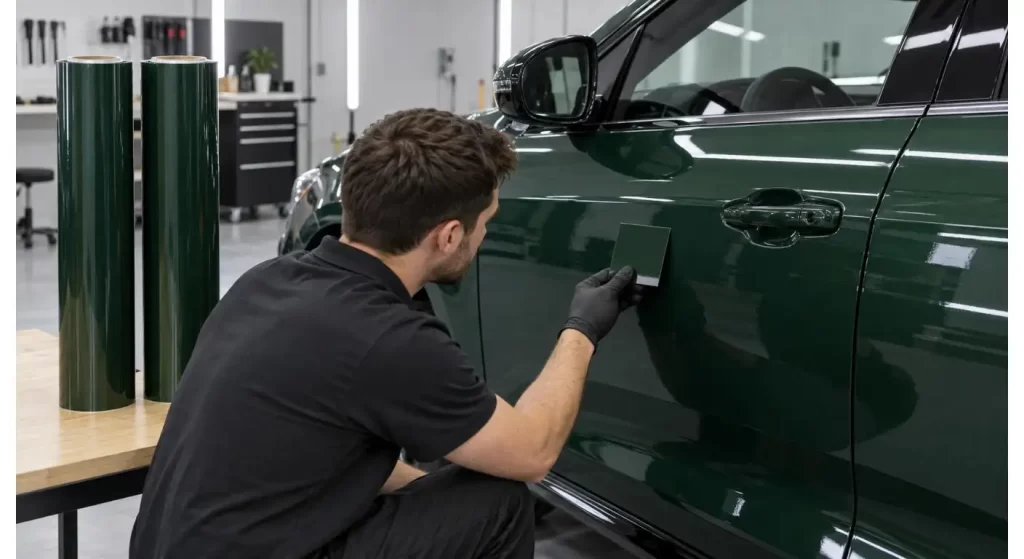
Click on Create a quote around the real installation.
Check vehicle size and coverage plan prior to estimating materials. Take into account the shape of the panel, trimming and the working method of the installer and any directional pattern. A quote should include information such as whether or not door jams, door returns (visible), mirrors, handles and trim are included. If this information is not provided, two quotes for a “full wrap” could be two different jobs.
When ordering products wholesale, provide the supplier with a clear brief: finish desired, quantity of orders expected, roll format desired, market and any sample requirements. If the project requires special colors or branded packaging, discuss these requirements prior to approving the packaging. Request information which can be used to assess the film in the installation workflow and not just based on a finish photograph.
Discussions about product availability and OEM/ODM requirements should be made on the contact page of the website of HEY FILM. Include the car application and outcome of the trial application with the enquiry – a specific feedback is more helpful than asking just for a recommendation.
On Vehicle Before handover Checklist
Vet the wrap from a number of yards away. First, make a walk around the car to see if it's consistent in colour. Then proceed to check closer on panel transitions, corners, recesses and exposed edges. Wherever possible use workshop lighting as well as daylight, particularly for gloss and metallic finishes.
Before handover, discuss with the vehicle owner, how the vehicle will be cared for. Provide them with the film supplier's instructions for washing, chemicals, pressure washing and when to return, if an edge needs attention. Record what's installed and make it easy to report an issue. This last inspection will serve to safeguard the efforts that have been already made, and also the customer will be able to have a realistic idea about the use of the product.
Conclusion
First step in a reliable car vinyl wrap is the car, followed by sample appearance, curved panel installation, and repeat order and final inspection. Formulate and experiment with the suggested film on the shapes that matters. Maintain an approved sample and record the particular material used. This provides a foundation for the installer, supplier and customer to approve.
FAQs
Q1. Will vinyl wrap on a vehicle cover up rusted paint?
It will not cure peeling paint or insecure repairs but it will alter the look of minor marks. Check and repair surface prior to installation.
Q2. Do I need to select a finish in a screen image?
Aim to narrow down the choices by using images, then approve a physical sample. Test it in the light of day and work lights.
Q3. Why go to the trouble of testing the film on a bumper or mirror?
These shapes require varying positioning and stretching as compared to a flat door. Distortion or edge problems can be detected early in a trial.
Q4. What if the shop should write down for next time replacement of panel?
Maintain a series of the product, color code, finish and roll ID with approved sample. When a setting or direction of installation is important in determining how a product looks, record this.
Q5. Does vinyl wrap equal coloured PPF?
Yes, both can alter the look of a vehicle, but there are differences in the ways that they are built and the protection they provide. Select based on customer's priorities.