




Hot Tags
Car Roof Vinyl Wrap: How to Choose for Roof Heat, UV Exposure, and Clean Removal
July 17, 2026


A Car Roof Vinyl Wrap can create a gloss-black roof, imitate panoramic glass, add a carbon-fiber texture, or visually separate the roof from the body color. However, the roof is one of the most demanding areas for automotive vinyl.
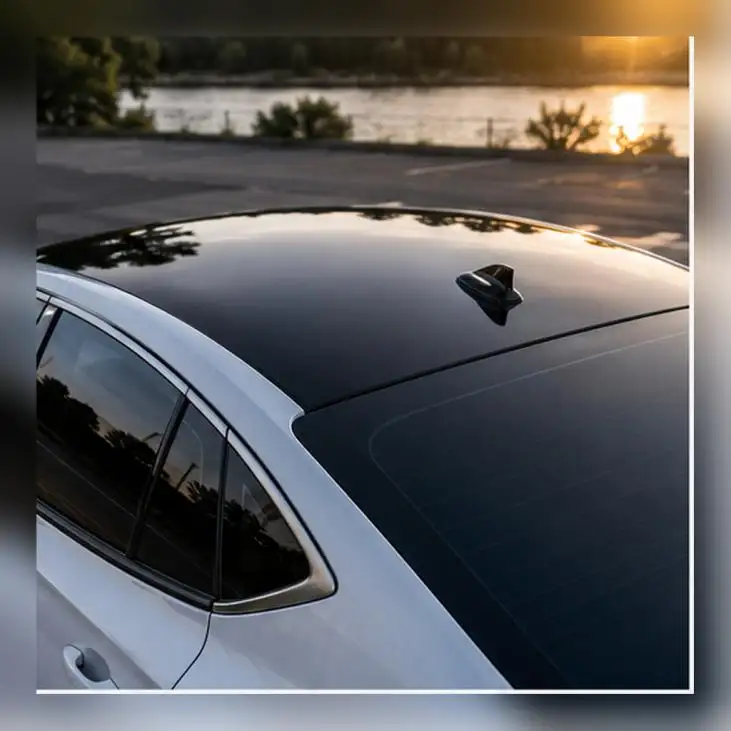
Unlike doors and side panels, the roof is a largely horizontal surface exposed to direct sunlight, standing water, bird droppings, tree sap, heat, and repeated temperature cycles. Antennas, roof channels, seals, and sunroof edges also create concentrated installation stress.
Choosing the right film therefore requires more than comparing colors or warranty claims.
Why Does Roof Vinyl Fail Earlier Than Side-Panel Film?
The following are documented issues regarding roof wrap:
• Loss of gloss and discoloration: The primary cause of this issue is excessive and extended exposure to the sun. However, high surface temperatures and a build-up of dirt due to lack of maintenance will also contribute to this issue.
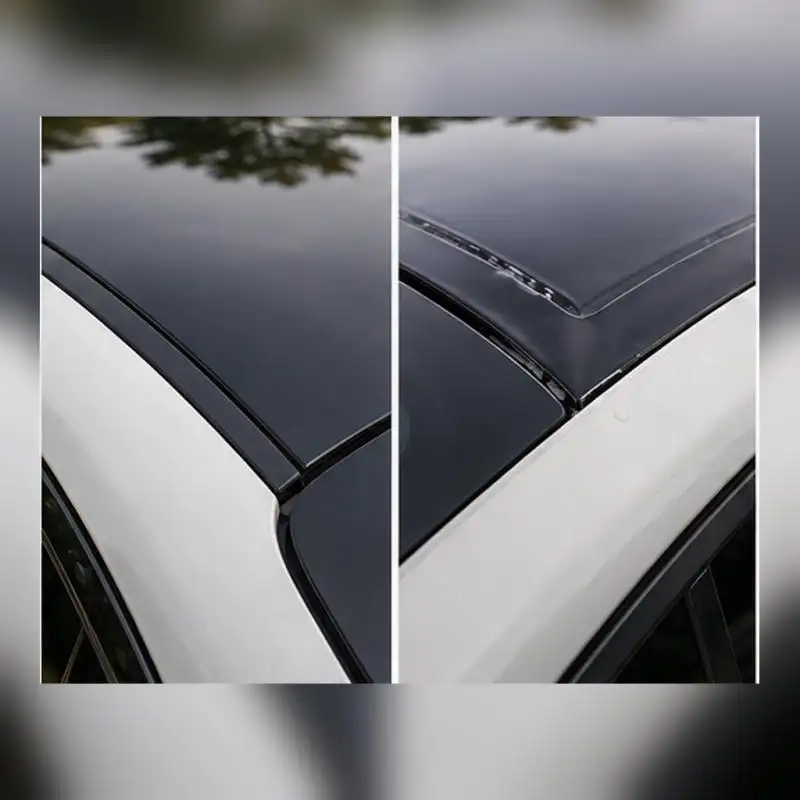
• Lifting at edges: This is usually caused by poor edge control and allowance, inadequate post-heating, and overstretching.
• Edge shrinkage at antennas: This is caused by wrapping film and not adequately releasing it after.
• Water spots and scratches: These become very pronounced and visible on black gloss wraps.
• Paint damage during removal: More likely on repaired, weak, peeling, or poorly cured paint.
The most important difference is exposure direction. A durability figure based on vertical vehicle panels should not automatically be applied to a horizontal roof. Buyers should ask whether the manufacturer provides specific horizontal-exposure data.
How a Car Roof Vinyl Wrap System Works
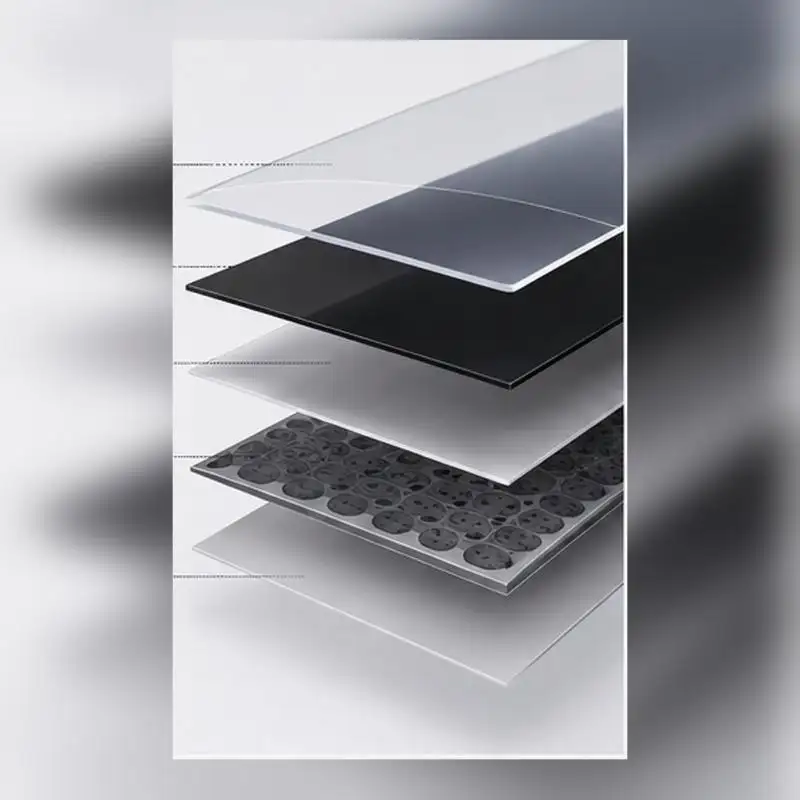
A vehicle wrap is not only a colored PVC sheet. It is a system consisting of the face film, adhesive, and release liner.
Face Film
The face film controls color, gloss, flexibility, texture, and dimensional stability. It must stretch enough to follow roof curves without becoming excessively thin or storing too much recovery stress.
Adhesive Layer
Initial tack determines how easily the film can be moved and repositioned during installation. Final adhesion determines long-term edge retention.
High initial tack can make a large roof difficult to align, while low final adhesion can contribute to lifting. The correct balance depends on the roof size, geometry, and installer workflow.
Air-Release Structure
Air-release channels help trapped air move toward the edge during application. They reduce bubble risk but cannot correct dust contamination, poor squeegee technique, or incorrectly prepared paint.
Cast Vinyl, Calendared Vinyl, or Color PPF?
The correct material depends on the project rather than on one product being universally better.
| Solution | Best-Suited Use | Main Advantages | Main Limitations |
| Cast vinyl | Complex roofs and longer planned use | Conformability and generally better dimensional stability | Higher material cost |
| Calendared vinyl | Flat roofs and shorter-term projects | Lower purchase cost | Shrinkage and edge stability require closer review |
| Color PPF | Color change with stronger surface protection | Better resistance to chips and abrasion | Higher cost and fewer finish options |
| Repainting | Permanent color change | Fully customized permanent finish | Difficult to reverse and may affect resale considerations |
Standard Car Roof Vinyl Wrap is primarily a decorative film. It may provide limited isolation from light contamination, but it should not be marketed as equivalent to paint protection film unless relevant impact and abrasion tests support the claim.
Which Roof-Wrap Finish Is Most Practical?
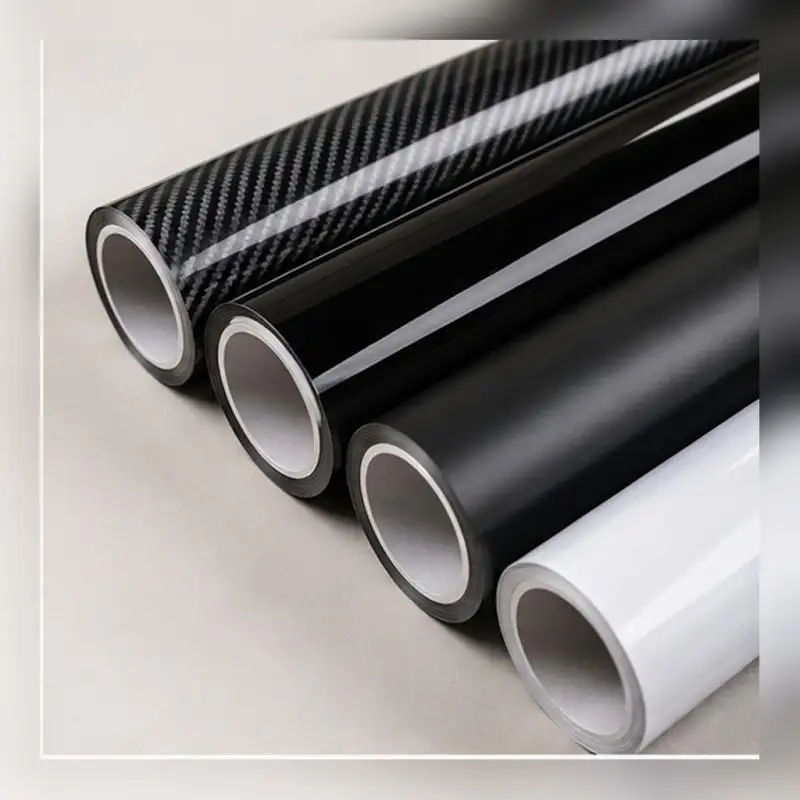
Gloss Black
Gloss black is commonly selected to match panoramic glass. It provides strong visual contrast but shows scratches, water spots, dust, and surface waviness more easily.
Satin or Matte Black
Both satin and matte finishes diminish reflectivity and may conceal minor abrasions. Sadly, traditional waxes and polishing compounds will cause uneven glossy areas that will be almost impossible to fix.
Carbon Fiber or Textured Film
Textured Films will create much more visual dimension but will be more difficult to clean and wrap around tight corners. Directional patterns must remain aligned across the roof.
| Finish | Defect Visibility | Maintenance Difficulty | Direction Control |
| Gloss black | High | Medium | Usually low |
| Satin black | Medium | Medium | Low |
| Matte black | Medium | High | Low |
| Carbon texture | Lower for light marks | High | High |
Which Technical Parameters Actually Matter?
Film thickness alone does not determine quality or durability. A thicker film may feel easier to handle, yet it can create material buildup around antenna bases, rubber seals and narrow wrapping areas.
Important parameters should be read as connected groups:
• Elongation and dimensional stability: High elongation helps during installation, but excessive stretching increases recovery stress and reduces local thickness.
• Initial tack and final adhesion: Initial tack affects repositioning; final adhesion affects edge retention and future removal.
• Application temperature and adhesive wet-out: Cold surfaces can prevent proper adhesive contact, while excessively hot roofs can make the film too soft and aggressive.
• Outdoor durability and exposure direction: The longest stated warranty may apply only to vertical surfaces, selected colors or moderate climates.
• Roll width and roof dimensions: The film must span the widest section of the roof and must have sufficient material to form grab handles and edge wraps.
Elongation at break should not be treated as the recommended installation stretch. Installers must follow product-specific stretch and post-heating instructions.
Match the Film to the Vehicle and Environment
Before selecting a Car Roof Vinyl Wrap, evaluate three systems together.
Paint Condition
Factory paint in good condition is usually the preferred substrate. Repainted panels, peeling clearcoat, rust, ceramic coatings and recently repaired areas require additional inspection or adhesion testing.
A vinyl wrap cannot strengthen weak paint. If the paint separates from the vehicle during removal, the problem may originate from the paint system rather than the adhesive alone.
Roof Geometry
A flat metal roof is easier to wrap than a roof containing:
• Panoramic glass;
• Shark-fin antennas;
• Deep roof channels;
• Roof rails;
• Multiple rubber seals;
• Sharp rear spoilers.
Removing antennas or trim can improve edge access, but disassembly must be performed without damaging electrical connections, seals or roof components.
Climate
High-UV and hot climates increase the importance of horizontal durability, color stability and adhesive heat resistance. Coastal areas add moisture, salt and contamination. Cold regions require closer control of installation temperature and adhesive activation.
Installation and Maintenance Factors
Long-term performance depends heavily on installation quality.
The roof should be washed, decontaminated, and cleaned of wax, oil, polishing residue and coating products. Edges, channels and antenna areas require particular attention because contamination often accumulates there.
During installation:
• Avoid concentrating stress around antennas and corners.
• Use relief techniques or approved seams when geometry exceeds the film's limits.
• Post-heat stressed areas according to the manufacturer's instructions.
• Leave enough film for secure edge wrapping.
• Avoid washing until the adhesive has stabilized.
For maintenance, remove bird droppings, insects, tree sap, and fuel contamination promptly. Keep high-pressure nozzles away from exposed edges, and use cleaning products suitable for the selected finish.
Car Roof Vinyl Wrap Purchasing Checklist
Before ordering, define:
• The expected service period;
• Whether the roof has factory paint or repaired paint;
• The roof width and structural complexity;
• Local UV, temperature and weather conditions;
• The desired finish and maintenance tolerance;
• Whether clean removal is required;
• Whether the warranty covers horizontal roof exposure;
The total installed cost, including preparation, trim removal, maintenance and future removal.
The best Car Roof Vinyl Wrap is not necessarily the thickest film, the lowest-cost roll or the product with the longest advertised warranty. It is the film whose material structure, exposure data, adhesive behavior and installation limits match the vehicle, environment and intended service period.
Choose HEY FILM for reliable Car Roof Vinyl Wrap solutions tailored to your finish, durability, and installation needs.
FAQs
Q1. What is a Car Roof Vinyl Wrap?
A Car Roof Vinyl Wrap is a custom film used on the car roof to change the color or finish or change the roof's appearance.
Q2. How long does a Car Roof Vinyl Wrap last?
The longevity of a vinyl wrap is based on the quality of the film, UV exposure, weather, condition of the installation, and the maintenance and condition of the parking space.
Q3. Is cast or calendared vinyl better for a car roof?
For complex roof shapes and longer term use, cast vinyl is better. For simple shapes and short term use, calendared vinyl works better.
Q4. Why does roof vinyl fade faster than side-panel vinyl?
Roof vinyl gets more sunlight, more exposure to the elements, and more contamination.
Q5. Can Car Roof Vinyl Wrap protect against stone chips?
Regular vinyl covers limited surface area and does not protect against stone chips.