




Hot Tags
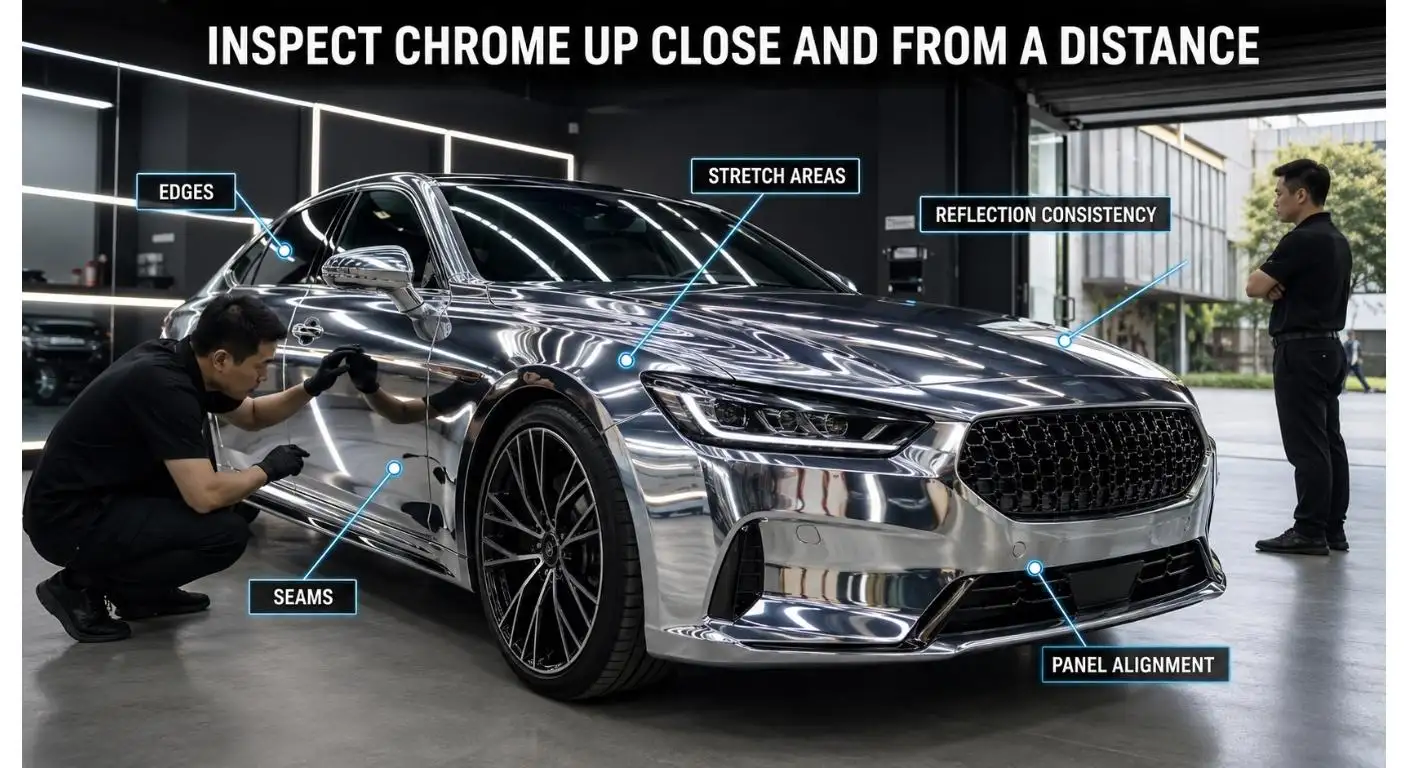
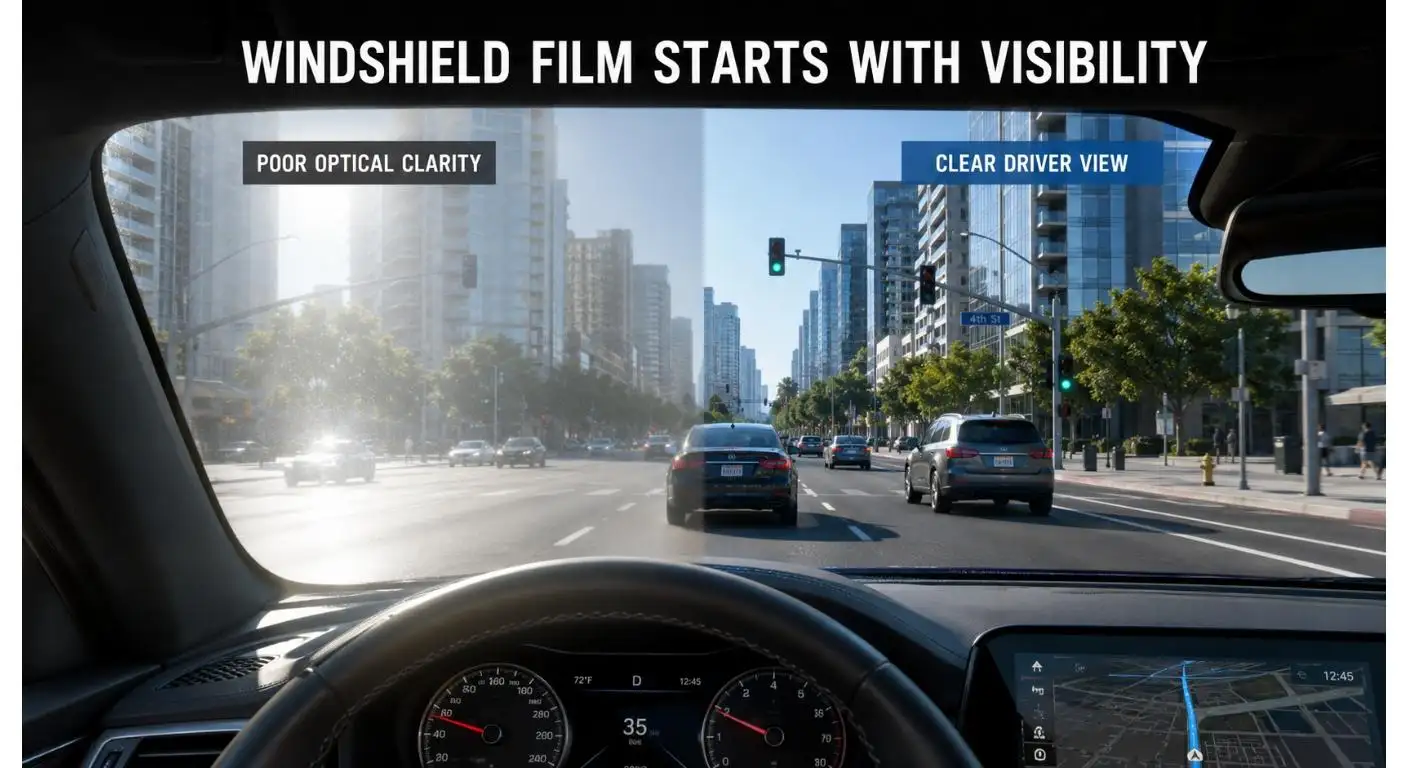
UV Protection Automotive Film: How to Verify UV Blocking, Visibility, and Durability
July 16, 2026


Dark automotive glass can create privacy without proving complete ultraviolet protection. Likewise, a film advertised as blocking "99% UV" may still be unsuitable if it reduces visibility, creates haze, interferes with vehicle electronics, or loses performance after aging.
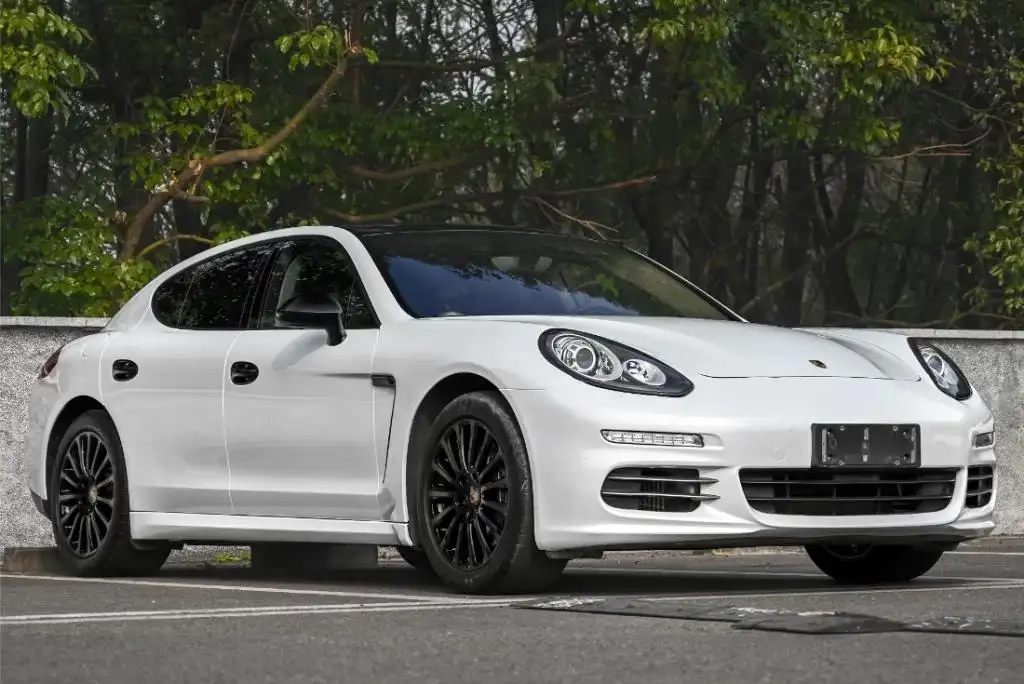
Selecting UV Protection Automotive Film therefore requires a decision chain: identify the problem, understand the film structure, compare technologies, verify parameters, match the film to each pane, control installation, review standards, and qualify the supplier.
Dark Factory Glass Can Still Leave UV Protection Gaps
Darkness that is visible and ultraviolet transmittance are separate phenomena. Privacy glass can alleviate glare and visible light, but it cannot be assumed that UVA, UVB, and solar-energy performance are evaluated. A combination of visible light, heat, humidity, and the materials involved, along with time, causes fading of interiors.
Start by defining the goals.
•UV Light: Once the product undergoes its aging process, conduct an observation, and indicate your findings for UV light transmittance.
•Heat: Integrate the changes from the infrared section when assessing the Total Solar Energy Rejected (TSER) test.
•Privacy: Assess installed visible light transmission (VLT).
•Glass retention: Assume no such protection is offered by regular window films. Therefore, use a specific safety-film assessment.
How a Nearly Clear Film Can Control UV
UV Protection Automotive Film generally combines a PET substrate, UV-absorbing chemistry, pressure-sensitive adhesive, and a scratch-resistant hard coat. Because ultraviolet and visible light occupy different spectral regions, a high-VLT film can reduce UV transmission without appearing dark.
Thickness alone does not determine UV protection. This principally influences handling and mechanical properties. UV performance relies more heavily on the chemistry of the absorber, uniformity of the coating, formulation of the adhesive, and stability of the adhesive in the presence of moisture.
Compare the Layer Stack, Not the Label
| Technology | Main Strength | Main Trade-Off | Best-Fit Question |
| Clear high-VLT UV film | Maintains a near-factory appearance | Limited privacy or glare control | Is UV reduction needed without darkening the glass? |
| Dyed or carbon film | Provides color, glare reduction, and privacy | Stability varies by construction | Is appearance the main priority? |
| Nano-ceramic film | Can combine high VLT with selective solar control | Haze and verified TSER still matter | Is heat control needed with high visibility? |
| Metallized or sputtered film | Provides reflective solar control | Reflection and signal compatibility require checking | Can the vehicle accept a conductive layer? |
A "ceramic" label does not prove low haze, zero metal content, or complete signal compatibility. A dark film is also not automatically better at UV control. Products should be compared using measured results obtained on the same glass substrate.
A 99% UV Claim Needs Test Conditions
UV rejection should state the tested wavelength range, sample construction, and measurement method. Buyers should determine whether the test used film alone or a film-and-glass assembly and whether the result represents initial performance or post-aging performance.
| Parameter | What It Shows | What It Does Not Prove |
| UV transmittance or rejection | UV passing through or being blocked | Total cabin heat reduction |
| VLT | Visible light transmission | UV or infrared control |
| TSER | Overall rejected solar energy | Legal compliance in every market |
| IR rejection | Performance over a stated IR range | Total heat control when based on one wavelength |
| Haze | Wide-angle light scattering | Distortion, waviness, or double imaging |
| Visible reflectance | Interior or exterior reflection | Long-term UV durability |
ISO 13837:2021 covers luminous, direct solar, and total solar transmittance and colorimetry for road-vehicle safety glazing. ASTM D1003 addresses luminous transmittance and haze in transparent plastics.
IR rejection and TSER are not interchangeable. The International Window Film Association notes that IR figures may be calculated over different wavelength ranges, whereas TSER represents performance across the broader solar spectrum.
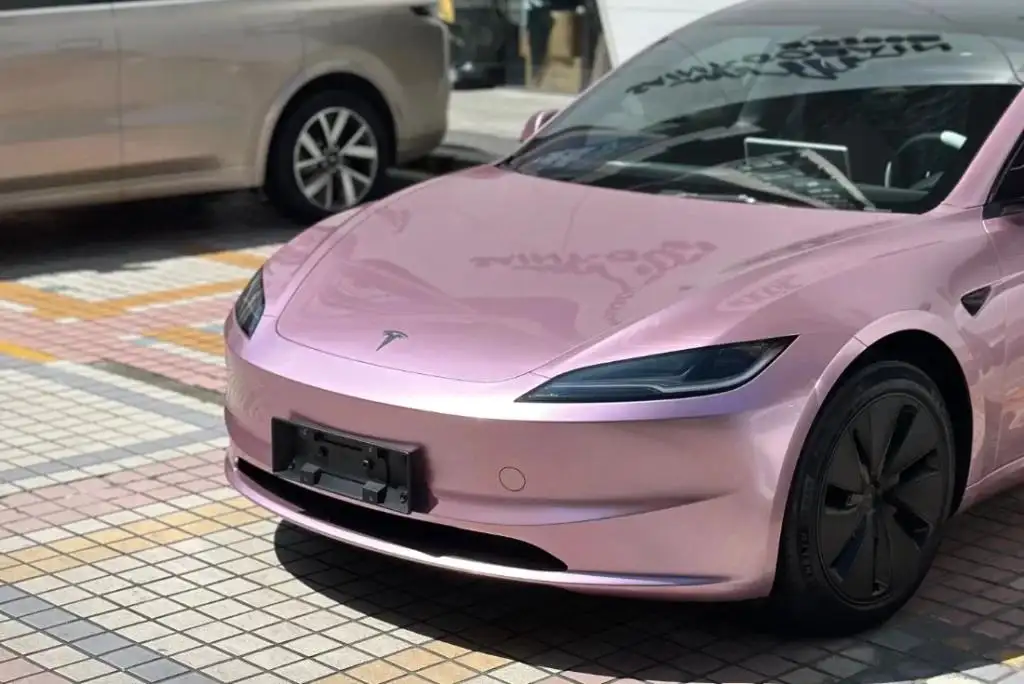
Match the Film to the Complete Glass System
Published film VLT is not the final installed VLT. A useful preliminary estimate is:
Installed VLT ≈ glass VLT × film VLT
Final compliance should still be measured on the completed glass-and-film assembly.
| Glass Position | Primary Risk | Verification Priority |
| Windshield | Reduced visibility, haze, and HUD distortion | Installed VLT, optical clarity, and local law |
| Front side windows | Night visibility and legal limits | Installed VLT and reflectance |
| Factory privacy glass | Excessively dark final appearance | System VLT and color |
| Rear glass | Defroster lines and embedded antennas | Adhesive and installation compatibility |
| Panoramic roof | Solar absorption and thermal stress | Glass construction, absorptance, and TSER |
ADAS cameras, rain sensors, HUD systems, antennas, GPS equipment, electronic toll devices, and keyless systems should be checked before installation. Panoramic roof glass requires a separate thermal review rather than simply applying the darkest available film.
Installation and Maintenance Determine Real Performance
Film performance can be compromised by contaminated glass, excessive heat forming, damaged defroster lines, poor edge preparation, or unsuitable cleaning chemicals.
Transitory installation moisture is differentiated from permanent bubbles. Consideration of construction of the film and quality of installation is essential to understand the cause of permanent bubbles, edge lifting, discoloration, and separation of the adhesive.
Cleaning must be performed using non-abrasive implements and chemicals that are compatible with the film's hardcoat. The installers must also document the film batch, the position of the film in the glass, and the date of installation to assist with a future warranty claim.
Verify Standards Before Accepting Claims
The UN Regulation No. 43 on automotive safety glazing and various country and regional regulations are the governing rules that describe or limit where in the vehicle the aftermarket film may be installed and the VLT that may be tolerated.
NHTSA guidance states that glazing areas required for driving visibility are subject to a 70% light-transmittance requirement in the relevant United States federal context. State rules and the status of the installer must also be considered.
Accelerated-weathering claims also require detailed test conditions. ASTM G154 describes fluorescent-UV exposure equipment and controlled conditions, but it does not select the most appropriate exposure cycle for every material.
A useful report should identify:
•Lamp type and irradiance
•Test temperature
•Moisture or condensation cycle
•Exposure duration
•Changes in UV transmission
•Changes in VLT, haze, and color
•Adhesive or edge-condition changes
Reporting only that a film "passed 1,000 hours" is insufficient without these conditions and before-and-after results.
From Sample Roll to Purchase Order
A qualified UV Protection Automotive Film supplier should provide:
•Reports matching the exact commercial film
•Comparable results measured on the same glass substrate
•Initial and post-aging optical data
•Batch controls for VLT, UV, haze, color, and adhesion
•Defined roll dimensions and manufacturing tolerances
•MOQ, lead time, packaging, and traceability information
•Warranty terms covering specific failure modes
•Trial material for controlled installation testing
The best UV Protection Automotive Film is not simply the product with the highest UV percentage or the darkest appearance. It is the film that maintains verified UV control while meeting visibility, solar-control, electronics, glass-compatibility, installation, durability, and legal requirements as a complete automotive glazing system.
Contact HEY FILM to compare UV protection, VLT, TSER, film construction, samples, and OEM options for your market.
FAQs
Q1. What is UV Protection Automotive Film?
It is a window film that is created to limit the transmission of UV rays through auto glass, while still allowing a reasonable amount of visibility.
Q2. Does UV blocking increase with darker auto film?
Not really. Darkness of the film is more related to visible light transmission. UV performance is more related to the coating and the absorber technology of the film.
Q3. Does clear automotive film offer UV protection?
Yes, very high VLT (visible light transmission) films can offer some level of UV protection with little to no change to the vehicle glass.
Q4. What does 99% UV rejection mean?
It means that the sample blocked about 99% of UV at certain wavelengths. The buyer must check the test conditions.
Q5. Is there a difference between UV rejection and heat rejection?
Yes. UV rejection is about the control of ultraviolet, while TSER is about the control of the whole solar energy spectrum.