




Hot Tags
Glossy Vinyl Wrap: How to Compare Finish, Fit, Durability, and Installation Risk
July 21, 2026


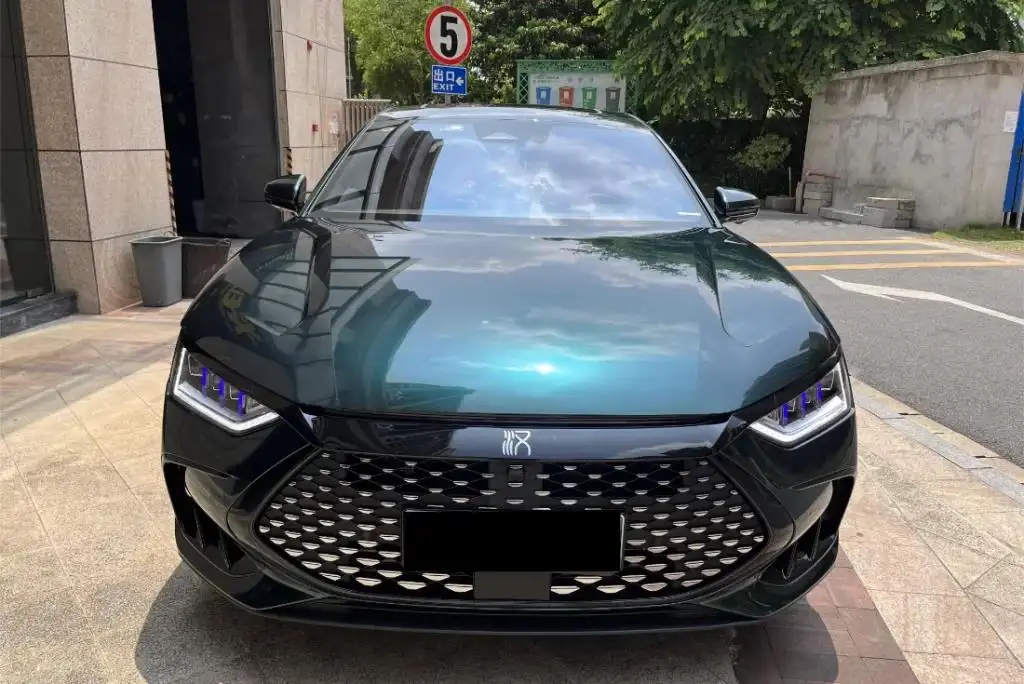
A Glossy Vinyl Wrap may look paint-like on one vehicle but show orange peel, color variation, or lifting on another. Film construction, adhesive design, panel geometry, paint condition, climate, and installation all affect the result.
Why Can a High-Gloss Wrap Look Uneven?
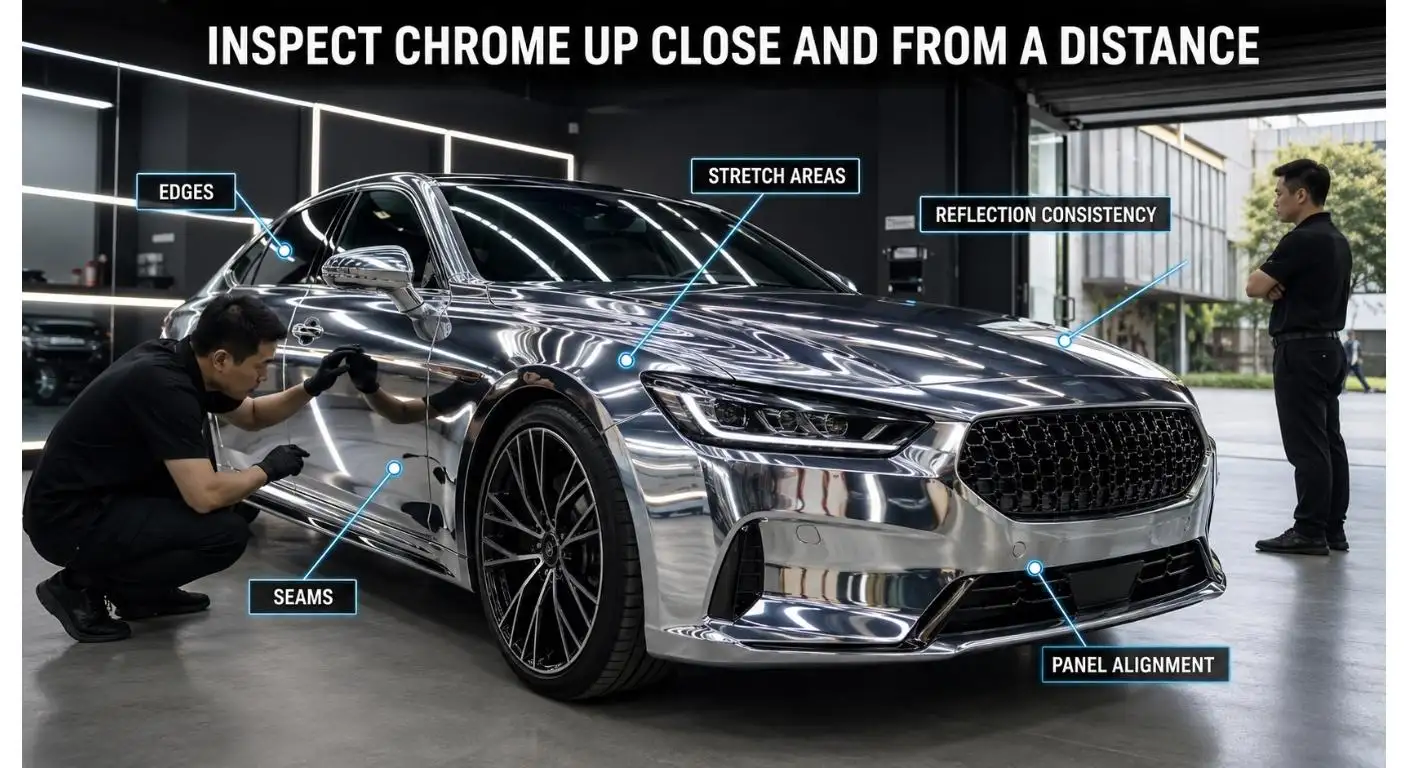
Glossy surfaces reveal blurred reflections, visible air-release patterns, trapped particles, stretched color, uneven gloss, and lifting more clearly than matte films.
The cause may lie in the PVC face film, adhesive, release liner, original paint, contamination, stretching, or heating. Film defects must therefore be separated from paint and installation defects before corrective action.
What Creates a Paint-Like Surface?
A Glossy Vinyl Wrap is a layered system. The face film controls color, smoothness, flexibility, and reflection. The adhesive controls positioning, air release, bonding, and removability. The release liner protects the adhesive and may influence its texture.
| Parameter | What It Shows | Limitation |
| Gloss value | Reflected-light intensity | Does not measure reflection sharpness |
| DOI | Reflection clarity | May change after stretching |
| Haze or orange peel | Surface distortion | Needs visual or instrument evaluation |
High gloss does not automatically mean high DOI or low orange peel.
Which Material Route Fits the Project?
| Solution | Suitable Use | Main Trade-Off |
| Cast glossy vinyl | Full wraps and more intricate designs | Higher cost |
| Polymeric calendered vinyl | Less intricate designs and shorter jobs | More shrinkage |
| Color PPF | Protective films | High thickness and cost |
Repainting is a permanent fix, not temporary. Cast film usually has less internal stress and is better for working on mirrors, bumpers, compound curves, and recesses. Calendered film is adequate for flat panels, promo vehicles, and projects with a strict budget.
Color PPF is more suitable where stone-chip resistance is required and a self-healing topcoat is preferred. Standard PVC Glossy Vinyl Wrap should not be assumed to provide TPU-level protection. We recommend repainting in instances of peeling or rusted paint and during the restoration of repair work of a more permanent nature.
Which Specifications Forecast Performance?
Specifications are linked as follows:
•Optical: Gloss angle, DOI, haze, orange peel, batch color difference.
•Film: Face film thickness, total thickness, tensile strength, elongation, shrinkage, flexibility, and dimensional stability.
• Adhesive: Initial tack & repositionability, air release design, peel strength, final bond, removal time, and residue risk.
•Durability: UV exposure and retention of color and gloss, range of temperatures, chemical resistance, and limits of orientation of panels.
The absence of elongation does not give a safe limit for installation. The excessive elongation can distort the adhesive channel and create recovery stress, as well as affect the gloss and density of color, and cause elongation. The lack of thickness does not accurately predict impact protection or conformability.
For deep recesses, elongation should be paired with shrinkage and recovery stress. A film with a high degree of elongation with strong recovery can lift during installation. A film with strong initial tack may help hold the film in place but may create difficulties in film positioning.

Match the Wrap to the Vehicle and Climate
Mainly flat surfaces require uniformity and consistency in batches. Roofs and hoods require high resistance due to more exposure to heat and UVs. Bumpers and mirrors require a high degree of conformability and controlled stretching verified with post-heating.
There are many different substrates in the abovementioned surfaces. A removable adhesive and normal film cannot guarantee safe film removal from weak paint.
Regions with high UVs require verified retention of color and gloss. Cold regions require suitable low-temperature flexibility. Fluorescent, metallic, dark, and specialty colors may have different durability, so warranties should be checked by color series and panel orientation.
How Installation Controls Gloss and Edge Stability
Surface preparation directly affects appearance. Wax, silicone, grease, dust, loose paint, and moisture should be removed.
Instead of using forced shaping to fit a sheet into a mold, installers should manage tension and temperature. Stretching a sheet too far can result in distortion of the adhesive, as well as color and gloss variations and stress. The use of seams or individual pieces may be necessary to accommodate the design of the part.
Post-heating should focus on stretched and recessed areas and follow the manufacturer's specified temperature. Edge sealer may support selected edges, but it cannot correct unsuitable film, excessive tension, or poor preparation.
Most air-release vehicle wraps are intended for dry installation. Wet installation should only be used when specifically permitted.
What Is the Recommended Way to Maintain the Gloss?
Gloss should be maintained by using clean microfiber towels, compatible automotive shampoo, and low-abrasion washing methods. To uphold the quality of gloss, extremely alkaline cleaners should be avoided, along with the following: harsh brushes, soiled towels, and solvents. Using these items may lead to loss of gloss and/or dull the edges of the item.
Contaminants should be removed as early as possible. Coatings or waxes may help cleaning and removal of contaminants, but these will not correct the orange peel and installation defects.
What is the Procedure for Verifying Claims?
In relation to gloss, concerns, and verification, ISO 2813 or ASTM D523 may apply. Color difference may be verified with ASTM D2244. Weathering may be verified with ISO 4892-2 or ASTM G155. Peel adhesion may be verified with ASTM D3330. Tensile may be verified with ASTM D882.
A report should match the purchased product code, color series, face film, and adhesive system. The hours concerning accelerated weathering should not be directly converted into service years without a validated correlation.
Exclusions in warranty comparisons should concern horizontal panels, special colors, extreme climates, commercial vehicles, installation, and maintenance. Buyers should also confirm whether coverage concerns the film only or includes labor.

Procurement Checklist
Before an order is placed in volume, the following should occur:
Samples should be tested on a flat panel, compound curve, and deep recess.
•Gloss, color change, repositioning, air release, post-heating, removal, and residue should be recorded.
•Use one production batch per vehicle and reserve matching material for repairs.
•Confirm film type, thickness, adhesive, recommended stretch, installation temperature, durability, and warranty in writing.
•Compare labor, waste, rework, claims, and replacement risk—not only price per roll.
Closing Words
A Glossy Vinyl Wrap should be selected as a complete material-and-installation system. Paint-like appearance depends on gloss, DOI, surface texture, adhesive quality, and installation control. Long-term performance depends on panel geometry, paint condition, climate, and service period.
The strongest decision comes from comparing material routes, reading related parameters together, testing realistic shapes, and verifying that reports and warranty terms apply to the exact product ordered.
Direct all questions about the specifications and customization of Glossy Vinyl Wrap and its applications to HEY FILM.
FAQs
Q1. What is Glossy Vinyl Wrap?
Glossy Vinyl Wrap is an example of an adhesive film that can be applied over a vehicle to change its color with a reflective, finish resembling that of paint.
Q2. Is Glossy Vinyl Wrap an example of paint protection film?
No. Standard vinyl protects only the appearance, whereas Impact and scratch resistance are inherent to TPU paint protection film.
Q3. What affects gloss in vinyl?
Gloss is affected by the smoothness of the face film, DOI, haze, texture of the adhesive, quality of the release liner, condition of the paint, and installation method.
Q4. What is the contrast between gloss and DOI?
Gloss is the measure of the amount of light reflected and DOI is the measure of the degree of distortion of the reflected image on the surface.
Q5. Can Glossy Vinyl Wrap be applied to damaged paint?
No. It should not cover defective painted surfaces including paint that is peeling, rusted, damaged clear coat, or paint that is poorly adhered.