




Hot Tags
PPF vs Vinyl Wrap Cost: What Are You Actually Paying For?
July 22, 2026


Comparing PPF vs Vinyl Wrap Cost is more complicated than comparing two installation quotes. Paint protection film and vinyl wrap use different materials, solve different problems, and create different maintenance and replacement costs.
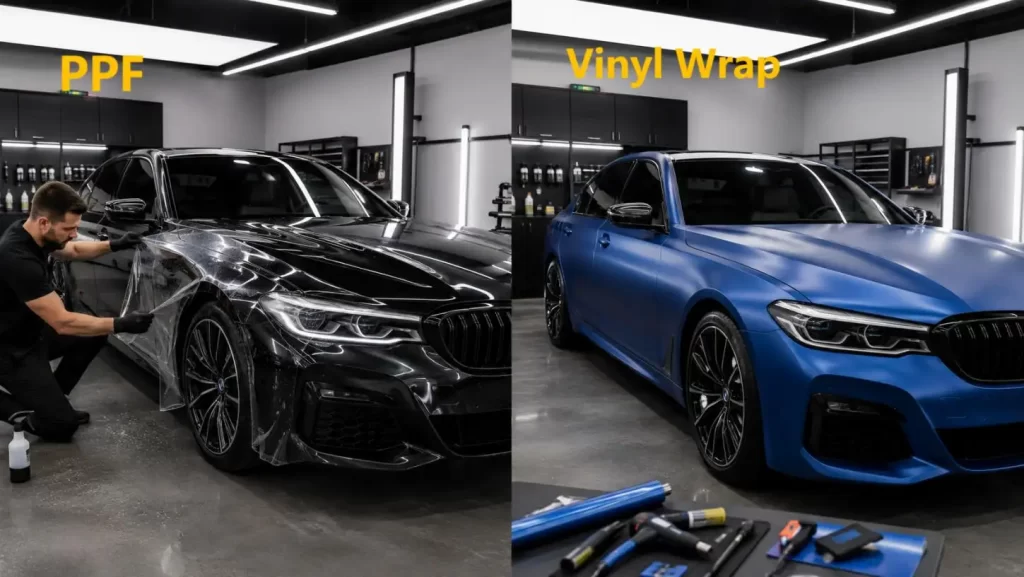
A useful comparison should therefore consider:
• Material and installation cost
• Vehicle size and panel complexity
• Paint condition and preparation
• Expected service period
• Repair and removal expenses
• Whether the main goal is protection, color change, or both
The lowest initial quote is not always the lowest-cost solution over the vehicle's ownership period.
Why the Two Full-Vehicle Wrap Quotes Differ?
A "full wrap" quote may include very different products and installation standards. One shop may quote a premium cast vinyl installation, while another is quoting transparent TPU PPF with edge wrapping, panel removal, paint correction, and a longer installation warranty.
Vehicle size matters, but body geometry can be equally important. Bumpers, mirrors, spoilers, air intakes, sensors, recessed handles, and sharply curved panels require more cutting, stretching, positioning, and finishing time.
Before comparing prices, confirm whether the quote includes:
• Paint decontamination or polishing
• Removal of badges, trim, handles, or lights
• Wrapped edges or visible-cut edges
• Pre-cut patterns or hand-cut installation
• Old film removal
• Material and workmanship warranties
Without this information, two apparently similar quotes may not describe the same scope of work.
Why Does PPF Usually Cost More Than Vinyl Wrap?
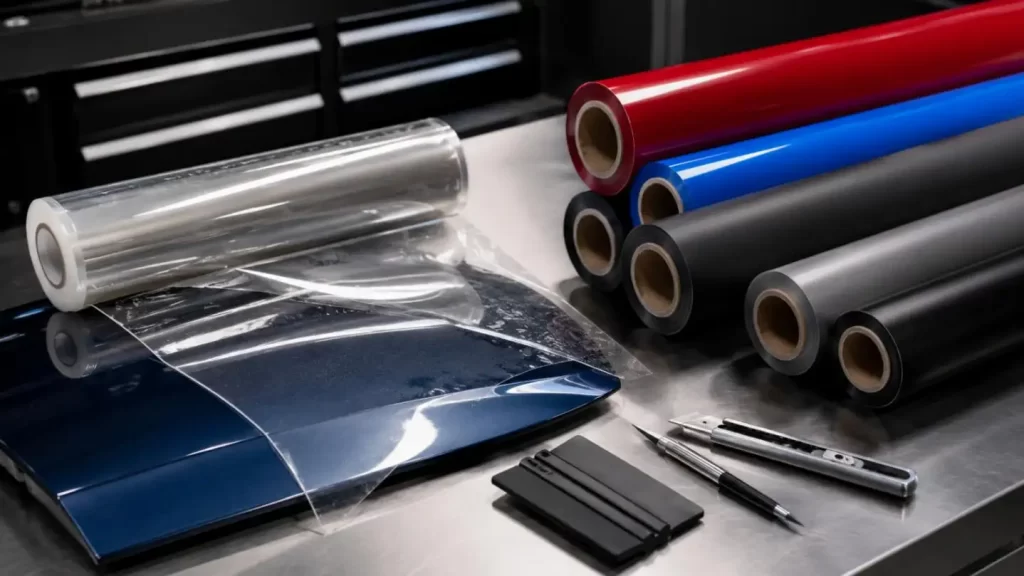
The majority of transparent paint protection films (PPFs) use an elastic, adhesive, polyurethane (TPU) film with a functional topcoat. This strong but light structure protects the surface against scratches, minor impacts and some pollution.
The main component of the films that change the color, gloss, and texture and that are used in vinyl wraps is based on PVC. Premium cast vinyl, which is one type of vinyl wrap, is more appropriate for use on complex curves, whereas lower-cost calendered vinyl is better for use on flatter surfaces or short-term applications.
These structural differences affect both material price and installation difficulty.
| Factor | TPU PPF | Premium Cast Vinyl |
| Primary purpose | Paint protection | Color or finish change |
| Impact resistance | Higher | Limited |
| Typical thickness | Greater | Lower |
| Surface options | Clear, matte, colored | Wide color and texture range |
| Installation difficulty | High | Moderate to high |
| Initial cost | Usually higher | Usually lower |
Film thickness alone does not determine performance. Elastic recovery, tear resistance, coating durability, adhesive behavior, and resistance to weathering must also be considered.
Choosing Between Transparent PPF, Colored PPF, or Vinyl Wrap?
The best option depends on the goal of the vehicle owner.
Transparent PPF for Paint Preservation
The top choice for preserving the factory finish is transparent PPF. It works with new, high-value cars, long-term ownership, or cars that get a lot of highway driving.
The cost is justified with:
• Resistance to rock chips, road debris, and light scratches.
• Protection from the effects of exposure to insects, birds, and road chemicals.
• Removing the original paint appearance.
PPF is not damage free; however, it offers superior protection. Deep impact, film punctures, and severe scratches may still require panel replacement.
Vinyl Wrap for Color Change
Premium cast vinyl is often the more economical solution when appearance is the main objective. It is suitable for temporary color changes, commercial branding, short ownership periods, and vehicles that may be restyled frequently.
Vinyl can provide a basic barrier against light abrasion, but it should not be treated as an equivalent substitute for impact-oriented PPF.
Colored PPF for Protection and Styling
Colored PPF combines visual change with greater physical protection, but it generally carries the highest initial cost. The premium may come from the TPU structure, colored layers, coating system, manufacturing consistency, and more demanding installation.
It is most rational when the owner genuinely values both functions. Paying for colored PPF purely for color change may not be cost-effective.
Will Total Costs Decrease if Coverage is Partial?
Cost-effective options that let you avoid full-vehicle protection are available. Owners with budget constraints can consider focusing PPF on high-impact areas such as:
• Front Bumper
• Hood
• Front Fenders
• Mirror Caps
• Rocker Panels
A full-front PPF package can cover all the most important exposure areas at a cost much less than a full-body installation.
Another alternative is the combination of front-section PPF and a full-body vinyl wrap. This will provide protection from impacts at the front of the vehicle while allowing the rest of the vehicle to be colored in a custom wrap. However, the installer must manage film overlap, edge visibility, gloss differences, and future replacement compatibility.
Reducing coverage area is often safer than selecting an unknown low-cost film with weak technical documentation.
Which Parameters Affect Real Installation Cost?
Material price per square meter tells only part of the story.
Material Utilization
Vehicle panels are irregular, so not every part of a film roll becomes usable coverage. Large bumpers, wide hoods, spoilers, and complex curves increase offcut waste.
Adhesive Behavior
First and foremost, and in order of importance, are initial tack, repositionability, air-release, and peel strength. If initial tack is too high, positioning can become impossible. On the other hand, long-term edge adhesion can result in lifting.
Stretch and Dimensional Stability
A film can be stretchable and still perform poorly under the right (or wrong) conditions. Stretching can cause leaching, color lightening, adhesive stress, and shrinkage.
Optical Quality
Haze, gloss, surface texture (orange peel), color consistency, and yellowing all work together to determine the long-term visual acceptability of an installation. A film that loses clarity early may need replacement before it physically fails.
How Do Vehicle Use and Paint Condition Change the Decision?
The same film is not suitable for every vehicle.
| Vehicle or Use Case | More Suitable Direction |
| New luxury vehicle | Full-front or full-body PPF |
| Frequent highway driving | PPF on impact zones |
| Short-term color change | Premium cast vinyl |
| Commercial fleet branding | Vinyl with planned removal |
| Protection plus color change | Colored PPF or combined system |
| Repainted vehicle | Adhesion and removal testing first |
Factory paint, repaired paint, and aged paint do not have the same adhesion strength. A film that can be safely removed from original paint may lift poorly bonded repair paint. The installer should inspect the surface, document previous repairs, and perform a test application where necessary.
Installation Quality Can Cost More Than the Film
The final result depends heavily on preparation and installation.
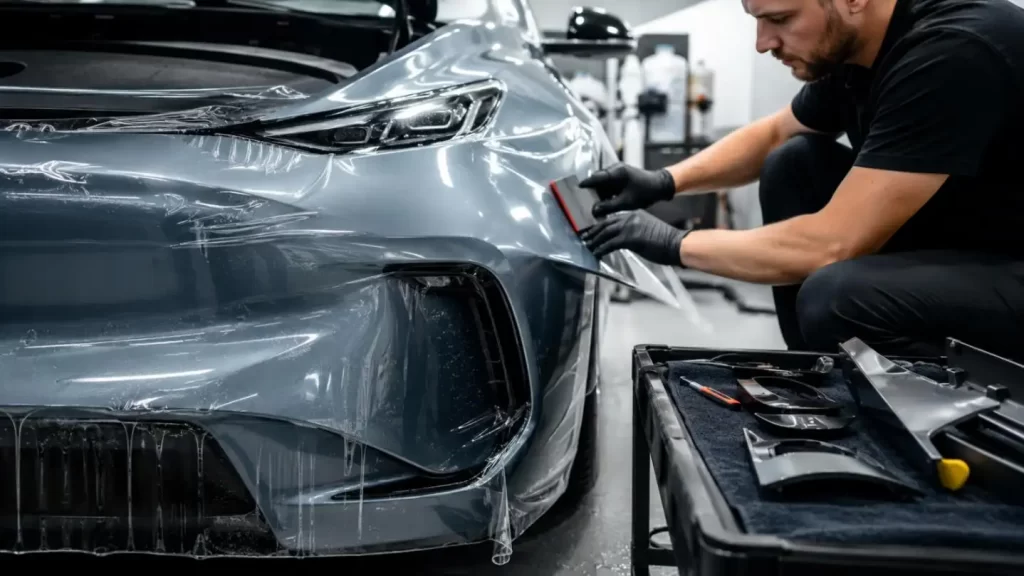
A controlled environment minimizes dust, contaminants, moisture, and temperature-related imperfections. Edge wrapping and removal of components may optimize aesthetics but are labor-intensive, increase material cost and the risk of disassembly.
The use of pre-cut patterns may reduce contact with the paint and increase consistency of the result. Hand-cut installation may increase the edge wrap but is more dependent on the installer's skill.
Poor installation results in:
• Bubbles or contamination
• Visible seams
• Lifted edges
• Stretch marks
• Premature shrinkage
• Unnecessary material replacement
A lower-grade film installed properly may outperform a higher-grade film installed improperly.
How to Compare PPF vs Vinyl Wrap Costs Over Time
The more accurate formula is:
Total ownership cost = installation cost + upkeep + damage + removal + anticipated repairs − value of paint protection
PPF is the better choice for long-term protection of paint for the purpose of preserving the value of the vehicle and the original paint after exposure to high-traffic areas.
Use premium cast vinyl for color change, branding, short-term, or more temporary designs.
Consider colored PPF only when both protection and appearance are genuine priorities. For limited budgets, protect the highest-risk panels first rather than reducing product quality across the entire vehicle.
The best PPF vs Vinyl Wrap Cost decision is not based on which film has the lowest invoice. It is based on which system delivers the required protection, appearance, service period, and removal outcome at the lowest realistic lifecycle cost.
FAQs
Q1. What are the implications of vehicle size on PPF versus Vinyl Wrap Cost?
Larger vehicles have higher material and labor costs due to the size. Additional features can be a higher cost burden due to labor intensive aspects of the installation.
Q2. Why is there a larger cost gap for PPF and vinyl wrap?
The larger cost gap for PPF and vinyl wrap is due to the various stages for each application. Vinyl wrap is a simpler process, while PPF requires a more complex process for the base material application, coating, film, and installation.
Q3. Is a vinyl wrap cheaper than PPF for a full vehicle?
Full vehicle installations using vinyl wrap are cheaper than PPF, especially if the aim of the installation is primarily for a vehicle color or finish change.
Q4. Does a vinyl wrap offer paint protection like PPF?
A vinyl wrap would offer minor protection against surface abrasion, but not the same as PPF protection from stone chips and other impacts.
Q5. Which is more resilient, PPF or vinyl wrap?
The resiliency of either PPF or vinyl wrap is highly dependent on a number of factors. PPF is more resilient when a protective purpose is served, and vinyl wrap is more resilient when used for design purposes.