




Hot Tags
Vinyl Car Wrap vs. Traditional Paint: Which Finish Fits Your Vehicle?
July 23, 2026


Evaluating Vinyl Car Wraps and Traditional Paint Jobs extends beyond cost and visual appeal. The condition of a vehicle's factory paint, how long the owner plans to keep the car, the car's body style and design, the weather and other conditions the car will be exposed to, how much effort the owner is willing to spend to maintain the wrap or paint, and whether it's important for the wrap or paint to be reversible, must also be considered.
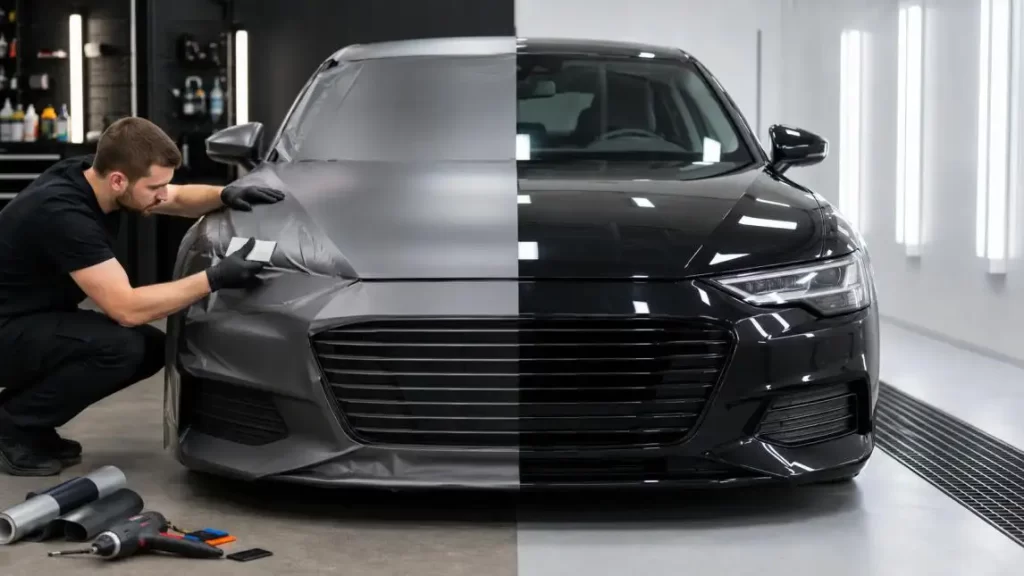
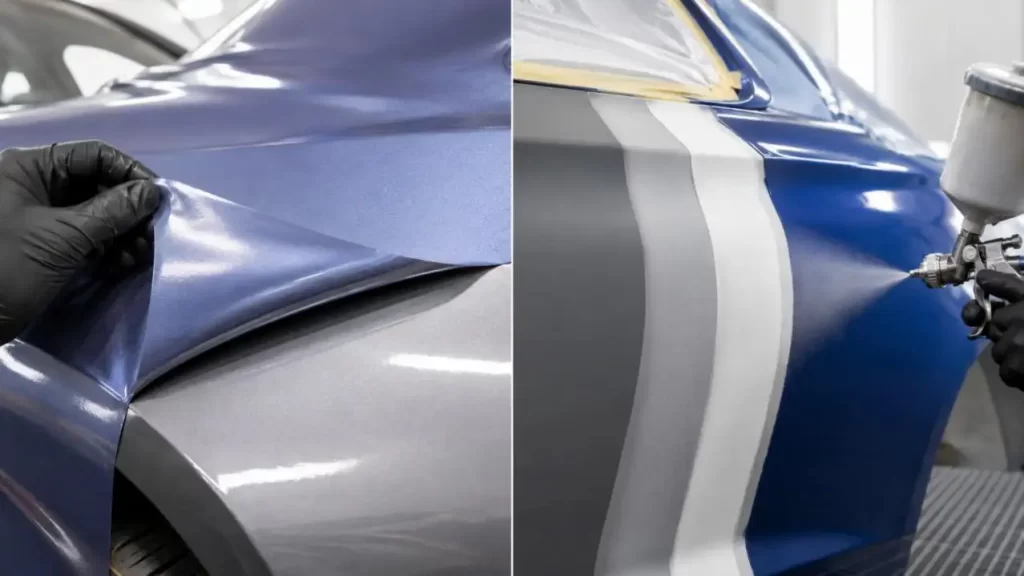
Vinyl wrap works as a removable covering over a stable painted surface. Traditional paint creates a new cured coating system and can form part of a wider body-repair process. Understanding this difference is the starting point for making a reliable decision.
Goal: Color Change, Paint Preservation, or Surface Repair?
First identify the actual problem.
Vinyl car wrap is often suitable when the original paint is in good condition and the owner wants:
• A temporary color change
• Commercial graphics or branding
• A matte, satin, metallic, or color-shift appearance
• The option to restore the original color later
• Less vehicle downtime
Traditional paint is usually more appropriate when the vehicle has:
• Peeling clearcoat
• Corrosion
• Deep scratches or dents
• Unstable body filler
• Poorly repaired panels
• A requirement for long-term surface reconstruction
A wrap can reduce the visibility of minor marks, but it cannot repair rust, loose clearcoat, deep sanding scratches, or uneven bodywork.
How Vinyl Wrap and Automotive Paint Differ
A vehicle wrap normally includes a colored or printed vinyl layer, pressure-sensitive adhesive, and release liner. The adhesive bonds to the existing clearcoat without becoming a permanent part of the vehicle's coating system.
Traditional refinishing may include surface preparation, filler, primer, basecoat, and clearcoat. New finishes are created by spraying these layers where they undergo flashing and curing.
This structural difference affects the entire decision:
| Decision factor | Vinyl car wrap | Traditional paint |
| Relationship to vehicle | Covers existing paint | Creates a new coating |
| Reversibility | Usually removable | Generally permanent |
| Surface repair ability | Very limited | Can support full repair |
| Substrate requirement | Stable, smooth paint | Can be prepared and rebuilt |
| Downtime | Usually shorter | Usually longer |
| Graphics | Highly practical | Difficult and expensive |
When Is Vinyl Car Wrap a Better Option?
A wrap is usually a strong candidate when the vehicle still has stable factory paint. It is especially useful for leased vehicles, commercial fleets, promotional vehicles, and owners who may change colors again.
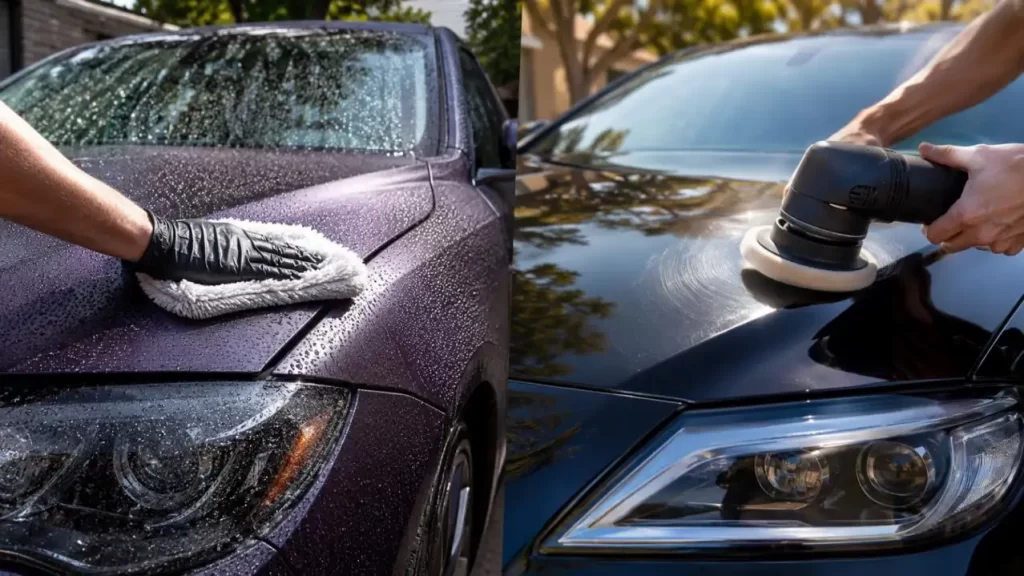
However, the installer should inspect:
• Repainted panels
• Stone chips and exposed metal
• Clearcoat edges
• Wax, silicone, or coating contamination
• Body filler and repair boundaries
• Plastic bumpers and textured trim
Repainted surfaces can present greater removal risk than properly bonded factory paint. Recently painted panels also need sufficient curing time before wrapping. The required waiting period should be confirmed with the paint-system supplier rather than estimated from surface dryness alone.
When Does Traditional Paint Provide a More Reliable Result?
Traditional paint is preferable when the existing substrate is already failing. Wrapping over peeling clear coat or corrosion only hides the defect temporarily. The film may bubble, lift, or remove loose coating during later removal.
Painting may also produce a more integrated finish when the project requires:
• Door jamb and engine-bay color changes
• Precise matching to an original body color
• Repair of accident-damaged panels
• Long-term ownership
• Restoration work
• Continuous color across exposed and hidden surfaces
Paint quality, however, depends on the complete process. Poor sanding, incompatible primer, incorrect flash times, contamination, or insufficient curing can produce delamination, solvent defects, orange peel, or color mismatch.
Which Wrap Parameters Matter Most?
Film thickness alone does not determine performance. Key parameters comprise the following:
• Film construction: Cast vinyl tends to have superior conformability and dimensional stability to economy calendered film when wrapping complex curves on vehicle bodies.
• Adhesive behavior: The related terms in this context are edge stability, initial tack, and final bond strength. Aggressive adhesion is generally detrimental to ease of removal.
• Stretch and recovery: Internal stresses and film lifting can be the result of failure to post-heat and to stretch the film along the contours of the vehicle body.
• Weather resistance: Roofs, hoods, and trunk lids are subject to more direct insolation and heating than vertical surfaces and may present different performance than the rest of the vehicle.
• Removability: Warranted removability should be confirmed for the removal period, the temperature for removal, and the adhesive-residue policy and exclusions for surfaces repainted.
Appearance Depends on More Than Color
Wraps in gloss tend to show subsurface defects. Matte and satin finishes conceal defects but may develop defects from cleaning.
Depth of finish is often enhanced with paints and wraps of a satin or gloss base, but matching for a repair can be impossible.
Special-effect wraps can be a means to a quick finish, but they have their own issues of a limited range and visibility of defects.
What Determines the Real Cost?
Vinyl Car Wraps have a higher material cost than paint, but that is only one factor.
Wrap costs may include:
• Surface decontamination
• Trim and panel removal
• Complex curves and deep recesses
• Door jamb coverage
• Old-film removal
• Adhesive-residue cleaning
• Future panel replacement
Paint costs may include:
• Dent and corrosion repair
• Sanding and masking
• Primer, basecoat, and clearcoat
• Booth and curing time
• Color matching and blending
• Polishing and defect correction
• Longer vehicle downtime
For a short ownership period or frequently changing commercial branding, wrapping may offer better lifecycle value. For a damaged vehicle intended for long-term use, proper repainting may be more economical than wrapping over an unstable surface.
Installation and Maintenance Risks
Wrap failures often appear after delivery rather than immediately. Common causes are the presence of contaminated paint, film that has been overstretched, poor edge preparation, too little post-heating, inappropriate material selection, and insufficient or inadequate selection of materials.
Other causes of paint defects may include insufficient preparation of the substrate, moisture, and dust, as well as incompatible layers, poor mixing, and incomplete curing of the paint.
Maintenance also differs. High-pressure water should not be directed into wrap edges. Aggressive compounds and abrasive brushes may damage vinyl. Matte wraps and matte paint should not be polished like gloss surfaces. Local repair can also produce visible differences because both vinyl and paint change with age and ultraviolet exposure.
Vinyl Car Wrap vs. Traditional Paint: Final Decision
Choose vinyl wrap when the paint is stable, reversibility matters, downtime must be limited, or the project requires graphics and special finishes.
Choose traditional paint when the substrate requires corrosion treatment, body repair, coating reconstruction, or a permanent finish across visible and hidden areas.
Some vehicles require both: repair and repaint damaged panels first, allow the coating to cure fully, and then apply vinyl for the final color change.
The best decision is not the cheapest initial quotation. It is the solution that matches the paint condition, panel geometry, climate, ownership period, maintenance plan, repair strategy, and verified material performance.
Explore HEY FILM's customizable automotive wrap solutions, technical support, and OEM/ODM capabilities to find the right finish for your market.
FAQs
Q1. Is there a difference in the maintenance of matte wraps versus matte paint?
Both require a degree of careful maintenance as matte finishes, both paint and wrap, can develop uneven sheen. Corrections are localized and difficult.
Q2. How does a vinyl wrap effect paint?
A low risk of damage to factory paint can be expected with a wrap that is properly installed and removed. The same cannot be said for surfaces that have been poorly painted and cured. Damage can be expected to those surfaces when a wrap is removed.
Q3. Does a vinyl wrap conceal or cover scratches or peeling paint?
Lightly scratched or scuffed surfaces may become less visible with a vinyl wrap. However, a wrap cannot conceal deep scratches, scabbing, or coating damage.
Q4. Which lasts longer, vinyl wrap or automotive paint?
Paint is more permanent, whereas the longevity of a wrap is contingent upon several other factors, including climate and quality of installation.
Q5. Which is better for body damage or rust, a wrap or paint?
A vinyl wrap cannot stop the progression of rust, neither can it repair or rebuild damaged surfaces, therefore, a traditional repair and repainting is the route most recommended.