


Hot Tags
Custom Vinyl Car Wrap: From Project Brief to Repeat Order
October 18, 2026


When it comes to a custom wrap project, typically, the process starts with a logo file, the preferred color and a photo of another car. None of those gives the supplier any clue on what should be delivered to the workshop and how the completed car will be accepted. Things get more costly if multiple vehicles are required to have the same appearance.
A custom vinyl car wrap is not just a single cool look for a brand manager, fleet buyer or wrap shop. The value-added product is a consensus package comprising artwork, film, coverage, installation method and replacement records. This guide will help you create that short and prepare before signing up a fleet or repeat order.
Explain the Concept of “Custom” for this Project
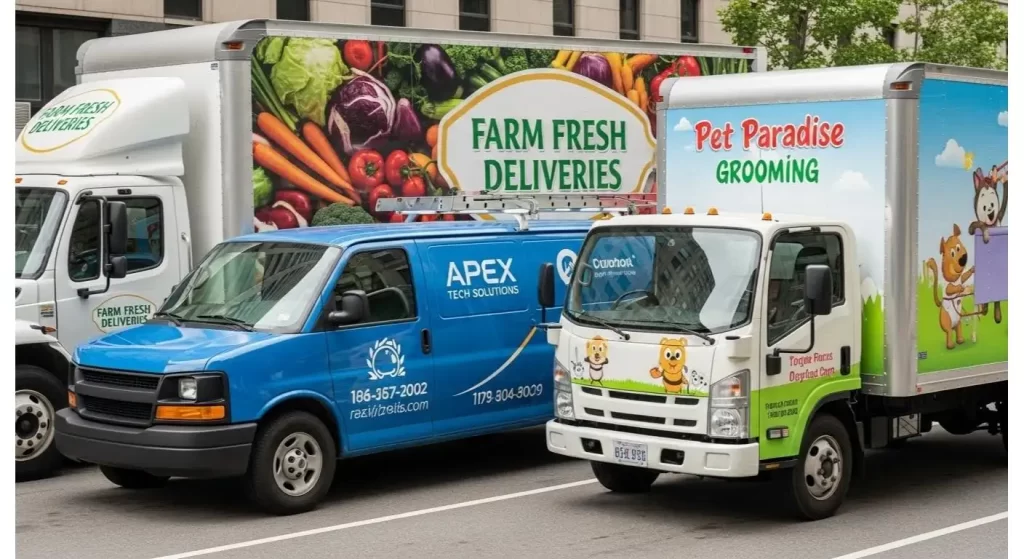
A stock colour could be used on an unusual panel, the printed artwork could be customized, the fleet identity could be matched or a special film colour could be developed for customizing. The requirements to present a proof vary from one to the other. If a custom color is required, an approved physical sample and a plan for subsequent repeat supply is required for a printed logo; if a print logo is required, readable artwork is required.
Start off with the vehicle models and how many are expected. There will be differences in dimensions of the artwork and installation time between one sedan and twenty vans. Determine what vehicles are already covered, what vehicles can be added and if previously wrapped panels will require repairs. Note the color of the current paint on each vehicle as the look of the same paint can vary depending on exposed openings and unwrapped surfaces.
Commit to one measurable objective, such as consistent fleet recognition, a unique personal appearance or the promotion of a design for a limited campaign. The use of branded business cars is covered in HEY FILM's business car wrap design guide. The brief should provide enough detail to make the general notion more concrete, into specific deliverables for your project.
Make real scale Artwork for the Real Vehicle
Provide Vector Art wherever possible and determine which logo, colours, fonts and variations are allowed. If you have a brand guide, pass it on to the designer or if a particular guide version, pass that on. Don't consider all text to be equal; clearly indicate information you want to be legible from a distance, like a service name.
Take a side-on, front and rear photograph of each type of vehicle. Important graphics can be disrupted by such things as gaps in panels, sliding tracks, sensors, and door handles. Design to be placed on a generic template must be tweaked according to the actual body shape prior to production.
Study the positioning at a typical distance. What works well on a banner on a computer may not work on a moving banner. Avoid complicated recesses with essential elements and provide for areas to be trimmed. Ensure that windows are separately verified to be part of the design, as well as which local requirements apply to vehicle graphics.
Explicitly state Materials Without Mixing Product Categories
Indicate if the job is utilizing a colored vinyl film, printable vinyl or a combination of both. Write down the finish, color code, desired location, and/or laminate to be used for printed graphics. For a color change panel, a different film can be selected than for the printable media of a logo.
Contact the supplier of material for the specific film and instructions for its use. The starting point for relevant product is the Vinyl Wrap collection of HEY FILM. For buyers who also specify impact protection, treat that as an additional material requirement, do not presume that a decorative wrap can be used for impact protection.
Match the material with the application. Requires varying requirements for installation and appearance with broad flat doors, deep bumper recesses and high exposure roofs. Get samples and test representative areas prior to agreeing on a large quantity. Keep approved samples—including the look of any printed colour post lamination.
Different Mockup Approval than Production Approval
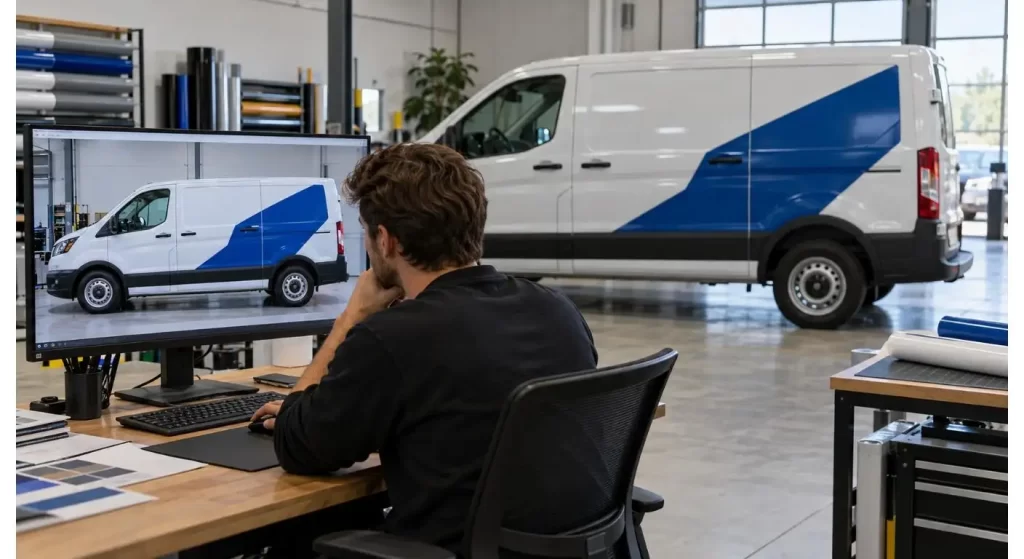
Using a digital mockup will set the composition and placement. Does not guarantee the actual color, printability, adhesion and finish when applied to the vehicle. Provide an "approved" visual layout, followed by an approval of a physical sample or trial panel fabricated using the materials that will be used in production.
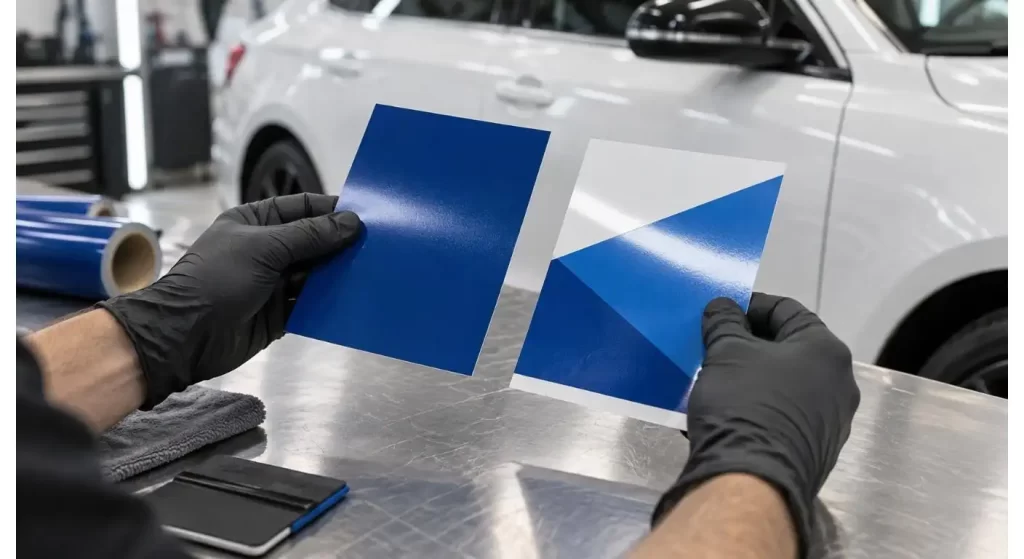
For printed work, check a proof for workable scale. Test for color, sharpness, gradations, small lettering and laminate effect. If the piece of art is going over a seam or panel gap, check for how the design will “seam up”. For multi-vehicle jobs, state an allowable variation, don't wish for all of the vehicles to look the same in all the lighting.
Have one individual sign off for each phase. Write down the approved file version, sample identification, model of the vehicle, date. When production starts, there's an easy way for a logo or shade to change, resulting in different versions of the same campaign on different vehicles.
| Approval Gate | Item Submitted | Approved Version / Code | Approver and Date |
| Design layout | Vehicle-specific mockup | ______ | ______ |
| Color and finish | Physical film sample | ______ | ______ |
| Printed graphics | Full-size print and laminate proof | ______ | ______ |
| Pilot vehicle | Finished vehicle photos and inspection | ______ | ______ |
| Repeat production | Final artwork and material specification | ______ | ______ |
Drive in front of the other vehicle, then drive around.
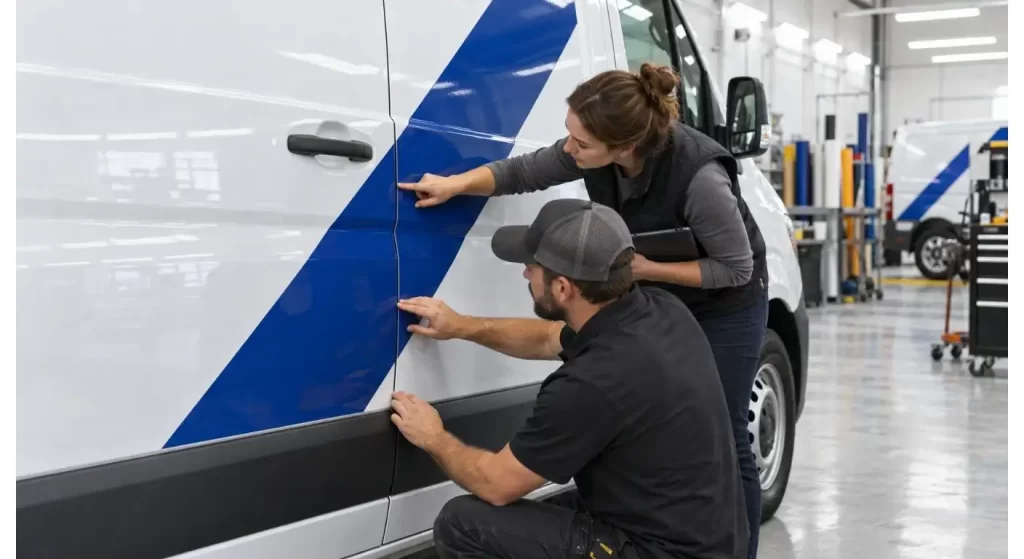
Choose one of the representative vehicles for the initial installation. If there are more than one type of body style in the fleet, select the one that has the most challenging doors or curves, and verify other layouts individually. Discuss panel gaps and how the material used reacts around panel recesses.
Go for a walk around the completed pilot during the day. Test the readability of the message from a distance, check for color consistency with the approved sample color, and check if the front, sides and back have a consistent message. Note any changes prior to cutting out materials for the rest of the automobiles.
The real material use and the real labour time are also revealed in the pilot. Update order quantities and installation schedule based on that evidence. That's the fleet context of vinyl wrap for commercial vehicles as described by HEY FILM, but if you need a plan to become a repeatable job, then you need a project-specific vinyl wrap pilot.
Schedule Repeat Orders and Repairs From the Very First Day.
Inquire about the ownership of the artwork master, colour reference and production specification. The fleet vehicle can be replaced following an accident or months after the initial installation. The team should determine the movie being shown, and duplicate the proper arrangement without having to construct the design from photos.
Continue to retain roll/batch information, if available. If using print graphics, keep the final print file, the scale, the output parameters and the approved print proof. Replacement material might not be exactly like weathered film on an older vehicle, compare in the same light and discuss acceptable result.
Define the respective responsibilities of material defects, installation quality, damage of the panel and regular maintenance. When requesting a project specific discussion, send vehicle models, quantities, target markets, sample needs, artwork needs, etc. through HEY FILM's contact page. Development based on client samples and requirements is also mentioned in its company information, which implies OEM/ODM development.
Conclusion
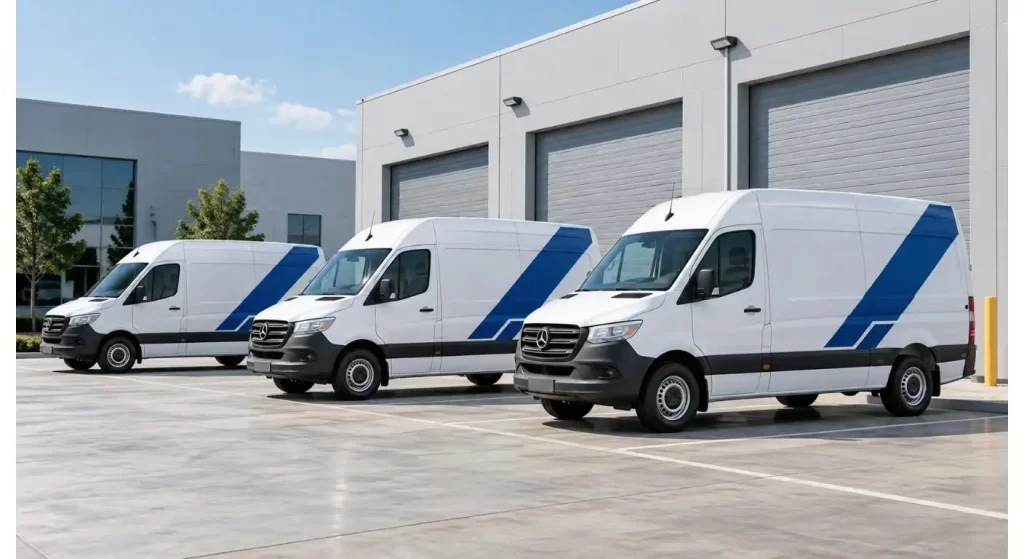
With every creative decision having a production reference, a custom vinyl car wrap becomes manageable. Establish an objective, create designs per vehicle type, green-light actual materials, and test a pilot prior to scaling. Maintain records and samples of what will be needed to enable the next vehicle to match the first.
FAQs
Q1. Does a custom wrap mean a custom made film color?
No. May feature standard films set out in a new format or printed graphics.
Q2. How is it possible to have a single design file for all models of the vehicle?
Not without adaptation. Body dimensions, doors and panel gaps vary the layout.
Q3. Is a screen mock up sufficient for production approval?
No. Approve a physical item/print proof and layout.
Q4. Why is it important to install a pilot vehicle first?
It shows fit, readability, usage of material and modifications required for repeat work.
Q5. What should be kept to the end of the fleet turnover?
Maintain approved artwork, film codes, print settings, samples and vehicle specific layouts.