


Hot Tags
Carbon Fiber Vinyl Wrap: How to Place and Align the Pattern
October 17, 2026


A piece of carbon-look sample may look good in your hand, but when you stretch it to a curved car panel, you may find it stretched or uneven. The pattern has a direction and the incidence of light on it varies throughout the vehicle. The location is as important as the actual content.
Carbon fibre vinyl wrap is a decorative film that resembles carbon fibre weave. Does not transform a body panel into a carbon fiber component, nor does it lighten a body panel. The actual question is where does the texture enhance and what is not too challenging to manage on the surface or to get the pattern to match for owners or wrap shops.

This is the first method of using the texture: use it as an accent.
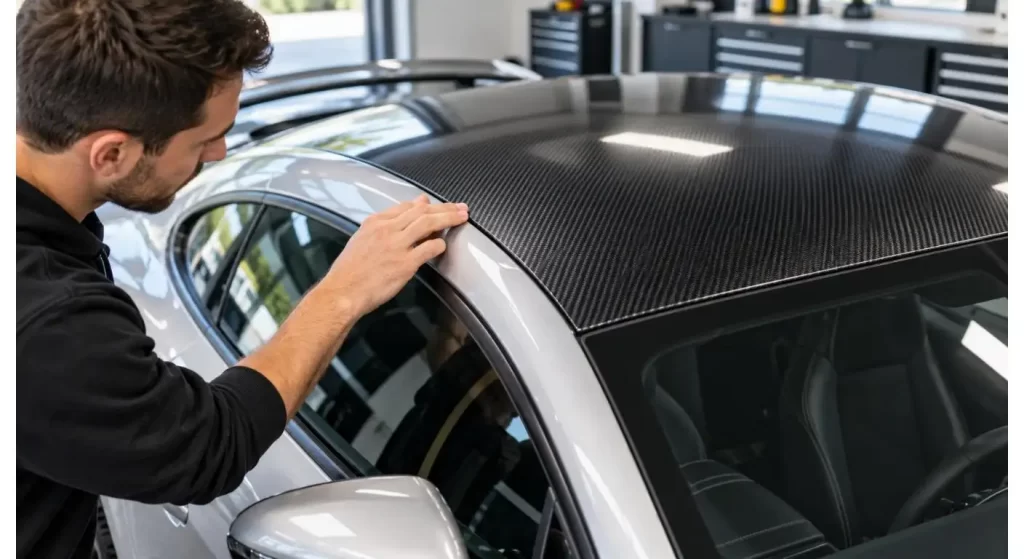
First, determine which section of the vehicle seems to be the one that needs to be emphasized. A roof or mirror caps, spoiler or well-defined hood section can add texture without having to paint over all of the panels. It's usually best when the rest of the car has a simpler finish.
Take into account the dimensions of the area. A small, textured item might be subtle on the whole, but detailed when viewed from close up. If you're installing a full hood treatment then it's imperative that this weave design be consistent throughout all panels of the car, and if you're doing a full car treatment then you're painting over everything anyway. Have a real sample next to the car and walk a few steps away before agreeing the scope.
The car roof vinyl wrap guide is written in terms of the heat and exposure to weather that horizontal panels receive and carbon texture is one of the possible roofs. That exposure should be an option – particularly on a car parked outside.
Compare under real light the pattern from the image.
There are different types of carbon-look films. Some rely on a raised texture that is apparent to the touch while others rely more on print and sheen. A high shine surface can enhance reflections, and a matte surface can help to reduce the pattern's visibility from a distance. This desired outcome will vary based on the vehicle's paint, trim and the desired style.
Test a sample under workshop lighting, black trim and out of doors. Inspect the weave from both a straight on and angled view. Inquire if the pattern is still the same if the sample is softly bent over a form similar to the target panel.
Don't trust a close-up picture of the product as the basis for approving a movie. On that level, practically anything can look dramatic when it comes to weave. If possible, see a larger sample installed. HEY FILM's vinyl wrap finishes overview lists carbon texture as an appearance option, but one would have to see a sample to determine the specific film.
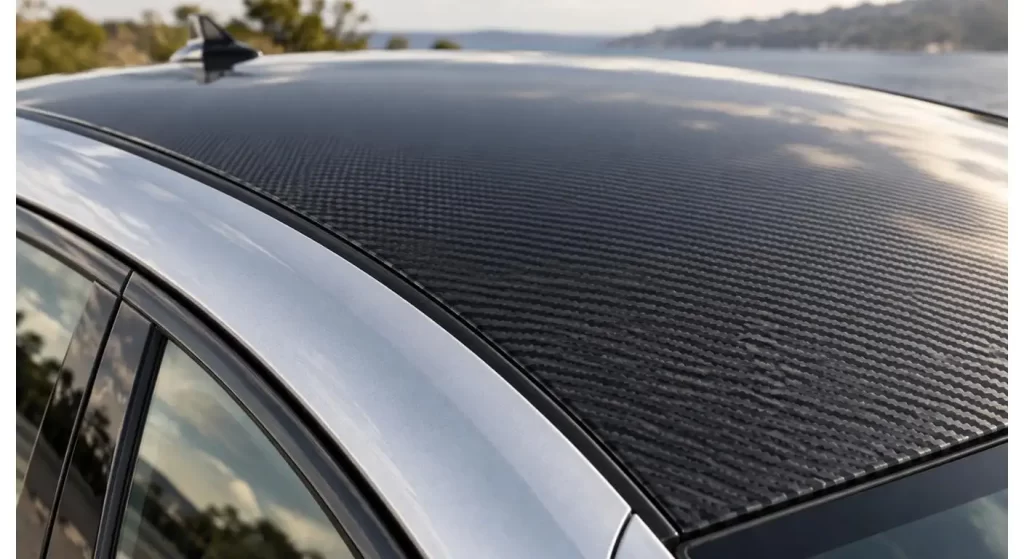
Maintain the same direction of the weave.
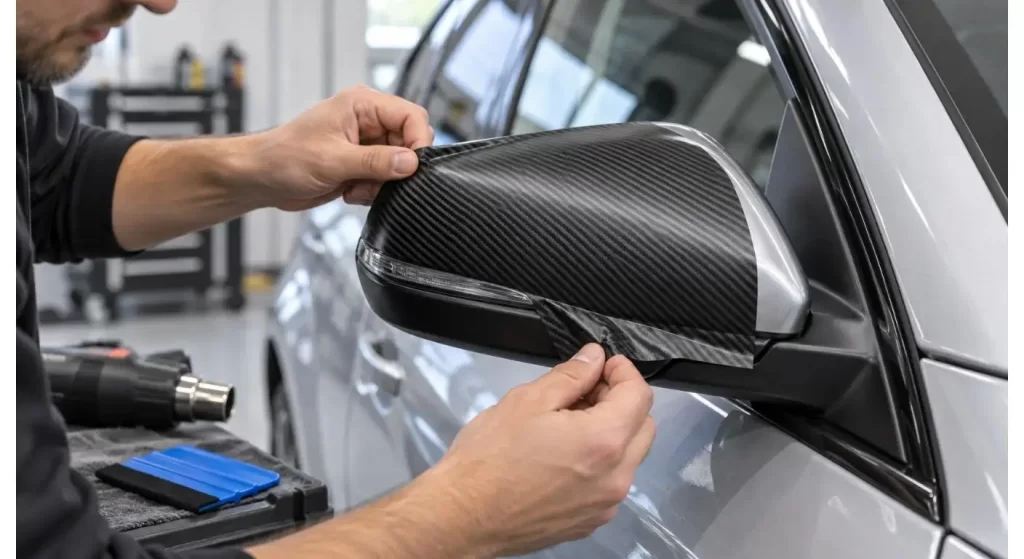
Carbon style patterns typically will show an orientation. A one-sided weave on the mirror can be distracting, even if it's the same colour, as it'll appear different when viewed from both sides. Direction is even more important on other hood, roof and spoiler parts.
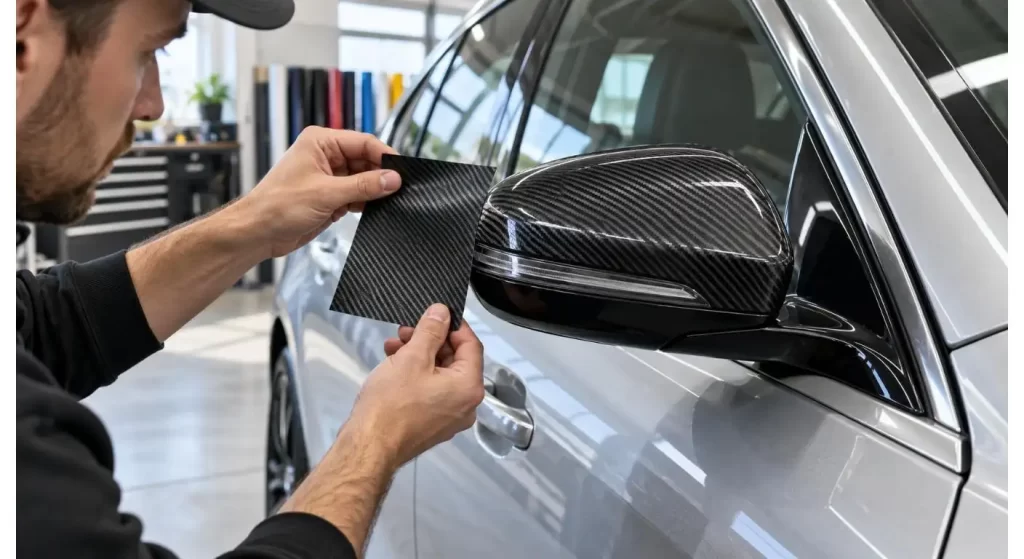
Prior to cutting, decide on the direction the pattern should flow with respect to each panel. Indicate roll orientation and take pictures of an approved reference. They can then consistently lay out pieces in the shop and predict the amount of waste due to that direction, as opposed to rotating pieces for best use of material.
Look for the pattern following curved surfaces. There is a way that the Stretch can alter the appearance of the weave size or angle. A controlled seam or separate piece might provide a better visual rhythm than extending one sheet over a problematical shape. Check the outcome both from a distance and close up.
| Panel | Approved Weave Direction | Reference Photo Taken | Edge or Seam Location |
| Roof | ______ | Yes / No | ______ |
| Hood accent | ______ | Yes / No | ______ |
| Left mirror cap | ______ | Yes / No | ______ |
| Right mirror cap | ______ | Yes / No | ______ |
| Spoiler | ______ | Yes / No | ______ |
Select Panels in Consideration of the Shape
Broad panels allow plenty of space for the pattern to be read, but the edges and attached portions will need to be planned. Antennas, seals or a sunroof can be placed on a roof. A hood can have vents, sharp edges or an exposed leading edge that is exposed to road conditions. Please specify the exact location where the film will end.
Compact accents can be mirror caps and spoilers but their curves can focus tension. Don't assume that a flat sample will fit if it is installed on a representative shape, ask the installer to test the actual sheet. The pattern will become visible when it is distorted at the corner, and can ruin a neat installation.
Do not cover over any damaged paint with texture. Chips, peeling clear coat and uneven repairs may show through and impact adhesion and/or removal. First, try to solve the problem of the underlying panel before determining the appropriateness of the decorative effect.
Verify the movie that is quoted.
The term “carbon fiber wrap” may refer to various materials. Inquire about the decorative vinyl or carbon patterned colored PPF. Materials might provide varying film structure, thickness, installation methods, protective performance and cost. A carbon pattern image doesn't set those specifications.
HEY FILM's Black Carbon Fiber Colored PPF case can be used for visual reference. That case is known as colored PPF, and should not be used as evidence of performance or appearance of a vinyl-wrap product. Compare samples and specifications for specific goods quoted.
When the goal is to customize for visual purposes, inquire about the texture, adhesive, application and care instructions for the particular vinyl wrap in HEY FILM's Vinyl Wrap collection. Separately discuss the need for impact protection if it is desired. Include product name and code on the invoice to prevent using a general description in future maintenance.
Check Edges, Cleaning and Future replacement.
Determine and agree on the location of the seam and any visible edges prior to work. Look for pattern around gaps around panels, tight corners, and removed patterns for installation. When handing over, check both sides at the same time; it is easier to tell if they are the same way when both are visible.
The dirt may be differently stored on textured surfaces as compared to a smooth, glossy film. Use the cleaning instructions provided in the actual film, and only 'friendly' cleaning equipment. Do not use abrasive polishing or a high power jet in an edge. Give special attention to roof and hood areas which have been exposed to the outdoors.
Retain a small sample that has been approved and roll information if available. If the mirror or spoiler needs to be rewrapped later, the shop can compare the new film with that already affixed to the vehicle. Checking for color, sheen and weave alignment should be done before a replacement piece is installed.
Conclusion
Carbon fiber vinyl wrap is effective if the pattern has the same vinyl wrap and helps to hold the shape of the car. Prior to cutting, select an area and see a physical sample under different light conditions and weave directions. Be sure to check the specific texture listed on the quote, and then carefully examine the texture that has been installed, just as you would its edges.
FAQs
Q1. Is carbon fiber vinyl wrap real carbon fiber?
No. It's a decorative film that will not alter a panel's structure or weight, but will have a carbon look.
Q2. What places could the texture work well?
Effective accents can be made with roof, mirror caps, spoilers and some parts of the hood. Evaluate the form and lighting of each panel.
Q3. What is the importance of the direction of the weave?
Parts that are cut in a different way can seem out of alignment. Before installation, agree on the orientation!
Q4. Carbon pattern vinyl versus carbon pattern PPF – what is the difference?
No. Be sure to find out for sure what it is and how it is created; don't assume it looks the same.
Q5. Is it possible to change a bad accent?
Typically, a rewrapping of a section can be done. Check the colour, sheen and weave on the replacement film and compare it to the existing film.