


Hot Tags
Car Paint Protection Film: How to Choose Coverage for Your Car
October 17, 2026


The initial stone chip on a new car is likely to be on a panel that the owner views daily. But painting all painted surfaces isn't necessarily the best place to begin. The exposure for a driver who spends hours driving on open highways is different from that of someone who primarily parks in urban environments with lots of people.
Car paint protection film, also known as PPF, is a clear film which is applied over painted panels. That is to form an outer layer that can be replaced and designed to accept some of the contact that would otherwise be occurring onto the paint. What matters is which surfaces are most vulnerable on the routes you take and what information you have on those surfaces before you approve the job.
When making the decision on which driving risk to choose coverage for, create a map first.
Consider the previous month of driving. When you're driving behind others on the highway, the front end may be vulnerable to road grime and grit. City use can result in increased contact at door edges; loading areas and close parking areas. Construction of roads and gravel roads bring another form of exposure.
Circumambulate around the vehicle and examine current chips, scuffs and repetitive contact areas. These are helpful hints, but a new car might not have any at this time. Take into account who is using it, where it is parked, and if pets, bags or equipment come into regular contact with the same panel.
This exercise provides an opportunity to transform a generic package into a reasoned coverage plan. HEY FILM's paint protection film selection continues with its clear film range, with the specific location to apply always dependent on the daily usage of the car.
Focus on Panels in Direct Contact.
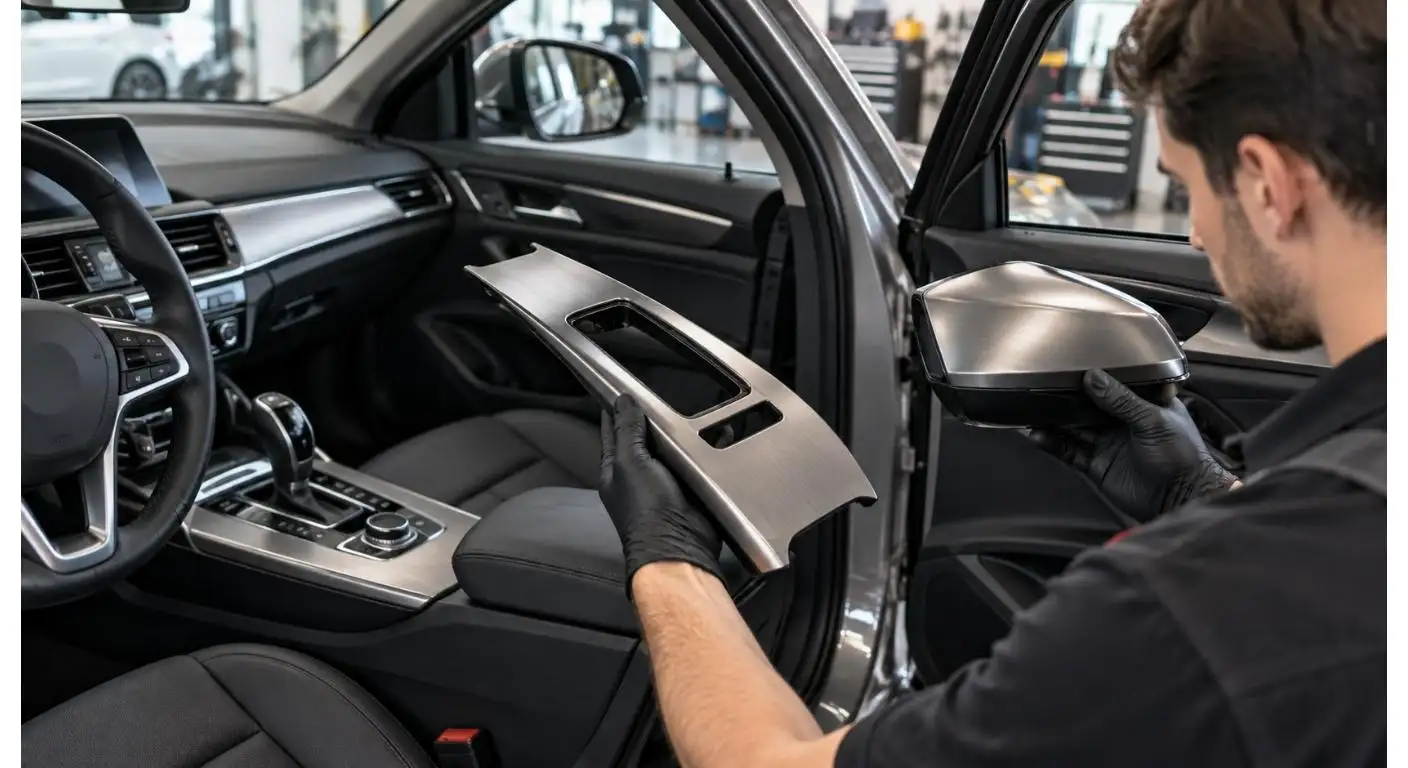
Front bumper, hood leading area, front fenders and mirror caps are typical priorities for regular highway driving. The motorist that desires a less noticeable film line on a hood may want to inquire about full hood coverage rather than a short strip. The distinction will have an impact on the material used and the appearance of the car from some angles.
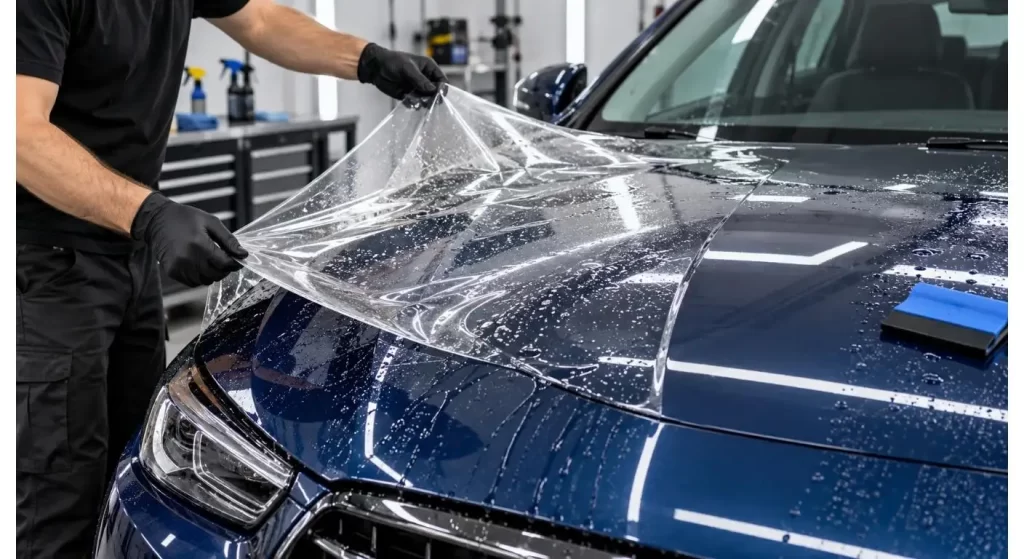
Rocker panels, door edges, door cups or rear loading sill are examples of parts a city driver can add. Instead of direct road debris, these areas are subjected to hands, shoes, bags and multiple entry. Partial packages can be expanded later at the discretion of the installer, but the installer should inform the end user about where each piece will end and if its edge will be visible.
Full-body coverage provides a more even film appearance and better coverage of painted surfaces, and requires more material and installation. Request a line item quote. HEY FILM's guide to PPF for cars is just a broad guideline as to what is the most critical to use, depending on the driving scenario, your priorities will change.
| Quote Item | Detail to Request | Recorded Answer |
| Film identification | Manufacturer and exact series | ______ |
| Coverage | Included panels and partial/full boundaries | ______ |
| Edge finish | Wrapped or visible edges by panel | ______ |
| Preparation | Cleaning and paint correction included | ______ |
| Aftercare | First-wash guidance and follow-up check | ______ |
| Responsibility | Material and installation warranty contacts | ______ |
Understand the role of the film and what it can and cannot do
PPF can help mitigate damage from certain road debris, handling and light surface contact. Not all impacts will mean no damage to the base paint. Damage to the film and the underlying panel may occur from a sharp stone, deep scrape or collision.
Some TPU films come with a "topcoat" that will return to their original surface condition when given proper heat. This does not mean a severe cut across the film that will make it close or fix paint that has been scratched prior to installing the film. Different constructions and properties are listed by HEY FILM for its various films such as K8 clear paint protection film. Do not transfer warranties or data from another model as the exact series quoted needs to be checked.
Transparency also matters. Test sample in daylight on your vehicle's paint colour. Examine clarity, gloss and appearance of exposed film edges. The film should not just have an attractive specification sheet, it should be appropriate to the finish that the customer is trying to maintain.
Before painting the ceiling, verify on the paint before you cover it.
PPF is the surface below. Film doesn't cover up existing chips, uneven repairs, peeling clear coat or contamination. Review each proposed panel with the installer and discuss cleaning and/or paint correction requirements prior to application.
Inquire about "sanded and repainted" panels. This may also vary in curing history and paint adhesion as compared to factory painted surfaces and therefore may impact future removal or installation. Unsure areas should be evaluated by a qualified installer and any restrictions documented on the job record sheet.
Let the shop know if the car already has a ceramic coat or if it has a lot of polish residue. The adhesive's performance varies based on the condition of the surface. Photograph any defects that are there at the time of filming so both sides are aware of any existing marks prior to the film going on.
When considering a film, think about the finished product, not just its specification
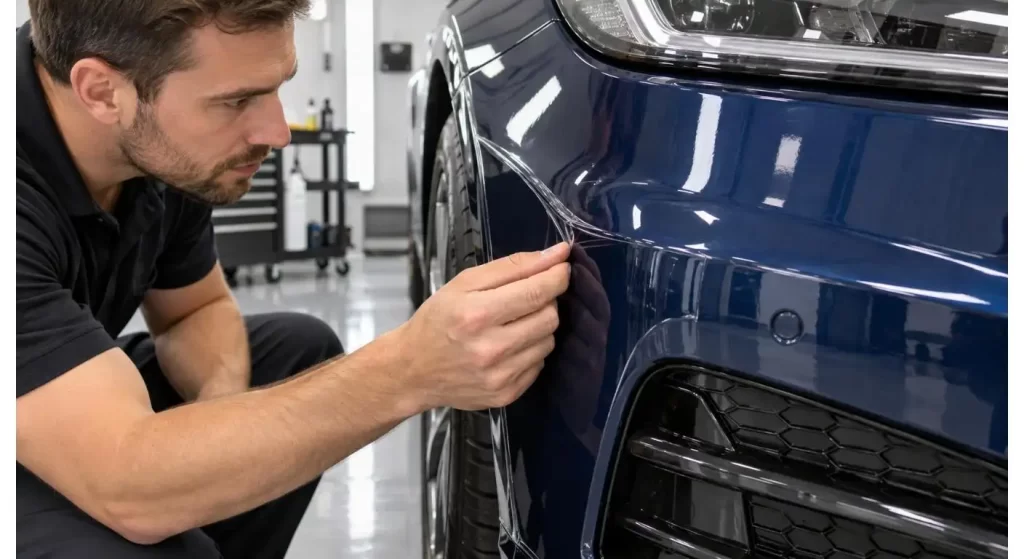
Film thickness, coating and adhesive can be described in a technical sheet, but it is fitting it to the panel that is the deciding factor for the installed result. Inquire about curves, edges, badges, and sensors and how the shop will manage these. Define if edges will be wrapped or exposed as lines as per the car's shape.
When collecting, check at various distances and under daylight and workshop lighting. Check for debris in, strange haze, edges that are misaligned, and out-of-place lifting around tight contours. A wet-applied film may be subject to small areas of installation moisture which may change as the film settles, please consult the installer for what they should expect to see and when to come back to check. Sub-film dirt should NOT be ignored as "temporary moisture.
Check against written coverage plan. Check the agreed edges and open doors. Take photos of the spaces that have been fitted, and keep the series of products, warranty conditions and directions for use with your vehicle documentation.
Arrange for Maintenance & Panel Repair.
The first wash and routine cleaning should be done as directed by film manufacturer. Be sure to use compatible products and not aim a pressure-washer nozzle at an exposed film edge. Clean up bird droppings and other debris quickly: although a protective film should be used, it must be cared for.
If the film is marked or cut, inquire if the damaged film can be replaced. The replaceable panel can be used only if the installer is able to determine the material and approximate the appearance to match the film already installed on the vehicle. Retain original invoice and series information.
When buying, make sure to read the warranty terms. Material defects, installation workmanship, accidental damage and removal are other issues. Inquire as to who is responsible for each claim and if coverage is contingent on maintenance or a maintenance schedule. A statement in words rather than a number of years is more helpful.
Conclusion
An auto paint protection film strategy should begin with exposure, then specific panels, after that film properties and also lastly installation high quality. Identify and protect the spots that receive the highest amount of exposure on your routes, analyze a sample and create a formal agreement. It will allow you to assess both the quote as well as the completed vehicle.
FAQs
Q1. Is it possible to chip paint in PPF?
No. It can mitigate some damage but in strong or sharp blows may be able to pierce the film.
Q2. Should all cars be equipped with full-body PPF?
No! Select coverage based on driving conditions, desired appearance and budget.
Q3. Are scratches a problem for PPF installation?
May cover them without obscuring them. Inspect and make corrections for visible defects prior to installation.
Q4. Will self healing repair a cut in the film?
No. Usually it is about light marks in topcoat (depending on the product).
Q5. What to retain after installation?
Maintain the coverage record, film series, warranty, invoice and care instructions.