




Hot Tags
Paint Protection Film Colors: How to Compare Appearance, Protection, and Durability
July 13, 2026


Paint Protection Film Colors allow vehicle owners to change a car's appearance while adding a protective layer over the original paint. Unlike clear PPF, colored PPF may combine a pigmented layer, TPU substrate, surface coating, pressure-sensitive adhesive, and release liner in one construction.
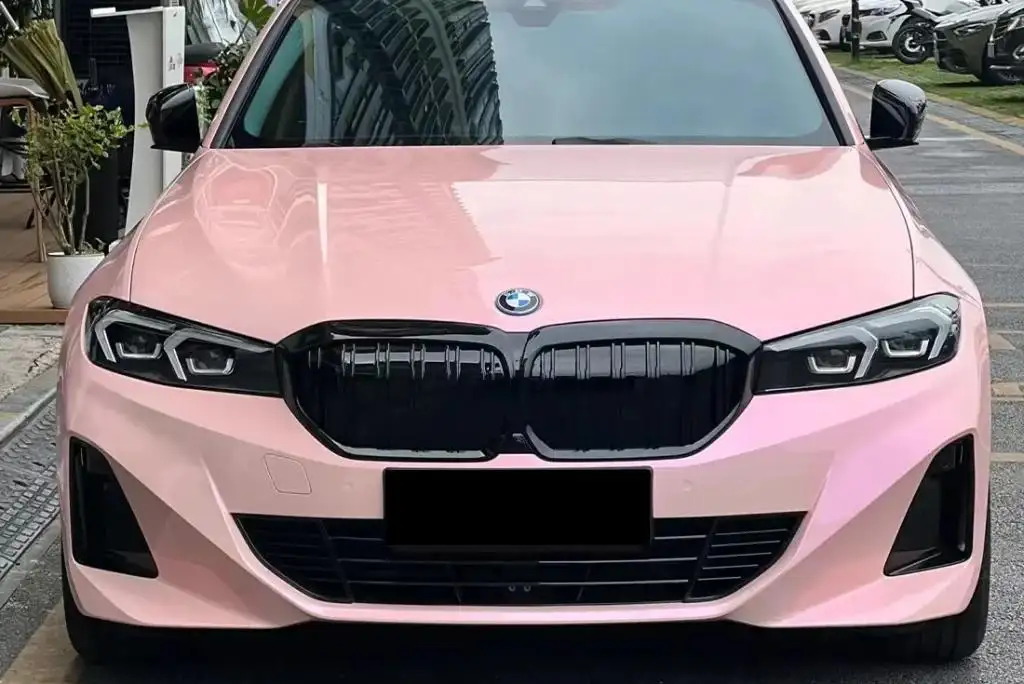
However, selecting a color is not simply a styling decision. The final result also depends on film opacity, gloss level, original paint color, stretching behavior, weather resistance, installation method, and future replacement availability.
What Are the Colors of Paint Protection Film?
As more consumers personalize their vehicles, the need for custom paint protection films (PPF) has grown. Some examples of PPF are listed below.
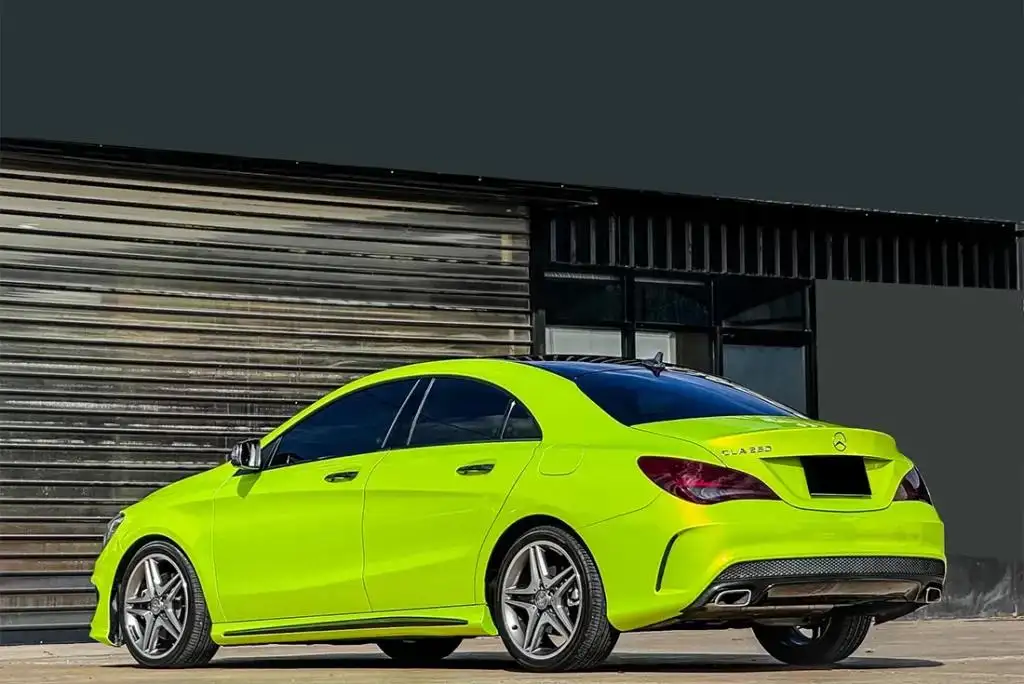
•Gloss: Paint protection film with a gloss finish will produce a shiny surface.
•Satin: Includes low-reflective-finish films.
•Matte: Offers films with a low-reflective finish and will accent the vehicle design.
•Metallics and Pearls: Realize advanced optical techniques that produce a range of finishes that change depending on the light.
•Color Shift: As the name suggests, these films will appear to be different colors depending on the viewing angle.
•Translucent colors: Will show some of the original finish colors beneath the film.
•Opaque colors: Provide greater coverage and more consistent color across different base paints.
"Color" and "finish" should be evaluated separately. Two blue films may use the same general hue but appear very different if one is gloss and the other is matte.
Why Can the Same Color Look Different on Different Cars?
A small color card does not reliably reproduce the appearance of an entire vehicle. Several factors affect the result:
•Original paint: Translucent films may appear deeper over black paint and lighter over white paint.
•Lighting: Color perception can vary with the type of daylight indoors and with different weather conditions.
•Panel curvature: Reflection on doors, bumpers, and fenders alter visual depth.
•Viewing angle: Especially sensitive films include metallic and color-shift ones.
•Film stretching: Excessive stretching can change color density and alter particle orientation.
For this reason, buyers should test a large sample on the actual vehicle rather than relying only on digital images or small swatches.
Which Parameters Affect Color and Protection Performance?
The total thickness of colored PPF does not explain its complete performance. Buyers should separate the effective TPU layer from the top coating, color layer, and adhesive.
| Parameter | Why It Matters |
| Film construction | Shows where the color layer, TPU, coating and adhesive are located |
| Effective TPU thickness | Influences impact absorption and conformability |
| Opacity | Determines how strongly the original paint affects the final color |
| Gloss units | Provide a more objective comparison of gloss, satin and matte finishes |
| L*a*b* values | Quantify color rather than relying on subjective descriptions |
| Delta E | Measures batch-to-batch or aging-related color difference |
| Elongation | Indicates material flexibility before breakage |
| Peel strength | Affects positioning, edge retention and later removal |
| Weathering resistance | Indicates resistance to UV, heat and moisture exposure |
| Yellowing index | Helps evaluate color change after aging |
| Stone-chip resistance | Relates more directly to physical paint protection |
| Dimensional stability | Affects shrinkage, edge lifting and long-term fit |
These parameters are connected. A thicker film may improve cushioning but become more difficult to install on tight curves. A high laboratory elongation value does not mean the film can be stretched equally far during installation. The surface coating or color layer may crack, lighten, or distort before the TPU substrate breaks.
Similarly, high hydrophobicity does not prove that a film has strong stone-chip resistance, stable adhesion, or good color durability.
Gloss, Matte and Metallic PPF Compared
| Finish | Main Advantage | Main Limitation | Suitable Use |
| Gloss | Strong color depth and paint-like appearance | Shows surface waves and fine marks more easily | Daily and luxury vehicles |
| Satin | Balanced reflection and soft appearance | Local repairs may remain visible | Premium styling projects |
| Matte | Distinct low-reflection look | Cannot normally be polished like gloss film | Design-focused vehicles |
| Metallic or pearl | Changes under light and viewing angle | Requires controlled film direction and stretching | Custom and display vehicles |
| Color-shift | High visual differentiation | Difficult panel replacement and color matching | Short-run customization |
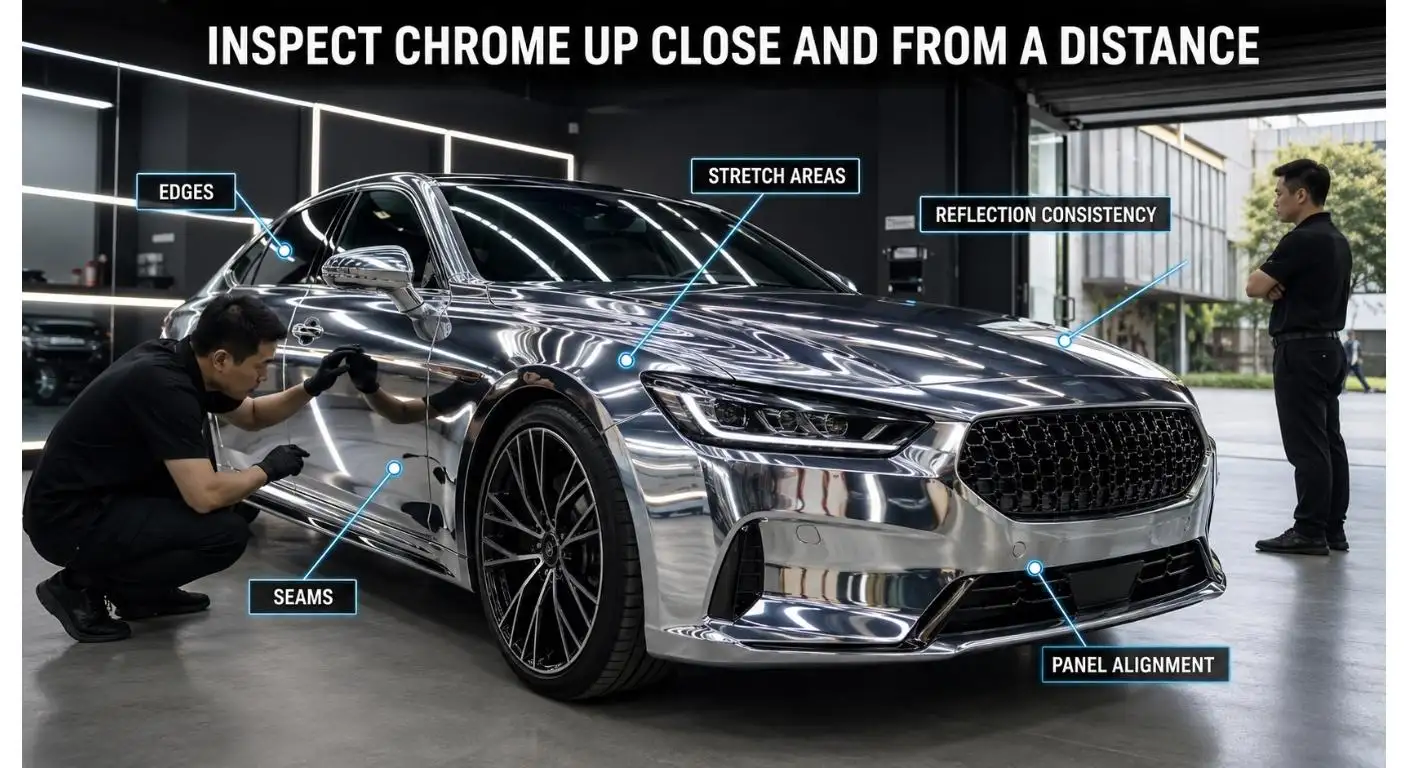
Metallic and pearl Paint Protection Film Colors require particular attention during installation. Adjacent panels should use consistent roll direction, and installers should avoid uneven stretching that changes particle distribution.
Colored PPF vs Clear PPF, Vinyl Wrap and Paint
| Solution | Color Change | Paint Protection | Removal | Main Decision Factor |
| Clear PPF | Minimal | High | Generally removable | Preserve the original appearance |
| Colored PPF | Yes | Moderate to high, depending on structure | Generally removable | Combine protection with restyling |
| PVC vinyl wrap | Yes | Limited impact protection | Generally removable | Wider color choice and lower cost |
| Repainting | Yes | Depends on the paint system | Not reversible | Permanent finish or paint restoration |
Colored PPF is not automatically better than vinyl wrap. A buyer primarily seeking a temporary color change may find vinyl more economical. Colored PPF is more appropriate when stone-chip protection and preservation of the original paint are major priorities.
How Does Installation Affect the Final Result?
Colored PPF may use wet installation or a dry-applied adhesive system.
Wet installation allows repositioning through installation fluid but requires careful liquid removal and drying. Dry systems may install faster but depend more heavily on controlled initial tack and air-release behavior.
Complex areas such as mirrors, bumpers and deep recesses introduce additional risk. Excessive stretching can cause:
•Reduced color density;
•Uneven gloss;
•Distorted metallic particles;
•Adhesive marks;
•Edge tension and later lifting.
The installer should therefore consider not only the film's breaking elongation but also its recommended working stretch range.
How Should Paint Protection Film Colors Be Evaluated Before Purchase?
Before ordering, buyers should request:
•A technical data sheet showing film construction and test methods;
•Large samples applied over light and dark paint;
•Batch color-control information;
•Weathering, peel, tensile and stone-chip test results;
•Installation guidance for complex curves;
•Warranty terms and exclusions;
•Roll size, MOQ, production lead time and replacement availability.
Claims such as "10-year color stability," "OEM-grade color," "imported TPU" or "no adhesive residue" should be supported by specific documents. A quality-management certificate does not by itself prove product performance, and a third-party test report should not be presented as a universal product certification.
For future panel replacement, distributors and installation shops should record the color code, production batch and installation date. Reserving additional material from the original roll may reduce—but not eliminate—the risk of visible color differences after years of outdoor exposure.
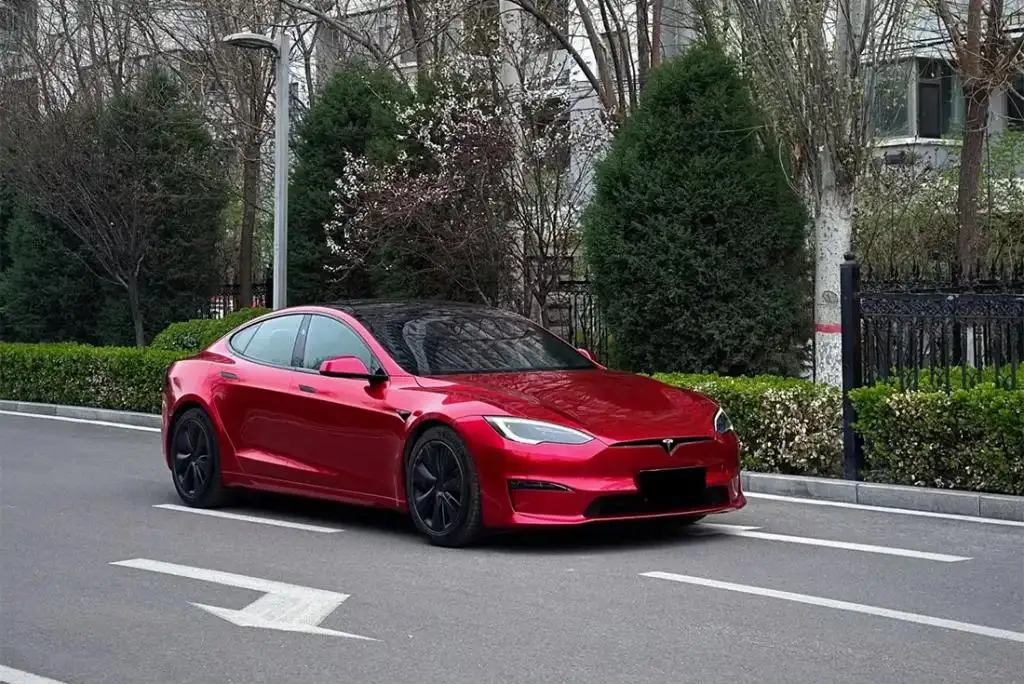
Choose Paint Protection Film Colors with HEY FILM
HEY FILM combines distinctive Paint Protection Film Colors with elastic TPU protection. Its PURE PPF features a self-healing hydrophobic topcoat for easier maintenance, an ultra-gloss finish designed to reduce waviness and orange-peel texture, and a construction stated to be four times thicker than traditional vinyl wrap. Selected products are supported by a 10–12-year manufacturer's warranty, subject to applicable terms.
Contact HEY FILM to request color samples, technical data, warranty details, or a quotation for your vehicle, distribution, or custom PPF project.
FAQs
Q1. Does thicker PPF always provide better protection?
Not always. While thickness is a consideration, the quality of TPU, flexibility, coating and its performance, and suitability of installation also come into play.
Q2. What are the finishes for colored PPF?
Gloss, satin, matte, metallic, pearl and color-shift finishes are the most common.
Q3. How does colored PPF interact with the original paint color?
The original paint color can definitely impact the final look of colored PPF. With some colored PPF, translucent or low-opacity films can show variations in appearance over light vs. dark painted vehicles.
Q4. Is colored PPF more advantageous than vinyl wrap?
Colored PPF typically has stronger protection against stone chips and scratches. Vinyl wraps typically come in a greater selection of colors and are cheaper.
Q5. Can colored PPF heal scratches?
Self-healing film technologies will self-repair minor scratches. They will not heal cuts or puncture damage.